Shemuel Gallardo Vivar is a Filipino Constitutional monarchist (Pro-Constitutional monarchy), aristocrat & conservative (Moderate conservatism). Admin of the Facebook page, Pilipinas: Mga Katutubong “Dugong Bughaw”.. Shem served in The Royal house of Sulu (under the reign of The 35th Sultan Muedzul Lail Tan Kiram & Heirs of Sulu) as one of the “OSMA” (Official Social Media Admins) from September 7, 2022 to April 29, 2026. Shem is also a CulinaryGrad, Humss12grad, Pre-Colonial Advocate, LGBTQIA member & admirer of Animist-Hinduist-Buddhist arts history philosophy heritage & etc. A descendant of The Vivar Clan of Kamaligan (also spelled as “Camaligan” or “Kinamalig”. aka Camalig) & Pinag Gubatan (also spelled as “Guinubatan” or Guinobatan), Albay of Las Islas Filipinas. A line of Catholic Maguinoo (nobility) or Catholic Rajahs (Kings) or Datus (Princes) according to their family (father’s side of the family that is believed to have Spanish blood. A “Mestizo” meaning ‘a person of mixed race, especially one of “Indio” or Indigenous and Spanish descent’) Oral history…
The Royal and Hashemite Order of the Pearl. featuring: ‘Why Monarchies Are Still Relevant and Useful in the 21st Century by Akhilesh Pillalamarri’, ‘Why we should choose monarchy | Noah Wiener | TEDxYouth@ISPrague’ and ‘Why did people help Cortez to bring down the Aztec Empire? by Shemuel Gallardo Vivar’ and MANY MORE…
Different Point of Views about Monarchism and its Importance and Contribution in Societal development…
I. Why Monarchies Are Still Relevant and Useful in the 21st Century
Think monarchies are bad? Think again. June 4, 2014
Credit: Wikimedia Commons
The institution of Monarchy has been back in the news lately, with the abdication of the erstwhile Spanish king Juan Carlos I and the ascension of his son, Felipe (Philip) VI. Elsewhere in the world, monarchies still make the news and shape events in places as far apart as Thailand, Bhutan, Belgium, Morocco, and Saudi Arabia. To many contemporary readers, monarchies seem to be purposeless antiquated relics, anachronisms that ought to eventually give way to republics.
On the contrary, nothing can be farther from the truth. Monarchies have an extremely valuable role to play, even in the 21st century. If anything their number should be added to rather than subtracted from. To understand why, it is important to consider the merits of monarchy objectively without resorting to the tautology that countries ought to be democracies because they ought to be democracies.
There are several advantages in having a monarchy in the 21st century. First, as Serge Schmemannargues in The New York Times, monarchs can rise above politics in the way an elected head of state cannot. Monarchs represent the whole country in a way democratically elected leaders cannot and do not. The choice for the highest political position in a monarchy cannot be influenced by and in a sense beholden to money, the media, or a Political party.
Secondly and closely related to the previous point is that in factitious countries like Thailand, the existence of a monarch is often the only thing holding the country back from the edge of civil war. Monarchs are especially important in multiethnic countries such as Belgium because the institution of monarchy unites diverse and often hostile ethnic groups under shared loyalty to the monarch instead of to an ethnic or tribal group. The Habsburg dynasty held together a large, prosperous country that quickly balkanized into almost a dozen states of no power without it. If the restoration of the erstwhile king of Afghanistan, Zahir Shah, widely respected by all Afghans, went through after the overthrow of the Taliban in 2001, perhaps Afghanistan would have more quickly risen above the factionalism and rivalry between various Warlords.
Third, monarchies prevent the emergence of extreme forms of government in their countries by fixing the form of government. All political leaders must serve as prime ministers or ministers of the ruler. Even if actual power lies with these individuals, the existence of a monarch makes it difficult to radically or totally alter a country’s politics. The presence of kings in Cambodia, Jordan, and Morocco holds back the worst and more extreme tendencies of political leaders or factions in their countries. Monarchy also stabilizes countries by encouraging slow, incremental change instead of extreme swings in the nature of Regimes. The monarchies of the Arab states have established much more stable societies than non-monarchic Arab states, many of which have gone through such seismic shifts over the course of the Arab Spring.
Fourth, monarchies have the Gravitas and prestige to make last-resort, hard, and necessary decisions — decisions that nobody else can make. For example, Juan Carlos of Spain personally ensured his country’s transition to a Constitutional monarchy with Parliamentary institutions and stood down an attempted military coup. At the end of the Second World War, the Japanese Emperor Hirohito defied his military’s wish to fight on and saved countless of his people’s lives by advocating for Japan’s surrender.
Fifth, monarchies are repositories of tradition and continuity in ever changing times. They remind a country of what it represents and where it came from, facts that can often be forgotten in the swiftly changing currents of politics.
Finally, rather counterintuitively, monarchies can serve up a head of state in a more democratic and diverse way than actual democratic politics. Since anyone, regardless of their personality or interests, can by accident of birth become a monarch, all types of people may become rulers in such a system. The head of state may thus promote causes or stir interest in issues and topics that would otherwise not be significant, as Prince Charles’ views on architecture prove. Politicians on the other hand, tend to have a certain personality — they are generally extroverted, can make or raise money, and have a tendency to pander or at least publicly hold to pre-defined mainstream views. The presence of a head of state with a psychological profile different from a politician can be refreshing.
Most of the criticisms of monarchy are no longer valid today, if they were ever valid. These criticisms are usually some variation of two ideas. Firstly, the Monarch may wield absolute power arbitrarily without any sort of check, thus ruling as a tyrant. However, in present era, most monarchies rule within some sort of constitutional or traditional framework which constrains and institutionalizes their powers. Even prior to this, monarchs faced significant constraints from various groups including religious institutions, aristocracies, the wealthy, and even commoners. Customs, which always shape social interactions, also served to restrain. Even monarchies that were absolute in theory were almost always constrained in practice.
A second criticism is that even a good monarch may have an unworthy successor. However, today’s heirs are educated from birth for their future role and live in the full glare of the media their entire lives. This constrains bad behavior. More importantly, because they have literally been born to rule, they have constant, hands-on training on how to interact with people, politicians, and the media.
In light of the all the advantages of monarchy, it is clear why many citizens of democracies today have an understandable nostalgia for monarchy. As in previous centuries, monarchy will continue to show itself to be an important and beneficial political institution wherever it still survives.
Quote: “Although I have heard much about Queen Victoria, I don’t think her life was half so interesting and eventful as mine.” — Empress Cixi. Read also: ‘Empress Dowager Cixi: The Concubine Who Launched Modern China’ by Jung Chang. See Here: https://www.amazon.com/Empress-Dowager-Cixi-Concubine-Launched/dp/0307271609
II. Why we should choose monarchy | Noah Wiener | TEDxYouth@ISPrague
III. Being and Living Under the Great Christian Culture: ‘Why did people help Cortez to bring down the Aztec Empire?’
by Shemuel Gallardo Vivar
Topic: Aztec Empire is not the victim as the left or woke media portrays them…
POV about the Spanish Empire: “The Spanish Imperial Monarchy is considered a saviour by mga tribo (Tribes), kaharian (Kingdoms) or mga sibilisasyon (Civilizations) because many katutubo (natives) during that time especially in the case of Aztec Empire are against Human sacrifices or the violence that these Aztec Cults or gods incorporated in their worship & political management. Many tribes despised the Aztecs.
They see Spanish Colonialism as a form of Salvation and last resort to be free from the nonsense ritual of the priestly pagan class. This is the reason why many natives after the fall of Aztec Empire celebrated and converted to the Catholic fold. Other similar things also unfolded in other era of colonial or imperial expansion.
In Las Islas Filipinas (The Philippine Islands) many Alipin (slave) especially those called “saguigilid” (slave without rights) see these alliances not as a treason but a maneuver to boost their status.
Similar things also happened on the side of the Principalía (Principalities/Kingdoms) where the Rajahs (Chiefs/Kings) & Datus (Lords/Princes) converted to the Catholic faith just to preserve their status, properties & well being of the people (those that are ruled) that they inherited from the Kerahaan (Royalty) and Maguinoo (Nobility) class that already existing prior to the era of the Kastila (Castilians). It’s all about politics after all.
It is good to note that because of the Judeo-Christian values that still influenced our Society as of this day it created many competent & stable Nation states. That is a fact regardless of how imperfect or unpopular the origin may be (because of colonialism/Imperialism).”
-words by Shemuel Gallardo Vivar, February 10, 2026
Photo: Human sacrifice as shown in the Codex Magliabechiano, Folio 70. Heart-extraction was viewed as a means of liberating the Istli and reuniting it with the Sun: the victim’s transformed heart flies Sun-ward on a trail of blood.
How Cortez Conquer the Aztecs? An unthinkable alliance…
Photo: Spanish conquistador Hernando Cortez, (1485-1547), circa 1500. -Getty Images
FACT:
1.) “Cortez only had 300 men when he conquered the Aztecs. The Aztecs were so hated by the other tribes that they provided Cortez almost 200,000 warriors to help him bring down the Aztecs“.
2.) “Some people are blabbing about how evil the Spanish Inquisition was compared to the nice nature-loving peaceful Indigenous peoples of South America. So let’s just try to put this into perspective.
While exact numbers are difficult to determine due to incomplete records, historians estimate that fewer than 100 people were executed by the Spanish Inquisition in Mexico. This figure includes around 50 executions by the Mexican Inquisition, with 29 of those being “Judaizers” between 1571 and 1700, in other words people who secretly practiced Judaism.
Yes the Spanish acquisition was pretty unpleasant but the murder, torture, slaughter and wholesale genocides committed by the Aztecs were a whole order of magnitude greater than that, sometimes involving the extermination of entire tribes.
A dedication of a single temple in 1487, in the main city of the Aztec Empire, Tenochtitlan, is estimated to have involved as many as 80,400 human sacrifices, and most historians estimate that between 15,000 and 50,000 people were sacrificed by Aztec priests every year.
At the Great Skullrack (Tzompantli) in Tenochtitlan, Spanish chroniclers counted a minimum of 136,000 skulls, indicating the number of people sacrificed in the preceding few years.
The Aztec Empire, also known as the Triple Alliance, lasted for about 93 years, from its formation in 1428 to its fall in 1521. Thus, if we make the rather conservative estimate that they sacrificed “only” 10,750 people per year, that equates to a million people killed during their rule.
If we consider the number of people murdered for merely religious reasons as an index of the level of evil of a society, then an objective mathematical calculation tells us that the Aztec empire was 10,000 times more evil than the Spanish Empire, since the Aztecs murdered 10,000 times more innocent people in the name of their evil bloodthirsty religion.
The domination of the Spanish Empire lasted for about 400 years, so actually on average only about 0.25 people were killed by the inquisition every year, amounting to one person every four years…”
“Also you don’t need to be either Christian or Religious to appreciate the debt the world owes Christianity. It’s the keystone of Western Civilisation, the civilisation that created the modern world. Explained by Rafe Heydel-Mankoo. Interview with The Camila Tominey Show. Here: https://www.facebook.com/share/v/1FFSFuPVbo/
Even Christianity’s Biggest critic wants to live in a Christian Culture. (Richard Dawkins illustrates “cut flower syndrome”). Explained by Blake Bozarth. Here: https://www.facebook.com/share/r/1NHWFfeGJj/
I will never lower myself just to please the popular narrative. I had my own disposition in life. I will never compromise just to fit in or gain anyone’s approval. Here: https://www.facebook.com/share/p/1BJJmYLfqk/
Kaya mo bang patunayan na may Diyos? (Can you prove the existence of God?). Explained. a critical thinking by The Youtuber Gharawi.
Can God lift an unliftable rock? -The Omnipotence Paradox. By Gharawi.
May conflict ba between Freewill & Predestination? (Is there a conflict between Freewill & Predestination?) By Gharawi
Kung perpekto ang Diyos, bakit may abnormal? (If God is perfect, Why is there anything abnormal?) by Gharawi
Checkmate nga ba talaga? (Is it really Checkmate?) The Problem of Evil – Epicurean Paradox by Gharawi
IV. ‘Pamana: An unpopular opinion regarding (most hardcore and not so hardcore) THE LEFT’s chaotic and unethical (no offense just my POV) economic model’ by Shemuel Gallardo Vivar
Other interesting reads: The Cambodia after Pol Pot. Read here: Facebook
Sept. 4, 2025
When the Monarchists speak about the popular narrative. The most unpopular but important stand that everyone must not forget is this…
5th-century BCE Greek philosopher Socrates
Photo: According to historical records & historians, Socrates (Philosopher & Martyr) greatest fear is the tendency of democracy to be ruled by the Mob (known today as Ultra/hardcore liberals, populists, anarchists or demagogues). He believes that not only rulers must be knowledgeable but also the voters. He believed that idiocy & people under it that avoided debates or simply those who avoid civil conversations (Socratic traditions) had no right to vote. Socrates believed that in order to understand something, one must ask questions in order to gather answers. And by doing that one can expose both the strongholds & loopholes of the ideas or subjects that are presented. Interestingly, Socrates is immortalized in Plato‘s book, ‘The Republic‘. And who is Plato? The one that gives us the ‘Theory of forms‘ that later inspired us humans (ancient and modern) interest in understanding different forms of government (monarchy, republic & etc.). Both the two great thinkers are still influential up to this day because they inspired the western ideals (American & European) that still create impact.
Sept 5, 2025
PAMANA (Inheritance)
My opinion on generational wealth & revolution:
“I’m not against generational wealth as long as it comes from legal means and is built upon my ancestors’ hard work and good legacy. Regardless of the origin of the legacy, each era or civilization is bound by its local and international conventions. Parents, regardless of status, have always wanted their heirs to inherit what they cherish. We must respect this universal truth.
It’s understandable that people are angry with “nepo babies” of corrupt politicians, but will we apply the same judgment to other rich families and businesses that aren’t corrupt? Are we truly advocating for change or just acting on frustration? Some social media influencers seem to be creating a narrative that all political dynasties are corrupt or that generational wealth is something to be frowned upon. They’re advocating for a French-style revolution, but are they aware of the potential consequences?
These influencers might be inciting people to commit inhumane acts, which is a serious matter. Even historical figures like Robespierre ended up doing more harm than good. It seems like some individuals are using trends and public sentiment to advocate for something more extreme. Sometimes, it’s hard to tell if they’re genuinely against certain individuals or just using democracy to bully others online.
The idea of targeting alleged corrupt families can go overboard, especially when using platforms to promote unrealistic views inspired by Karl Marx, Georg Wilhelm Friedrich Hegel, Mao Zedong, Vladimir Lenin, and others. This narrative is prevalent on the left side of the political spectrum, which isn’t surprising given their ideologies. However, countries like Vietnam, China, and Russia have moved away from these hardcore ideals and adopted more capitalist approaches.
There’s nothing wrong with calling out corrupt families, but we must be vigilant about entities that might be using this issue to promote their own agendas. Ideas inspired by hardcore communism and Socialism often lead to instability and harm. We can learn from history that Mob rule and Revolutions inspired by Anarchism and hardcore Communism often end in failure.
We should beware of Demagogues and remember that the last two world wars were connected to extreme ideologies. Populism, anarchism, communism, and socialism might appeal to frustrated minds, but once emotions subside, they can unleash mad men turned mad dogs, creating a vacuum that leads to more horrors and corruption.
Philosophers like Plato and Socrates warned about the dangers of mob rule and the importance of balance in governance. We should be wary of revolutions and rebellions that claim to be on the side of freedom but might actually be promoting harmful ideals. Inequality and equality will always be part of human life, and trying to erase them completely can be a sign of idiocy.
Men are natural-born competitors, and the only thing we can do is create systems that benefit everyone, regardless of status or ideology. Let’s bridge the gap and avoid being part of another problem. Revolutions might look good on social media, but in reality, they can lead to true change or pave the way for the next tyrant. The economy is multifaceted, and both the upper and lower classes must work together.
Let’s not forget the importance of order above chaos and the natural desires of human nature. Classical ideals and philosophers like Socrates, Plato, and Niccolò Machiavelli and modern thinkers like Thomas Hobbes will always be relevant. Let’s focus on creating a better society by following our part of the bargain and working together.”
– POV by Shemuel Gallardo Vivar. Moderator of the Facebook group ‘Monarchists’. Originally written in Tagalog. Member of CoRRECT™ Movement Moderated Public Forum
2.) Related article: Why Monarchy is not expensive and self sufficient featuring “crown jewels are not stolen” by John M. Kelleher. Here: https://www.facebook.com/share/p/172Efvv5CR/
7.) What can the Dutch Empire teach us about the importance of Capitalism in driving long-term success. Explained by Ray Dalio. Here: https://www.facebook.com/share/r/17SjLqGpk4/
8.) They are not targeting wealth. They are targeting the systems that power the Philippine economy. Explained by Orion Perez Dumdum in PGMN Official. Here: https://vt.tiktok.com/ZSHQjwWhs/
Photo: Levites accepting Tithes or offering in their Tabernacle. They’re obliged to help widows.
Photo: Mother Goddess Meenakshiof Madurai, India also recieved many offerings. The proceeds is used to support charity such as free food aka “Prasada“. Prasāda (Sanskrit pronunciation: [pɽɐsaːdɐ], Sanskrit: प्रसाद), prasad or prasadam is a religious offering in Hinduism. Most often prasada is vegetarian food especially cooked for devotees after praise and thanksgiving to a god. Mahaprasada (also called bhandarā),[1] is the consecrated food offered to the deity in a Hindu templewhich is then distributed and partaken by all the devoteesregardless of any orientation. -Wikipedia). Meenakshi is one of the manifestation of “Divine Feminine” and a part of Goddess movement known in India as “Shaktism“. She is a Rani (Queen) that undergone Apotheosisor Deification meaning the elevation of a mortal human, spirit, or concept to divine status. It is a prominent concept across various religious, historical, and theological frameworks. In this picture you will see a 210 kg (gold and silver) statue crafted forChemmanur International Jewellers, located in Madurai, Tamil Nadu. It was designed for exhibitions and festive displays, not as the main temple idol.
Another POV: “God’s view of inheritance: A generational blessing built on the aspirations and inspirations of predecessors to ensure the future of their successors. It is not just a simple handout. Inheritance is not just about finances; it is about heritage, continuity, security, and stability. God Himself promised and passed inheritance to His chosen people (the promised land) and creation. It is a philosophical truth where the universal right of an all-knowing Creator reflects the ideals of all humans who also want to pass their achievements to the next people of their bloodlines. So, inheritance represents God’s desire for His blessings to overflow and to be experienced by one generation to the next, but that right (or “privilege,” as the communists and socialists argued) comes with great responsibility. Not all inheritance is eternal. Some inherited it but squandered it accidentally, while others did it knowingly. God predestined that those in the upper class must dress, feed, or help those in need. God Himself equates these actions as man’s direct way of showing love towards Him as their God. This is the reason why tithes are given as a law to the Israelites, and even Christians who aremostly not Jews are free to practice it as long as the giving comes freely from the heart. In return, the people who are being helped must be grateful and not covet things that do not belong to them… unless they know that these properties are indeed stolen or belong to them in the first place. Covetousness and demagoguery (the appeal of using popular narrative or sentiments to justify indefensible ideas) are also forms of corruption. Do not try to sugarcoat or sell it; it will not survive in the long run.”
Photo: Experience almsgiving at Ba Vang Pagoda (Photo: Buddhists giving alms to the Sangha led by Thay Thich Truc Thai Minh.). A form of “Merit Making” (Merit (Buddhism)) or Noblesse Oblige. Merit-making is a foundational concept in Buddhist ethics and various other traditions referring to the accumulation of beneficial and protective karma through intentional virtuous deeds, thoughts, or acts. It encompasses giving, moral living, and mental development
Sept 10, 2025
Part 1
Topic: Hinduism, Free market capitalism, Monarchism, Universal compass & Moderate Conservatism. Featuring: The Rastriya Prajatantra Party (5th largest monarchist party of Nepal) Versus Maoist & Leninist Parties of Nepal…
I had a friend that is an admirer of Karl Marx’s manifesto. He said that he absolutely loves the guy. And I was like: “Okey, from now on renounced ur inheritance & also ur rights to ur house. I also said that he must renounce all the universal moral laws & traditions that shaped the very essence of humanity ( the 10 commandments of Christians & Karma of Hindus for example) where both believers & unbelievers (atheists) benefit. And just simply let the state support & decide for you. Let the mob also decide what is the collective that you must live by in every second of your mortal life.”
He suddenly becomes silent. After that conversation he never bragged again about Marx, Mao, Lenin & the like. Yes, humanity can have the so-called ‘most utopian & equal society’ BUT to what extent?
Yes, in its prime it’s good to see, hear and feel BUT in the long run you’ll regret it (ask Nepal, Venezuela & north Korea). Always remember if things that are promised are too good & unrealistic then, that advocacy/rebellion (or alleged revolution) is already doomed to fail.
Even the greatest proponents of ‘absolute equality & freedom without limitations’ (China, Russia, Laos, & the like) are also the ones that abandoned it. Yes, they are successful in eliminating the crown heads. They succeed in installing their brothers and sisters that later betrayed them & create a massive material & spiritual overhaul that they ( fellow cadres) too find distressing, painful & disgusting (ask the Cambodians).
The cadres had succeeded in eliminating a not so equal/divine monarchs and in exchange they reaped curses upon curses that are given to them by their beloved “elected leaders” that governed as an absolutist or authoritarian. An almost monarch without any holy & majestic aspirations nor consideration to the people of the realm…The supposed Leaders or “fellows” that later became the most villain in the alternate universe or horrid story that they help to create.
One must understand that mathematics is the universal language of all civilisations. Yes, equality truly exists BUT one must not forget that subtraction & unequal parts are necessary to keep creating an all new equations or formulas. The same rules also apply in real life…
One must be LESS to CONTRIBUTE.
One must be ADDED to create a big CHANGE & make a HIGHER outcome or VALUE.
One must remain ABOVE to maintain the CORRECT TOTALITY of the LAWS of nature.
One must not always be EQUAL but at the same TIME be JUST, in order to give justice in BOTH the SUBJECT that is given & the PRODUCT that is presented.
I bet philosophers will not dare to object. And if just in case they are…then we can assume that the world of academe is truly dead. Not physically but mentally. And for those that already accepted the vile principles of communism & socialism don’t bother to get an insurance policy nor bother to get some sort of assurance from thy chosen form of government. Consider yourself already dead because even the first advocates of Robespierre, Karl, Mao, Lenin, Lenin & Hitler found themselves in the misery of their own undoing. Undoing that they too failed to undone & outlive.
All changes, laws & principles must be practiced in absolute moderation and also with full acknowledgement of what is necessary & unnecessary to truly attain a continuous, stable & realistic form of society that everyone can partake in. A society that doesn’t discriminate whether you’re elite or just a common man…An ideal society where both the faithful & unfaithful doesn’t become too much in conflict with the world they are in nor in contrast with the aspirations that they too had already aspired to be.
Capitalism is not perfect but doesn’t distribute equal misery. While communism & socialism will always be cursed because even before & after its implementation they are already hellbent & predestined in distributing equal portions of their own hell.
Photo: Demonstrators outside the burning Nepali Congress Party office in Kathmandu during a protest Tuesday to condemn the deadly police crackdown. –AFP/Getty Images
Part 2 My opinion on revolution in Nepal during The Time of Oli that is hijacked by the violent mob (mostly not monarchists)… Effects of revolution powered by idiocy, mob rule & anarchism? Well, the government will have to spend billions in rebuilding public properties. Foreign investors will find a hard time in trusting again the “stability” of that nation state (Example: Nepal) I know that in corruption everyone finds it difficult to go by BUT STILL in a stable although not perfect economy and politics everyone can still live and thrive. Remember in every chaos there will be evil people or organisations (hardcore liberals or simply “leftists” or reds aka communists/Socialists) that will always hijacked revolutions built on Demagoguery or wokeism gone overboard… And to our fellow Monarchists that resided in Nepal, don’t let the atheists/communists/socialists/anarchists or demagogues hijacked ur divine aspirations & inspirations. Call them out. Who knows another faction from the left (same atheists/communists/socialists/anarchists) will arise. Remember even the communist regime of PM Oli had its own power struggles from within & it might be possible that a foreign nation is behind this. Be careful. Remind the younger generation to stop the madness.
Photo: Few would argue that there are many texts as foundational to the West as Plato’s most famous dialogue, The Republic. A warning about unchecked Democracy might turned into Mob rule (ochlocracy or mobocracy) under the direct rule of Demagogues. Just like a ship where the skillful captain is overpowered by the majority aka Majoritarianism.
Sept 11, 2025 “I had liberal friends but I don’t wholeheartedly trust them. Most of them (in my observation) are admirers of anarchists, arsonists, demagogues, populists or MOB RULE. Not to mention that they admired atheism & abortion. Ideologies that remove (most of the time) the divinity (and dignity) of human existence. Conservatives and traditionalism are not perfect BUT STILL the Trad (Traditionalism) & Con (Conservatism) are still the guardian of humanity’s different civilisations. ” -Shemuel
Photo: A Renaissance imagining of the Temple. Tempel van Diana te Efeze, Philips Galle, after Maarten van Heemskerck, 1581 – 1633. Rijksmuseum. n July 21, 356 BCE, an ancient Greek arsonist named Herostratus or Eratostratus (fl. 356 BCE),[1][a] was an arsonist who destroyed the Temple of Artemis in an attempt to achieve infamy. His name has become an eponym for someone who commits a crime solely to become famous. He burned down the original Temple of Artemis in Ephesus to achieve infamy. Today, the desire to commit a destructive act purely for notoriety is known as “Herostratic fame”.
20.) Relevance: Why Monarchism is so important still in making the nation state (Statecraft)? Full explanations and references here. Featuring the Middle east, Nepal & Iran: https://www.facebook.com/share/p/1CaBcyJtxk/
23.) The Monarchists’ relevance as guardians of unity, continuity and stability. A.) Featuring & ‘The art of strategic ambiguity. Explained by Sass Rogando Sasot’ & ‘Think Monarchies are bad? Think again by Akhilesh Pillalamarri of The Diplomat’. Here: https://www.facebook.com/share/p/19b52jL48u/
About the writer of the POV:
Shemuel Gallardo Vivar , Filipino constitutional monarchist & conservative (moderate conservatism). Shem is a Humss12Grad, LGBTQIA+ member, CulinaryGrad, Pre-Colonial advocate & admirer of Animist-Hinduist-Buddhist arts, philosophy & etc. A Descendant of The Vivar Clan of Kamaligan (Camalig) & Pinag Gubatan (Guinubatan), Albay of Las Islas Filipinas.
Shem has served (from 2022 to 2026) at the royal court of His Royal Majesty Sultan Muedzul-Lail Tan Kiram , De Jure 35th monarch of The Royal House of Sulu (Raha Muda or Crown Prince during Presidential Order Memorandum 427 Year 1974 Sulu coronation). Son of the late 34th monarch. Sultan Muedzul is one of the legal heirs or present day descendants (1 of the inheritors of Sabah Private Lease agreement) by the power of McCaskie Court Decision Year 1939…)
Photo: I adore those old fairy tales or legends. You know, the ones where the valiant knight saves the princess? The ones where chivalry and honor are boldly demonstrated and highly praised? They are not just stories. Knights are real. Warriors or protectors advocating for Noblesse Oblige. -Shemuel
____________________
Quote: “Noblesse oblige [Rank has its obligations].” -Pierre-Marc-Gaston de Lévis
Photo: Pierre-Marc-Gaston de Lévis (Pictured above), The phrase noblesse oblige was coined by the French author and aristocratPierre Marc Gaston de Lévis, Duke of Lévis in 1808. He was the Duke of Lévis, a French peer, and a writer known for his collection of maxims and reflections. He used the French term in his work Maxims and Reflections to encapsulate the unwritten rule that privileged status requires honorable, generous, and responsible behavior. While de Lévis coined the exact phrase, it was heavily popularized in 1836 by the famous French novelist Honoré de Balzacin his novel Le Lys dans la Vallée (The Lily of the Valley). -Google
Photo: Revised daguerreotype taken in 1842. Picture (Google) of Honoré de Balzac. “Honoré de Balzac was a staunch monarchist. He publicly identified as a reactionary and a Legitimist, which means he supported the restoration of the Bourbon monarchy to the French throne. He believed that the monarchy and the Roman Catholic Church were the only institutions strong enough to maintain social order. He is criticize because he believes in authoritarian rule and believed traditional hierarchy kept human egotism in check. He viewed the French Revolution and egalitarian ideals as forces that destroyed organic social stability. He also despised the rising power of the bourgeoisie, the obsession with money, and the cold logic of capitalism. He is known to always romanticized the old aristocracy and lamented their decline in the face of newly wealthy merchants and industrialists. Despite his personal conservative beliefs, his commitment to ruthless realism meant his novels actually exposed the moral decay of the aristocratic class he supported. Because of this honest, unvarnished look at capitalist greed, socialist thinkers like Karl Marx and Friedrich Engels deeply (and surprisingly) admired his work.” -Shemuel Gallardo Vivar
A.) What is Noblesse Oblige? Noblesse oblige is the idea that people with high social status, wealth, or privilege have a moral obligation to act generously, responsibly, and with honor towards others, particularly those less fortunate. It translates from French as “nobility obligates,” implying that privilege entails responsibility. An example is a wealthy philanthropist who uses their fortune to fund community projects and improve society, not just for profit or personal gain, but out of a sense of duty. Key aspects of noblesse oblige: 1.) Moral obligation : It’s not a legal requirement but a sense of duty to give back or help others.
2.) Position matters : The concept applies to those in positions of power, influence, or high birth, whether inherited or earned.
3.) Generosity and responsibility : The obligation involves being kind, honorable, and acting in a way that is consistent with one’s privileged position. Example: Imagine a successful entrepreneur who has built a large company and accumulated significant wealth. According to the principle of noblesse oblige, this entrepreneur would feel a responsibility to use their resources to benefit society.
4.) This could manifest as: Donating to charities that support causes they care about.
5.) Funding community initiatives like schools or public parks.
6.) Advocating for policies that addresses social inequality. Mentoring and supporting individuals from less privileged backgrounds to help them advance.
7.) Noblesse Oblige applies to royals, nobility (aristocracy), social media influencers, leaders & etc.
B.) A Monarchists History: Topic: How does personal hatred affect our view in history? Featuring: How the British empire stopped slavery.. Context: ‘On August 1, 1834, Britain passed the Slavery Abolition Act, outlawing the owning, buying, and selling of humans as property throughout its colonies around the world. While this did not free enslaved people in the United States, it was a source of inspiration and hope for abolitionists.” -Google
POV: “Slavery was humanity’s sin, not the monopoly of one race — and it ended because people chose conviction over comfort. That’s the part the woke script leaves out. Real strength isn’t found in clinging to victimhood but in rejecting it, owning history honestly, and building forward. Those who refuse the victim role radiate the kind of emotional strength that can’t be faked — and that’s why they stand out.”
Photo: Thomas Clarkson was a British abolitionist who was responsible for gathering information and support that led to the abolition of the British slave trade in 1807. He was also a leading campaigner against the end of slavery worldwide, devoting his entire life to the cause. He wrote many pamphlets and books on the subject of abolition, and he was part of an elite group of British abolitionists that created a grassroots movement to end the slave trade.
1.) HRM Sultan Muedzul-Lail Tan Kiram , De Jure 35th monarch of The Royal House of Sulu . Raha Muda (Crown Prince) during Presidential Order Memorandum 427 Year 1974 Sulu coronation. Son of the late 34th monarch. One of the legal heirs or present day descendants (1 of the inheritors of Sabah Private Lease agreement) by the power of McCaskie Court Decision Year 1939.
2.) HRH Datu (Prince) Nizamuddin Kiram , Maharadjah adinda 2nd heir apparent to the Sulu Throne.
3.) Shemuel Gallardo Vivar , Filipino monarchist, aristocrat & conservative (moderate conservatism). Admin of the Facebook page, Pilipinas: Mga Katutubong “Dugong Bughaw”. . Shem is finish serving (from 2022 to 2026) at the royal court of Sulu. CulinaryGrad, Humss12grad, Pre-Colonial Advocate, LGBTQIA member & admirer of Animist-Hinduist-Buddhist arts history philosophy heritage & etc. A descendant of The Vivar Clan of Kamaligan (Camalig) & Pinag Gubatan (Guinubatan), Albay of Las Islas Filipinas. A line of Catholic Maguinoo (Nobility).
Lessons From Ancient Athens, Rome, the Renaissance & Other Golden Ages: The Full Johan Norberg
Suggested Books for Good Read? Here: ‘Peak Human: What We Can Learn From History’s Greatest Civilizations’ by Johan Norberg.
All golden ages are marked by periods of spectacular cultural flourishing, scientific exploration, technological achievement and economic growth; yet no two are the same. Their beliefs, societies and place in the wider world all vary. Despite this, all previous golden ages have ended, whether it be because of external pressures or internal fracturing; too much hubris or too little wariness. Looking at seven of humanity’s greatest civilizations – ancient Athens, the Roman Republic, Abbasid Baghdad, Song China, Renaissance Italy, the Dutch Republic and the Anglosphere – historian and commentator Johan Norberg seeks to distil their strengths and shortcomings in answering the question: how do we ensure that our current golden age doesn’t end? As insightful as it is riveting, Peak Human is at once a paean to our incredible progress and a warning that we cannot afford to be complacent. Buy the book here: https://www.amazon.com/Peak-Human-Historys-Greatest-Civilizations/dp/1838957294
PART 3: Asia’s Monarchies: Inside The World’s Last Remaining Kingdoms | Full Series | Real Royalty
V. Question: Shemuel Gallardo Vivar as the descendant of The Vivar Clan of Kamaligan (Camalig) and Pinag Gubatan (Guinubatan), Ibalon (Bicol)..How do you see yourself? Are you a Monarchist or more like a Royalist? Answer: “NO”. Why?
NO BECAUSE…Monarchists support the institution of monarchy as a system of government, regardless of who is on the throne, while Royalists support a specific monarch, royal family, or dynasty. Why? Simply put: Monarchists advocate for the system, WHILE Royalists are devoted to the person/family/Dynasty that is currently or previously in power (Crown/Throne). In other words I support the Kiram Dynasty (starting from the 35th Sultan Muedzul Lail Tan Kiram and his future successors) not because I’am a fanatic or royalist. I chose to support them because I see it as my duty (and not just simply as an obligation or work) as a fellow believer of Moderatism and Constitutional Monarchism (Constitutional Monarchy). I personally believed and expect that they will also stay the same (as a fellow proponent of constitutionalism, moderatism, free market capitalism and monarchism). I wholeheartedly believed on that. Aside from that… if in any case, another former ruling royal family from a far away former monarchist land will implore my help then so be it. I will help. Sino pa ba ang magtutulungan kundi tayo tayo din diba? (Who else would help but us, right?)
The Difference…
Monarchists
Focus: The system (monarchy) itself.
Goal: To establish or maintain a king/queen as head of state, often emphasizing tradition or stability.
Scope: Can be abstract; they might not care which family rules, as long as it is a monarchy.
Royalists
Focus: A specific person, king, queen, or dynasty.
Goal: Supporting a particular royal family or heir, often during a time of crisis, revolution, or exile.
Example: Supporters of the Bourbon dynasty in France were royalists, even when the monarchy was abolished
Key Differences and Overlap
Interchangeability: In stable constitutional monarchies like the UK, the terms are often used interchangeably because supporters of the system are usually loyal to the existing monarch.
Distinction: A monarchist might support a new monarchy, whereas a Royalist often supports a traditional or established dynasty.
Context: Royalists are commonly associated with political movements meant to restore a deposed king or defend a current one against republican efforts.
2.) I have friends & support many things but I will never lose myself. It reminds me of the Facebook post I watched before (April 18, 2026), titled: ‘ Sino ang totoo mong kaibigan (Who is your real friend)’ by Zac Alviz. Here: https://www.facebook.com/share/r/1bebQLdYoe/
VI. How the Modern & the Ancients viewed “Statecraft”? EXPLAINED BY SHEMUEL GALLARDO VIVAR USING ‘ Matthew 22:21 ‘
How the Modern & the Ancients viewed “Statecraft”…Read the Topic & Context (Video Description):
The Chosen. The King of Kings & The Lord of Lords Official Heavenly Mandate towards the created…
Topic & FullContext: Paying Taxes & Spiritual/Divine obligations. A matter of Temporal & Spiritual.
Jesus answered, “Render to Caesar (title) the things that are Caesar’s, and to God the things that are God’s” (Matthew 22:21), creating a distinction between civic obligations (taxes) and spiritual allegiance. He did not advocate for blind obedience to the state, but rather a limited submission where temporal, material dues (like taxes) are paid to the government, while ultimate loyalty—our souls and worship—is reserved solely for God.
The Various Aspects of Jesus’ Answer
1.) The Trap: Pharisees and Herodians tried to trap Jesus; if he said “yes,” he was a traitor to the Jews; if “no,” a rebel against Rome.
2.) The Coin: Jesus requested the tax coin and asked whose image was on it. They replied, “Caesar’s.” Meaning the critics (of Jesus Christ, The Messiah) also knows (as part of common sense) that although things are born out of spiritual and divine origins (Book of Genesis) there are things that must be done regardless of how spiritual or not spiritual you are since the fall of man (Garden of Eden). There are things that are hard to avoid and must be accepted head on.
3.) The Principle: Because the coin bears Caesar’s image, it belongs to him. Humans bear God’s image (Genesis 1:27), so we belong to God and must give our lives to Him. It shows that human authority is a shadow of heavenly things that is to come. The temporal (or human) systems are not perfect but because of the pre-ordain natural order that is given since the time of creation (genesis) then humans regardless if they’re a believer or not a believer naturally follow these courses born out of the innate “need” of peace & order above chaos.
4.) Contextual Obedience: While Christians are instructed to obey authorities (Romans 13), this is not unconditional. When human authority conflicts with divine command such as the “Heavenly Mandate” (example: 10 commandments where both believers & unbelievers are protected & abide) , then God’s claim overrides Caesar’s, as stated in Acts 5:29 (“We must obey God rather than men”).
5.) Connection to “Blind Obedience”…
A.) Not Blind: The instruction is to give Caesar only what is his (taxes, compliance) & to God what is God’s. Meaning there’s a balance & clear distinction in Temporal (things that concern the Physical realm) & Spiritual things.
B.) Limited Authority: The state’s authority is delegated by God and limited; it is not always absolute because reality & its cause and effect are non-negotiable.
C.) Higher Allegiance: Our primary, uncompromised loyalty is to God’s Kingdom, not the temporary kingdoms of this world. Meaning if the State‘s principle is for the common good and is built in humanity & conscience then we must follow it as the State’s (as the legitimate ruler in the temporal sense) subjects or citizens BUT when the government’s ways is finally in conflict on what they promised or agreed upon (A doctrine of Social Contract. See the books that are written by Thomas Hobbes “Leviathan” & “De Regno” by St. Thomas Aquinas. Both books talk about the balance of society and its realities) or anything that is inhuman or wrong then as a good believer one must abide according to conscience and what reality is being felt, seen or heard in real time.
-words by Shemuel Gallardo Vivar, April 22, 2026
All rights reserved
Clip from “The Chosen” .Video clip by YouTuber ‘On Mission With Shawn Alain (Note: Not me). . Render unto Caesar the things that are Cesar’s | The Chosen S5E3. See the full context here:
The Lineage of Jesus Christ and are Political Dynasties that bad? by Orion Perez Dumdum
A balanced view of a thousand year old history under “DYNASTIC SUCCESSIONS”…All about Dynasties: Part 1 “The myth that Political Dynasties are among the worst root cause problems that the Philippines needs to “fix first before fixing all other problems” is the biggest sleight-of-hand scam aimed at distracting most Filipino academics and reform activists from truly solving the real root causes of the Philippines’ problems.
Due to the widespread belief in this myth that so many anti-reform obstructionists have repeatedly spread, so many Filipinos have been led to ignore the fact that the proliferation of Political Dynasties is actually a symptom of other deeper issues, and NOT A MAIN CAUSE of society’s problems.
Moreover, Filipinos have been falsely made to ignore the fact that the mere existence of dynasties is a natural phenomenon that occurs naturally in human society as well as other living species, due to the fact that genetic characteristics often tend to be passed on from parents to offspring.
There will always be “dynasties” in so many different areas and fields of endeavor for as long as human beings are able to pass on their genes from parent to offspring, and for as long as there will remain fields of endeavor in which the passing on of knowledge and experience from parent to offspring poses as an advantage.
And because humans generally and naturally acknowledge the heritability of traits from parent to offspring, humans will naturally – BY DEFAULT – assume that whatever traits a parent has, the children are likely to have. Because of this natural tendency for humans to pre-assume the success of children based on the achievements of one or both of their parents, DYNASTIES will always naturally tend to emerge.
Truth be told, DYNASTIES ARE A DEFAULT feature of human societies.
How many times have you noticed that there are families of lawyers, families of dentists, families of doctors?
How about a lot of traditional trades of a highly specialist nature such as gemstone cutting and jewelry?
How about old medieval trades like blacksmiths, fletchers (arrow makers), luthiers (makers of stringed instruments like lutes, guitars, etc), Japanese artisanal businesses/trades like katana sword-making and the like which often got passed on from father to son?
To this day there are cases where we have “dynastic families” of musicians like Ez Mil (Ezekiel Miller Sapiera) being the son of Rockstar lead vocalist and guitarist Paul Sapiera, Nat King Cole and his daughter Natalie Cole, or Johann Sebastian Bach and his sons CPE Bach and Johann Christian Bach, etc.
How about the Hollywood dynasties of the Sutherlands (Donald and son Kiefer), the Baldwins, Will Smith and his son Jaden, just to name a small handful?
Look at a lot of our legends and myths. Greek mythology is filled with stories of heroes who enjoyed the advantage of being the son of Zeus or some other Greek god.
Even King Arthur who was unaware of his being the son of King Uther Pendragon was destined to be the only one who could take the sword Excalibur out of the stone.
Luke Skywalker inherits his force sensitivity (and the mission to restore balance to the Force) from his being the biological son of Anakin Skywalker (who became Darth Vader) who was very strong with The Force.
Even the New Testament of the Bible goes through lengths to establish Jesus’ membership within King David’s dynastic line.
Dynasties are part and parcel of human Culture and History.
To demonize dynasties as being the source of all that is wrong with the Philippines is stup1d and wrong.
Besides, are dynasties all bad?
Japan is a modern, successful, and highly advanced society, yet they are a society that has had a lot of politicians coming from political families. The late former Prime Minister Shinzo Abe was the grandson of Kan Abe, an anti-war member of parliament who sought to challenge the Hideki Tojo Government. Shinzo Abe‘s whose own father, Shintaro Abe (son of Kan Abe) had formerly served as a Foreign Minister, and Shinzo Abe’s own brother Nobuo Kishi (adopted at a young age by his mother’s brother, hence the Kishi surname), had also served as Minister of Defense…
Is this really a problem?
Let’s look at the overall results: Japan remains a first world country that is among the top performers in terms of human development, education, and economic performance.
Is it really a problem if a country has dynasties?
Of course it’s nice to have a society that isn’t dominated by dynasties.
But just the same, not all dynasties are bad.
In fact, in a paper authored by Japanese political scientist Dr. Yuko Kasuya, it was found that members of political dynasties (members of political families) have often tended to have a more national perspective than just a narrow local/parochial one, plus they’ve often tended to have more liberal and more inclusivist/progressive views.
It was also found that members of political dynasties tended be electorally more successful in poorer districts than in richer ones, showing that poverty was more likely to exacerbate the proliferation of dynasties than it was for dynasties to be the cause of poverty.
In other words, the causal direction of which causes what is more likely that poverty worsens dynasties as opposed to dynasties being the cause of poverty.
That said, whenever a society transforms itself into a very healthy and inclusive society in which members of society are given the same opportunities to succeed, regardless of who their parents are, dynasties tend to become less pronounced and they tend to dominate less.
It is absolutely necessary for ALL Filipinos (ESPECIALLY ALL ACADEMICS!!!) to wean ourselves away from the mistaken notion that “Dynasties are among the root causes of our society’s problems” and instead understand that:
1) Dynasties emerge as a natural phenomenon in human societies because humans naturally expect that children tend to take after their parents
2) Dynasties are worsened and exacerbated by poverty, and not that dynasties per se cause poverty.
3) Not all dynasties are bad, as there are “good dynasties” too.
*
The sooner we Filipinos all wean ourselves of our irrational obsession with political dynasties and instead concentrate more on fixing the flaws of our economic and political systems as defined in our Constitution, the sooner we will be able to solve these issues and create a much more inclusive society which will lessen the dominance of Political Dynasties and make it easier to have a more level playing field so that competent and committed new entrants can compete on merit against players who enjoy a dynastic advantage.
Don’t be distracted by all these diversionary tactics used by the anti-reform obstructionists…”
Part 2 It has always been a primordial tendency of human beings to revere DYNASTIES.
Look at old literature and ancient legends and even modern novels and movies, there’s always some story about a hitherto unknown hero out there who then grows up living an ordinary life who is actually the unknown offspring of a great warrior or ruler and is destined to rule or act as the savior of his/her society, but then is found to have special abilities or skills that makes this person fit to rule and/or save his/her people.
Yes, it’s featured in Star Wars too with Luke Skywalker being the son of the Chosen One (himself therefore also being chosen), and his sister Leia and her son having the same gift. The story is featured strongly during every Christmas Season, and even Arthurian legend has it, as do so many other stories that feature heroes. (Yes I watched Episode IX and it too features the primacy of the genetic line once again)
Heck, even Iron Man features a tech-tycoon, industrialist, and hands-on engineering genius whose own father started the company that bears his name and that father was also an extremely talented engineer.
The Primordial human tendency has – for a very long time – been to recognize that between Nature and Nurture, Nature – GENETICS – is the superior determinant for leaders or “saviors” to have the requisite abilities needed for one to lead one’s people towards success.
I’m not saying this to justify Dynasties, but simply to point out the fact that for quite a long time in history, societies have tended to put a premium on “Dynastic Succession”, meaning that for a very very long time, Dynasties and the concept of Dynastic Succession were not considered objectively bad.
In fact, the concept was considered to be generally good.
Why else was an effort made to establish Jesus’ genealogical connection to King David and Bethlehem (where Kind David was originally from) if not to establish “dynastic cred?”
This is where I am, to an extent, at odds with what I consider to be the misguided obsession with trying to ban dynasties in the Philippines, an obsession promoted by the Ateneo School of Government.
Because for me, the focus on Dynasties is totally misguided, when the real focus should actually be on the QUALITY OF POLITICIANS produced by the system of government which sorts its participants based on competence and leadership skills.
Do we prevent doctors from having members of their family get into the same profession?
Do we prevent the emergence of families of musicians? (musical ability is very very obviously “dynastic” because it is one of the most easily-recognizable abilities that is genetically passed on)
No.
So why should we prevent people from running for office just because they are related to people who are currently or were previously in political office?
Might we actually be barking up the wrong tree and trying to suppress the wrong symptoms instead of curing the real underlying disease?
Because dynasties per se are not bad. The Truth is that there are bad dynasties and there are good dynasties, and it is actually the bad dynasties that we don’t want.
More importantly, while we want meritocracy so that we get the best person for the job based on extremely objective and non-partisan criteria, meritocracy also means that we should not prevent the most qualified best person from taking the post which he/she won fair and square just because he/she comes from a family that has members who have been (or probably still are) involved in politics.
He had to prove himself meritocratically by being the best he could be at school – he was the top Mathematics student of his class in Cambridge, and has consistently shown that he is extremely competent and knowledgeable just to prove that he was really objectively the best person for the post of Prime Minister and not because he is the son of Lee Kuan Yew.
So if it’s bad dynasties that we don’t want, then what we need is a system that weeds out lousy politicians or prevents lousy people from rising up the ranks.
It’s that simple.
A highly meritocratic system would essentially discourage sons or daughters of politicians from running for office just because they are sons and daughters of politicians, but it would allow those among them who are exceptionally brilliant, talented, and possess the leadership instincts and skills necessary to be good leaders to thrive and rise up the ranks, REGARDLESS of their having been children or relatives of past or existing politicians.
The overriding obsession of any society ought to be to have the best people lead it, regardless of who their parents or relatives are, and to avoid having unsuitable people get chosen to lead such society. If the most suitable person to lead a country due to his or her abilities, wisdom, and leadership skills is the son or daughter or relative of a former leader, there should be no problem, let that leader lead!
It makes no sense at all to prevent the most qualified and the best person for the job to take that job just because of who that person’s parents or relatives are.
Focus on setting up a strict Meritocracy and everything good will follow from there…
Dynasty bans that prevent people from running for office just because of who their relatives are is just another one of those SELF-SABOTAGING symptom-suppressing band-aid attempts at quick fixes that tend to make things worse.
VII. What is an OTROVERT AND MODERATE CONSERVATIVE (aka Centre Right)?
Photo: The Thinker (French: Le Penseur), by Auguste Rodin, is a bronze sculpture depicting a nude male figure of heroic size, seated on a large rock, leaning forward, his right elbow placed upon his left thigh, with the back of his right hand supporting his chin in a posture evocative of deep thought and contemplation. This universally recognized expression of “deep thought” has made the sculpture one of the most widely known artworks in the world. It has become the iconic symbol of thinking; images of the sculpture in profile are often used to indicate philosophy and other practices of contemplation or introspection. The Thinker was initially named The Poet (French: Le Poète), and was part of a large commission begun in 1880 for a doorway surround called The Gates of Hell. Rodin based this on the early 14th century poem the Divine Comedy by Dante Alighieri, and most of the figures in the work represented the main characters in the poem with The Thinker at the center of the composition over the doorway and somewhat larger than most of the other figures. Some critics believe that it was originally intended to depict Dante at the gates of Hell, pondering his great poem. Other critics reject that theory, pointing out that the figure is naked while Dante is fully clothed throughout his poem, and that the sculpture’s physique does not correspond to Dante’s effete figure. –Wikipedia.
Proud to be an Otrovert, Moderate Conservative & Monarchist.
What is an Otrovert?
An otrovert is a personality type coined in 2025 by psychiatrist Dr. Rami Kaminski, describing someone who is socially capable and empathetic but feels like an eternal “outsider” in groups, preferring one-on-one connections. They are not shy, but rather independent thinkers who do not conform to group norms or seek validation from crowds.
Photo:Memoirs of a Geisha (film) is a story about a woman named Sayuri. Despite being both a “servant” and “admirer” of tradition she still maintained her own stand. An independent thinker. In the film we can hear her monologue throughout the film. A glimpse of her mind. Released in Japan as Sayuri, is a 2005 American epicperioddrama film directed by Rob Marshall and adapted by Robin Swicord from the 1997 novel of the same name by Arthur Golden.[3][4] It tells the story of a young Japanese girl, Chiyo Sakamoto, who is sold by her impoverished family to a geisha house (okiya) to support them by training as and eventually becoming an anthropomorphicgeisha under the pseudonym “Sayuri Nitta”. The film centers around the sacrifices and hardship faced by pre-World War II geisha, and the challenges posed to geisha society by the war and a modernizing world. It stars Zhang Ziyi in the lead role, with Michelle Yeoh, Gong Li, Youki Kudoh, Suzuka Ohgo, Samantha Futerman and Ken Watanabe.
Key Characteristics of an Otrovert:
The “Outsider” Mentality:
They maintain a sense of being “other” or “facing a different direction” (derived from Spanish otro), often feeling detached from group activities and rituals.
Selective Socializing: They thrive in deep, one-on-one relationships but often feel tired or out of place in large groups.
Independence: They are not driven by the need to “fit in” or follow groupthink, preferring to act according to their own principles.
Socially Capable, Not Communal: Unlike introverts who need to recharge from overstimulation, or extroverts who need social energy, otroverts are socially skilled but simply don’t find comfort in communal Belonging, according to Dr. Rami Kaminski.
Friendly but Detached: They are often described as pleasant, friendly, and engaging, but maintain an internal, observant distance from the group, as discussed by The Otherness Institute.
The term is often used in discussions regarding the “gift of not belonging,” emphasizing that it is a healthy human trait, not a diagnosis or disorder, according to this article on Breeze Wellbeing.
——————————
Photo: “The lotus flower is a profound symbol in both Hinduism and Buddhism, universally representing purity, spiritual awakening, and detachment. Because its roots are in murky mud while its bloom rises pristine and untouched above the water, it perfectly mirrors the journey of a soul rising from worldly suffering to reach enlightenment. This symbol is not only sacred in India but also seen as a holy sign by other Monarchist countries such as Thailand, Bhutan, Cambodia and Japan.” -Shemuel Gallardo Vivar
What is moderate conservatism? what are its characteristic or difference in the traditional conservatism?
Moderate conservatism is a form of conservatism that combines traditional conservative principles—such as limited government, free markets, and respect for established institutions—with a pragmatic, flexible, and often less dogmatic approach to social and political change. It acts as a middle-ground political stance, aiming for stability while accepting that gradual, orderly change is sometimes necessary for societal progress.
Characteristics of Moderate Conservatism
Moderate conservatives tend to share a philosophy that focuses on practical results rather than rigid ideological purity.
Pragmatism over Dogma: Moderate conservatives are willing to compromise, preferring to “get things done” rather than holding out for ideological perfection.
Cautious Change: While traditionalists resist change, moderate conservatives accept it, provided it is well-thought-out, gradual, and not a reactive response to novel ideas.
Fiscal Responsibility & Market Capitalism: They support pro-growth tax policies and free markets, but may accept some government regulation to ensure stability.
Respect for Institutions: They hold respect for established institutions like the church, family, and rule of law, often prioritizing legal order and stability.
“Moderate” Social Views: Unlike traditionalists, moderate conservatives might not push for strict legislation on every social issue, often preferring to avoid intense “culture wars”.
Differences Between Moderate and Traditional Conservatives
The primary difference lies in flexibility and the “purism” of their ideological commitment.
Approach to Compromise: Traditional/Hard-line conservatives are more likely to refuse to compromise on core principles, even if it prevents legislation from passing. Moderate conservatives view compromise as necessary for governing.
Role of Government: Traditionalists often advocate for a minimal state across the board. Moderate conservatives are more likely to accept a social safety net, such as Medicare or Social Security, as necessary, particularly in a modern context.
Change Management: Traditionalists, often associated with Edmund Burke’s skepticism of change, tend to prefer looking backward to precedent, whereas moderate conservatives are more willing to look forward, provided the change is managed safely.
Culture War Involvement: Traditional conservatives are often driven by a strong desire to preserve specific traditional social values, sometimes through legal imposition. Moderate conservatives often prefer to stay out of intense social disputes, focusing more on economic and constitutional stability.
Centrism is a political ideology and approach that sits between left-wing and right-wing politics, prioritizing moderate, pragmatic, and non-extremist views. Centrists often adopt policies that combine elements from both sides, aiming for consensus, stability, and evidence-based solutions over rigid ideological dogma.
Key Aspects of Centrism
Moderate Politics: Centrists, or “moderates,” avoid extreme positions and advocate for gradual, rather than radical, political change.
Pragmatism Over Ideology: Centrism is often described as a “what works” approach, selecting ideas from both the left and right rather than adhering strictly to a single ideology.
Balancing Views: A centrist may support social liberal policies (left) while also favoring free-market economic policies (right).
Centre-right (or right-of-centre) refers to a political position that supports conservative, capitalist, and free-market policies but in a moderate rather than extreme way. It lies between the political centre and the right-wing, advocating for limited government regulation, private property rights, and traditional social values while adhering to democratic processes.
Key Characteristics
Economic Stance: Supports capitalism, free markets, and lower taxes.
Role of Government: Favors limited government intervention in the economy.
Political Ideology: Combines elements of conservatism and economic liberalism.
Contrast with Extremes: Unlike far-right positions that may favor authoritarianism, centre-right positions support liberal democracy.
Social Views: Generally values traditional social structures and, in some cases, supports strong religious ties.
Common Examples
Political Parties: Moderate conservative parties, often known as Christian Democrats, Red Tories, or liberal-conservative parties.
Policies: Favouring tax cuts, supporting private enterprise, and advocating for a regulated welfare state.
This position is often described as “right-of-centre” in British English or “right-of-center” in American English.
Photo: Proponents of horseshoe theory argue that the far-left and the far-right are closer to each other than either is to the political centre. In European thought, thehorseshoe theoryasserts that the far-left and far-right are not opposites on a straight line, but instead curve toward each other until they closely resemble one another. This theory challenges the traditional linear political spectrum by suggesting that the extreme ends of the political spectrum have more in common with each other than either does with the political center.
VIII. My opinion in Nationalism and Third Gender?
Photo: This image has been given the description of a “…courting couple at the symposium.”[1] and a “Symposium scene with youths.”.[1] Interior of an Attic cup. Artist; Painter from Colmar. Around 500 – 450 BCE. Louvre Museum
POV:“Some trans people are lucky because they have friends, parents, or relatives who still choose to love them unconditionally and support their newfound growth. Their relatives may not like this new reality, but at least they did what had to be done to make the dream real.
Forget about toxic friends, relatives, or parents. They’re the real losers because they’ll never be part of the most important journey someone they know can take. As the saying goes, most people won’t agree with every difference, but let’s not worry about things that don’t harm us.
If they’re contributing to the betterment of society, then just be happy for them…sometimes it is no longer a matter of faith alone. It’s a matter of pride. Our state is a republican form of government. Although our preamble is inspired by the reverence to the almighty we must not forget that temporal & spiritual are still complete separate entity. Both things must not overstep each side of the draw line.
Even the monarchies in Europe that are former hardcore traditionalists knew this for a fact. Not surprised that most of these crown heads are now considered in the side of “centre right” (aka moderate conservatives/traditionalists). I believed that we must abide by our heritage or tradition but not to the extent that it will neglect the realities of a changing world.
Faith is personal. The journey is personal. We can share our own beliefs with others without giving or making unnecessary confrontations & every person regardless of the degree of conservatism (& liberalism) holds some degree of personal creed that they treasure. Creeds that we can’t simply question or erase because each person’s life story is different. We must retain those good creeds and discard the bad ones.
We must understand that the times of multi ethnic autocratic empires where only the supreme ruling faction had the only say are long gone. We are now living in a world full of different nationalism with many ism within.
Monarchism, Republicanism, Constitutionalism & etc.
Even the absolutists institutions know for a fact that they can’t simply impose their wants on their people without experiencing repercussions.
Let the people live according to who they are.
Let the spiritual be a personal journey of self determination.
Let the temporal be a national agenda of the governing & the governed.
And at the same time let both factions learn to appreciate the ups and lows of their history, heritage & traditions. Let them be immersed in it and to not take it for granted.
Let it all be maintained so that both can keep on thriving or learning…& let everyone according to what era, position & pre disposition he or she is currently in, respect that kind of newfound reality.
Let the draw line remain & be more clear than ever.”
A Tiktok Entry: Answering The Inquiry (or Insult?)…
A hardcore conservative (far right? Not sure of their spectrum) asked a ‘trick question’ but for me the question is more like an INSULT (in my opinion) in social media…
Question: ‘Arent Trans-Able & Transgender just the same. If Transgender can do modification to their bodies then why a Trans-Able can’t be permitted?
My Answer: “A balanced POV (because you asked & I’ll try to answer respectfully): Transgender people undergo operations in order to live the life they want that corresponds to the identity they identify with. They still maintain their mobility. In matters concerning aesthetics, a lesbian who surgically removes her breasts is no different from a flat-chested woman. And a trans woman (M to F) who surgically removes her male genitalia is no different from a sterile woman. Regardless, both maintain their mobility & still contribute to society.
Transabled is different. They are taking for granted the chance to live a normal life. Unlike trans women & trans men (or lesbians) who want to live a normal life where their bodies correspond to the identity they see themselves as, most people in the transabled camp have no gender dysphoria & want to live as incapacitated individuals despite being physically fit or mobile.
On a surface level, many people, especially those on the extreme sides of the spectrum (religious or not, atheists or not, spiritual or not), will try to connect the two, even though deep inside they know there’s no clear connection. But let’s not forget that inthe present era there must be a clear distinction & balance regarding spiritual & temporal things. We are a republic & not a theocracy. All of us have different opinions, beliefs, or leanings. Personally, I don’t care about beliefs as long as you can contribute to this country, as long as you are not endangering other people. There are people that are much more extreme or radical that are worthy of criticism.
I also apologize for the fact that many LGBT people are becoming out of line because of extremism in the form of wokeness, but before we judge them, let’s first see why many of them became radicals. They (woke LGBT) might be misled, but a small group doesn’t represent us ( the whole of LGBT community).”
-Shemuel Gallardo Vivar
Note: The question is not a ‘trick question’ but seemingly more like an INSULT in my opinion.
1.)Vocabulary Trans-Able is Transable (or transabled) is a term used to describe individuals who, although born or living in able-bodied bodies, strongly feel that they should be physically impaired. This identity is tied to a psychological condition known as Body Integrity Identity Disorder (BIID) (or Body Integrity Dysphoria). People who identify as transabled feel a fundamental mismatch between how they perceive their bodies and their actual physical capabilities. They often feel like “impostors” in their fully functioning bodies and desire to acquire a specific physical impairment, such as: Self inflicted (in some instances) Amputation of a limb, Paralysis (such as paraplegia), Blindness or deafness.
The Desire for Surgery: Individuals with BIID strongly desire to have a healthy organ or limb altered or removed.
Self-Harm: In severe cases, some people may intentionally injure themselves to make the desired disability medically necessary or to force a surgical amputation.
Distinction from Transgender Identity: Scholars like Alexandre Baril note that the transgender and transabled communities often distance themselves from one another. The transgender community has historically fought hard to de-pathologize gender dysphoria, whereas transability is currently recognized as a medical/psychiatric condition. [1]
About The Owner of this TikTok Account: Shemuel Gallardo Vivar is one of the former OSMA (Official Social Media Admins) of The Royal House of Sulu. A former Social Media Admin of the Facebook page, ‘ Pilipinas: Mga Katutubong “Dugong Bughaw”. ‘ The tenure ran from Sept 7, 2022 to April 29, 2026. The aristocrat worked with The 35th Monarch of Sulu Archipelago His Royal Majesty The 35th Sultan Muedzul Lail Tan Kiram (The Crown Prince of the last government recognised 34th monarch of The Philippines during Presidential Order Memorandum 427 year 1974) . Shemuel is a descendant of The Vivar Clan of Kamaligan/Kinamalig (Camalig) & Pinag Gubatan (Guinubatan/Guinobatan), Albay of Las Islas Filipinas. A line of Catholic Maguinoo (Nobility) or Catholic Rajahs(kings) or Datus(princes) according to their family (father’s side of the family that is believed to have spanish blood. A “Mestizo” meaning ‘a person of mixed race, especially one of “Indio” or Indigenous and Spanish descent’) oral history…
X: Shemuel Gallardo Vivar (The Filipino Monarchist)
YouTube Channel: Shemuel Gallardo Vivar’s Journey
WordPress: sgv.ecseachamber.org
For educational purposes only.
Bonus Topic: The History, Studies and different Talks or Opinions about ‘The Third Gender’…
Question: What is the original Translation of Homesexuality?
Answer:Arsenokoitaiand malakoi are two Koine Greek words appearing in 1 Corinthians 6:9 and 1 Timothy 1:10.Historically translated as “effeminate” and “abusers of themselves with mankind,” modern biblical scholarship widely debates their exact ancient meanings. Today, they are at the center of discussions on how the Bible addresses homosexuality.
Part 1. God Loves Gays: Jesus, LGBTQ Affirming Bible Verses and Homosexual Love Stories in the Scripture
Additional Trivia:
1.) Malakoi (μαλακοί) –Literal Translation: “Soft” or “effeminate”.
In Ancient Context: ‘In the Greco-Roman world, the term was often an insult implying a lack of discipline, luxury, or weakness. In sexual contexts, it typically described the “passive” or receptive male partner in same-sex relationships.’
In Scholarship: ‘Many interpreters argue Paul used it to condemn pederasty (the common ancient practice of older men taking younger boys as sexual partners) or men who exhibited passive, culturally “unmanly” behavior.’
2.) Arsenokoitai (ἀρσενοκοῖται)-Literal Translation: “Man-bedders” or men who lie with men.
In Ancient Context: ‘The word is extremely rare in ancient literature; some scholars believe the Apostle Paul coined the term himself by combining two words used in the Greek translation of Leviticus. It generally implies the “active” participant in male same-sex intercourse.’
In Scholarship: ‘Most scholars link it to abusive, exploitative sexual acts—such as pederasty, male prostitution, or rape—rather than modern, consensual same-sex marriage or orientation.’
3.) Modern Translation Debate:
Pre-1946: Earlier English translations used phrases like “effeminate” for malakoi and “abusers of themselves with mankind” for arsenokoitai.
1946 Translation Shift: The English word “homosexual” was first introduced into the Bible in 1946 when the Revised Standard Version (RSV) was created. The translators grouped the two Greek words together.
Controversy:Critics, scholars, and films like 1946: The Mistranslation That Shifted Cultureargue that applying the modern concept of “homosexual orientation” to these ancient words was a historically inaccurate projection of mid-20th-century cultural bias.
Other Entries? Check the Following. Click the two references or entries below…
Part 2. The Sultan of Sulu Speaks: Muedzul Lial Tan Kiram Explains the Sultanate, Recognition & Sabah Claims featuring ‘The Sultan’s Opinion on respect towards the LGBT community…’
____________
See also other interesting stuff about our present day:
5.) Additional Context: Edit: April 28, 2026. Effective.
Update: Shemuel Gallardo Vivar has finished serving the Royal House of Sulu due to ideological differences. Shem is pro-Western European and not pro-China/Russia. Regardless, I respect His Royal Majesty’s decision. It was an honour to serve the Royal House. I can’t blame him — the Sultan — because of historical issues between the Sultanate with the Americans, for example, the Bates Treaty (The 1899 Kiram-Bates Treaty was an agreement between the U.S. and Sultan Jamalul Kiram II to ensure the Sulu Sultanate’s neutrality during the Philippine–American War. It recognized U.S. sovereignty over Sulu while allowing local autonomy, religious freedom, and monthly payments to the Sultan, but was unilaterally revoked by the U.S. in 1904). My tenure ran from September 7, 2022, to April 29, 2026.
VIII. THE LEGENDARY KOH-I-NOOR DIAMOND by John M. Kelleher, member of the facebook group “Monarchists“. Sept 22, 2022.
____________
Repost The Fact: “I posted a detailed reply on one of these social-media stories about supposedly “stolen” Crown Jewels, explaining their current legal disposition as well as the specific provenance of the Koh-i-Noor and Star of Africa:
>> “To begin with, major pieces in the Crown Jewels collection are only held by the monarch in trust, and are the property of the institution rather than the individual. Neither the late Queen nor the current King could simply give away the Koh-i-Noor or the Star of Africa diamond, just as they could not bequeath Buckingham Palace or the succession itself to whomever they pleased.
Even allowing for the admittedly problematic nature of imperialism, it’s a considerable logical stretch to claim that either the Koh-i-Noor or the Star of Africa diamond was ‘stolen.’ The Koh-i-Noor was originally owned by the Mughal Emperors of Delhi and was taken from them in the middle of the 18th century by Nader Shah, not by the British. After the prompt collapse of Nader’s empire upon his death, the Koh-i-Noor passed through several of the Durrani kings of Afghanistan before coming into the possession of Ranjit Singh, the Sikh ruler of the Punjab.
When the Sikh Empire was finally defeated by the East India Company in 1849 after a lengthy war, the Koh-i-Noor was surrendered to the British along with the sovereignty of Punjab itself. These terms, including explicit mention of the Koh-i-Noor, were incorporated into the Treaty of Lahore which was signed by the guardians of the underaged Maharajah Duleep Singh, the last surviving son of Maharajah Ranjit Singh. In return, the young Maharajah was permitted to retain his own titles for life, placed under British protection and granted a lifetime pension.
Maharajah Duleep Singh was then taken to England, where he became a great favorite of Queen Victoria, even having his portrait painted by Winterhalter (the fashionable court painter to the crowned heads of Europe in the mid-19th century). His children married into the English gentry; the last of them died in 1957 in Lahore, having returned to her father’s homeland and remained there after Pakistani independence.
So even if we regard the Treaty of Lahore as illegitimate, which government today, exactly, has the right to claim the Koh-i-Noor? The domains of Ranjit Singh straddled modern India and Pakistan, and before him the diamond was owned by Afghan and Persian rulers. And if the Treaty of Lahore is illegitimate, then does this mean the territories of the Sikh Empire were never legitimately surrendered and, hence, never truly merged into either India or Pakistan?
The Star of Africa was mined in 1905 by a privately-owned company in Transvaal, which only a few years prior had been a fully independent Republic. At the end of the Boer Wars in 1902, Transvaal and the other Boer republics became British colonies and would eventually (1910) be merged into the new Union of South Africa, a self-governing dominion like Australia or Canada which retained a nominal link to the Crown. In 1905, the Colony of Transvaal was still a separate, largely self-governing entity with its own legislature.
The Transvaal administration decided to take up a subscription in 1907 to purchase the Star of Africa from the company that had mined it, which was owned by Thomas Cullinan (hence the diamond’s alternative name, the Cullinan). This proposal was voted on and approved by the Transvaal legislature, and a subscription was taken up by private individuals to purchase the diamond on behalf of the Transvaal administration and present it to King Edward VII as a gesture of the territory’s loyalty to the Crown.
Snopes did a writeup on the recent memes and social-media stories which claim that the Star of Africa is ‘stolen,’ and concluded that these claims are really quite subjective as to what we believe constitutes theft. The diamond was legally purchased at the behest of the Transvaal government which, although a ‘Crown Colony’ was effectively self-governing and voted to do this on its own initiative (it was even reported at the time that the British Prime Minister was AGAINST accepting the gift!).
So if a diamond is mined from African territory by a company which is mostly or solely owned by ‘melanin-deficient’ individuals, is that sufficient to say that it has been stolen? And if that’s the benchmark that we’re using for theft, then how closely are most people looking at their own diamond and gold engagement and wedding rings?
The symbolism of both of these diamonds is of course closely entwined with memories of imperialism, and this is why the calls to return them have been as persistent as they have. But the facts are more nuanced than the social-media memes would have people believe, and the British monarch isn’t free to just do as he or she pleases with either of these gems. Negotiation over their future can certainly be part of any future efforts between the British government and formerly-subject nations to reach some form of reconciliation, but two things need to be emphasized: a.) the initiative for doing this would have to come from the government, not the monarch; and b.) the British government is under no legal (or even moral) obligation to give away diamonds that were not, in fact, ‘stolen’.“ << -John M. Kelleher, Monarchists. posted Sept 22, 2022
The Koh-i-Noor Diamond. Image by Reena Ahluwalia, Google.
IX. THE ARISTOCRACY aka NOBILITY.
_________________
Part 1: Aristocracy or Nobility…
What are Aristocracy/Nobility?
Aristocracy and nobility are often synonymous terms for a hereditary, privileged upper class that historically held social, economic, and political power, often just below the monarch. Derived from Greek for “rule of the best,” aristocrats possess noble titles (e.g., Duke, Baron) and usually inherited their status and land, though titles could be conferred.
Key Characteristics and Aspects:
Definition: Aristocracy is a form of government run by a small elite class. Nobility generally refers to the class of people holding Hereditary titles.
Hereditary Status: Noble status is usually passed down through the family line.
Privilege: Nobles historically enjoyed rights not shared by commoners, including land ownership, tax exemptions, and political influence.
Ranks: The Hierarchy typically includes titles like Duke, Marquess, Earl/Count, Viscount, and Baron.
Origin: The concept originated in ancient Greece and feudal societies where warriors or elites held power
While historically dominant in feudal societies, the political power of the nobility has generally decreased over time, particularly following modern bourgeois (Middle class. Between Rich and Poor) revolutions.
Photo: The Queen of Burma with aristocracy/nobility (Aristocrats or Nobilities are descendants of Kings or in most instances a descendants of great Warriors/Conquerors/Tribal chief/Knights/Princes) observing a Royal Ploughing Ceremony with two oxen. From an 18th-century Burmese watercolour.
Photo: Knights may have used rounceys, coursers, or destriers in the joust… depending largely on what they could afford to ride.
Additional Info: Do descendants of Nobility that doesn’t have an official title still count as aristocrats?
Answer: YES.
Yes, descendants of nobility without a formal title are often still considered part of the Aristocracy, though the meaning has evolved significantly. Here’s a breakdown of how it works today:
• Historical vs. Modern Status: Historically, the aristocracy was a hereditary class with legal Privilege (law) tied to titles and land. Today, while many titles are ceremonial (Ceremony), being part of an aristocratic family often refers to social recognition and heritage rather than legal power. As one descendant shared, her title now appears as part of her name on her passport but comes without estates or legal authority.
• as “Untitled Nobility”: This group includes families with noble lineage but no official title. They may retain social influence, cultural traditions, or historical prestige, even without formal recognition.
• Modern Identity: For many, aristocratic identity is defined by upbringing, values, and social fluency—such as knowledge of history, art, or multilingualism—rather than titles alone. As one descendant noted, her family’s emphasis on cultural knowledge and humility shaped her identity more than any title.
Additional Information. Go to the website “The Aswang Project” and check the article titled ‘TAGALOGS Class Structure in the Sixteenth Century Philippines by John Clark. Published in June 3 2018. Read Here: https://www.aswangproject.com/tagalogs-class-structure-precolonial/
THE IMPORTANCE OF NOBLESSE OBLIGE?
Noblesse oblige (French for “nobility obliges”) is the moral imperative that those with power, wealth, or high social status have a responsibility to act generously, ethically, and in service to the less fortunate. It translates privilege into social duty, fostering philanthropy, leadership accountability, and social cohesion. First practiced by great warriors or conquerors that later became monarchs, princes, knights and etc.
Responsibility Over Privilege: It reinforces that high status is not merely a license for self-indulgence but a duty to serve, often summarized as “with great power comes great responsibility”.
Social Cohesion and Philanthropy: It encourages the elite to support the marginalized, reducing social frictions and acting as a mechanism for philanthropy and charity.
Ethical Leadership and Behavior: It sets a standard for ethical conduct, demanding that leaders act as role models for their subordinates—a concept often summarized by leaders needing to know “you are always on parade”.
Long-Term Stewardship: It fosters a sense of stewardship over society, encouraging privileged individuals to look after the long-term interests of others, often resulting in increased generosity, as shown by ResearchGate studies.
Modern Application: While historically linked to aristocracy, the concept is now applied to modern leadership in various fields—such as military, business, and education—encouraging leaders to prioritize the welfare of their teams. [1, 2, 3, 4, 5, 6, 7]
The concept can also lead to issues of superiority and paternalism, where the wealthy dictate what the less fortunate need. However, its core importance lies in reminding the empowered that their position obliges them to aid others.
Part 2: The Relevance of Monarchy as Monuments of Continuity, Unity, and Stability by Sass Rogando Sassot
A Filipino talks about monarchists’s relevance:
Let me repost this as a lesson for some people on the fine art of strategic ambiguity. This is one of the lessons we’ve learned in our Foreign Policy & Diplomacy class, which I imparted to my students in International Diplomatic Negotiations. The more you talk, the less powerful you become.
—
STRATEGIC AMBIGUITY
Strategic ambiguity is one of the hallmarks of fine diplomatic language. This is a practice of being intentionally ambiguous. By using ambiguity strategically, risks then become minimised, while at the same time widening the field of action.
The 61-word response of the Queen of England to Harry and Meghan’s Oprah interview is a textbook case of strategic ambiguity. It’s subtle but weighty. Elegant yet effective. It is, to use a phrase from one of The Economists’ article, “brilliantly bland,” a very important characteristic of a monarch.
Before I dissect the letter, it’s worth noting that this family drama already has an international relations layer AFTER Biden’s press secretary shared what the President thinks about Meghan and Harry’s interview:
“For anyone to come forward and speak about their own struggles with mental health and tell their own personal story, that takes courage and that’s certainly something the president believes.” Yet the White House restrained from giving more comments. Good move, given that doing so would make the US fully cross the Rubicon of getting head-to-head with the Head of State of the United Kingdom. Still, the White House commented — and for what purpose? Only Biden knows.
1. The aim of the response is to devolve the issue into a family issue that must be resolved privately. It’s a smart move, given that the US is close to interfering in this issue and that this is perfectly in line with what the couple wanted to do — to protect their privacy. While it didn’t condemn how the couple turned a private family issue into a spectacle, this subtext reminded the couple of what they wanted to do, which is contrary to their current action. Thus, it’s condemnation without vilification.
2. The word “family” is mentioned thrice. This reinforces the message of the response: This is a private family issue. In the first paragraph, “whole” is the adjective used but not “Royal.” It provides a personal touch. Again, emphasising that this is like any family issue that must be resolved privately.
3. The first paragraph expresses an emotion in a very subdued way: “saddened to learn the full extent.” The phrase “full extent” is a masterstroke. It suggests that all these matters weren’t raised to the family in private, only through Oprah. Whether or not it’s true is not the point, strategic ambiguity is.
4. The second paragraph refers to issues, with special mention of “race” but not of “mental health.” These are the two buttons Meghan pushed. It’s a tacit admission that there’s a race issue and that it is “concerning.” Why was race emphasised and not mental issue? Because it’s a more politically incendiary matter in the UK than mental health. The opening clause of the second sentence “while some recollections may vary” suggests that there are other sides of the story that we are not hearing. It didn’t vilify Meghan and Harry, but reminds us that this is not the “full extent” of it. And as the first paragraph suggests, these two aren’t in the habit of divulging everything to them, what more to the public?
5. The second paragraph provides a solution: These issues will be addressed by the family privately. It’s an offer that Meghan and Harry couldn’t resist, unless they just want to continue to eat their own words about protecting their privacy.
6. The last paragraph’s ambiguity is delicious because of the absence of comma after Meghan. It reads: “Harry, Meghan and Archie will always be much loved family members.”
At first glance, this reads as if it’s addressing the public. However, that is not the case given the overall aim of this response to devolve the issue into a family matter.
Without a comma after Meghan (also called the Oxford comma), the sentence is a direct address to Harry. It’s akin to this form “Sir, please close the door.” This is a direct message to Harry that no matter what happens, his wife and child will “always be much loved” members of the family. This suggests to us that Harry might have left his family because he thought that his wife and children aren’t welcome to the family, as the Oprah interview portrayed it.
So what exactly the Royal Family is doing to Harry? Why did the Royal Family let this fester and escalate like this? A scene in the series “The Bold Type” will help us unpack this.
The Bold Type is an American comedy-drama series about working in a magazine. Jane resigned from her job at Scarlet to seek greener pastures elsewhere. But after that didn’t work out, Jane returned to Scarlet, apologising to Jacqueline, the editor, for taking her for granted. She then asked if she could have her job back. Jacqueline told her that the budget for her position was re-allocated somewhere else. Jane then asked Jacqueline if she could do something about it. “You always get what you want,” Jane told her. Jacqueline responded that she would certainly be able to do it. Jane smiled, filled with hope.
Then Jacqueline dashed that hope: “But I’m not sure that is the best thing for you right now. You have some growing up to do, Jane. You need to live in this failure. You can’t be afraid of it.” Jane then said that she wasn’t afraid and that she was there because she loved Scarlet.
“I think if you are really being honest with yourself, it’s both. You just lost your job, so you want to feel safe, and you think that if I fix this, everything will get right back on track. Now, I know this is not what you wanted to hear, but this is going to be an invaluable learning experience for you,” Jacqueline said.
And what’s the lesson needed to be learned?
“Being a royal,’ the Economist writes, “is about serving an institution. It does not work for those who crave individual attention. The only way of doing the job properly is through self-effacement, at which the queen, who has not said a single interesting thing in public in her 70 years on the throne, has excelled. That’s not because she is a boring person, but because she understands the demands of the job.”
Meghan and Harry chose to quit that job because of deplorable incidents that could crumble an ordinary person. But they are not ordinary persons. The monarchy is an institution that provides stability, unity, and continuity in a nation.
That’s the reason why countries that have this institution chose to retain this tradition. The parliament is the institution of politics, and therefore of change. And change is always chaotic. In the midst of this chaos, the monarchy provides a refuge for the people. Just take for example Thailand. The monarchy serves as a symbol of national unity that holds the country together despite the political turmoil there.
Photo: The head brahmin priest presenting the Great Crown of Victory to King Rama X (cr. Prachachat)
Stability, unity, and continuity of the nation take precedence over the personal issues in the Royal Family. That’s why, these issues, like what Meghan and Harry have, must be resolved privately, quietly, with dignity. They must take these by the chin, as the British would say. Roll with the punches and suffer in silence. These are demanding emotional labor for an ordinary person. But for the Royalty? This is a must because you cannot serve as a symbol of stability, unity, and continuity if you cannot hold yourself together. It’s a sacrifice of self for duty, duty, duty.
And Harry chose self over the demands of this, yes, inhumane duty. Like Jane, Harry sought greener pastures elsewhere — in the United States, the centre of individualism in the world. So now he is free to crave individual attention as much as he likes. And he would soon learn that this freedom has a price to pay. Soon after, Harry and Meghan would face problems in their relationship, like any couple.
And the mess within their relationship would be played out in the eyes of the public, like a reality TV show, and there will be no institution that would fix this for him, a privilege he enjoyed all his life, a privilege he enjoyed because he is part of an institution tasked to be a monument of stability, unity, and continuity.
Monuments are meant to be hard, unfeeling, immovable, and strong even in the face of crisis. That’s what the queen is in this response, a monument. And the last paragraph of the response elegantly encapsulated these three: stability, unity, and continuity (always…love…family).
ENDS
By
Sass Rogando Sassot, April 18, 2022
Note: Sass Rogando sassot(教萨丝)is known to be “Pro-Asian Rejuvenation“. She believes that Asia must never be under the pressure of west (such in matters of foreign policy) Some critics labelled her as Pro-China and Anti-West (America) but still debatable. She believes that if Philippines needed to continue they must maintain close ties to its neighbours (example: China) and not just to other sovereign states from a far flung places that are not close (in proximity) in The Philippine Archipelago. According to Google: “The distance between the United States and the Philippines is approximately 8,000 to 8,500 miles (12,800 to 13,700 kilometers), depending on the specific cities of departure and arrival. A typical direct flight takes about 14.5 to 18 hours.” Sass Rogando Sasot is an international relations scholar, blogger, and political commentator with a strong academic background in international law and politics. . Her formal educational credentials include the following: In Leiden University (The Netherlands): She earned her Master’s Degree in International Relations, specializing in the South China Sea conflict. In Leiden University College-The Hague (The Netherlands): She graduated magna cum laude with a Combined Major in World Politics & Global Justice, and a minor in International Development. Other achievements include University of California, Los Angeles (UCLA): She took specialized coursework here as part of her broader undergraduate and graduate training and in Open University of Hong Kong: She earned a Bachelor of Arts in Business Administration in Human Resource Management. Wow, Impressive.Not just a knowledgeable but also a beautiful transgender.Truly aComplete package.
“Monarchy is something you are, not what you do. The Crown is a symbol of permanence. Of stability. Of continuity.” -The Crown, Netflix Series.
X. Shemuel Gallardo Vivar’s Research about ‘THE KIRAM BATES TREATY’…
April 28, 2026. Effective.
Update: Shemuel Gallardo Vivar has finished serving the Royal House of Sulu due to ideological differences. Shem is pro-Western European and not pro-China/Russia. Regardless, I respect His Royal Majesty’s decision. It was an honour to serve the Royal House. I can’t blame him — the Sultan — because of historical issues between the Sultanate and the Americans, for example, the Bates Treaty. My tenure ran from September 7, 2022, to April 29, 2026.
The Research for context regarding Kiram-Bates Treaty:
Additional Context of The Bates Treaty: (officially an agreement) signed between the United States and the Sultanate of Sulu on August 20, 1899, was unilaterally revoked by President Theodore Roosevelt on March 2, 1904. Why it was Revoked by President Theodore Roosevelt officially declared the treaty void in 1904. The U.S. cited the Sultan’s failure to control local resistance and the need for direct colonial administration as justifications. However, historical analysis suggests the treaty was intended only as a temporary expedient to buy time for the U.S. during the conflict. Another reason behind the revocation is the issue of “slavery” (that financed the Sultan’s economy) mentioned or covered in that treaty. While the treaty generally promised that the U.S. would not interfere with Moro customs and religion, it included one specific article (Article X) regarding slavery.
Article X: This article stated that any slave in the Sulu Archipelago could purchase their freedom by paying their master the “usual market value”.
Controversy: This clause was highly controversial in the U.S. because it implicitly acknowledged the legality of slavery, which had been abolished by the 13th Amendment. When President McKinley approved the agreement, he specifically excluded this article, declaring that it did not condone slavery.
Reasons for Revocation:
The United States unilaterally abrogated the treaty on March 2, 1904. The primary reasons included:
Changing Strategic Needs:
The treaty was initially a “temporary expedient” intended to keep the Moro people neutral while the U.S. was busy fighting the Philippine-American War in northern Luzon. Once the war in the north was suppressed, the U.S. no longer needed the agreement.
Consolidation of Power: American authorities viewed the treaty as a legal obstacle to establishing direct colonial administration and “indivisible sovereignty” over the region.
Resistance: The U.S. cited the Sultan’s failure to quell local resistance against American expansion as a breach of the agreement, using this as a pretext to terminate it.
The Carpenter Treaty of 1915 (formally known as the Carpenter-Kiram Agreement):
was a follow-up to the revoked Kiram-Bates Treaty. Signed on March 22, 1915, between Sultan Jamalul Kiram II and Frank W. Carpenter (Governor of the Department of Mindanao and Sulu), it fundamentally altered the status of the Sultanate of Sulu.
The key provisions and outcomes of this agreement include:
Relinquishment of Temporal Sovereignty: The Sultan formally and voluntarily surrendered all his temporal (political and secular) power to the United States government. This meant he gave up rights to collect taxes, enforce his own laws, and maintain a separate government.
Recognition of Religious Role: In exchange for giving up political power, the U.S. recognized the Sultan as the “Titular Spiritual Head” of the Mohammedan Church in the Sulu Archipelago. He retained his religious authority over Islamic practices and customs.U.S. Protection and Benefits: The Sultan was granted a lifetime pension (a yearly allowance of approximately 12,000 pesos) and several parcels of land in Jolo. The U.S. also promised “full protection” to the Sultan and his people.
The Sabah Controversy:
“Some modern interpretations of the treaty, such as those held by groups like the Mindanao and Sulu Unification Movement (or MSUM a separate entity & not a supporter of Sultan Muedzul Lail Tan Kiram, according to what I observed during my tenure as an “OSMA”), argue that the Sultan only surrendered sovereignty over territories within the Philippines and that his rights over North Borneo (Sabah) remained intact.
End of the Sultanate’s Political Existence: From the American legal perspective, this treaty effectively marked the de facto end of the Sultanate of Sulu as a sovereign political entity, integrating the region fully into the Philippine colonial administration.This treaty is still cited today in discussions regarding the Sabah claim and the historical autonomy of the Bangsamoro people.
Bottom line: Regardless slavery is unacceptable in the view of most Americans (Pro-Republic), Asian & Europeans (most are Commoners, Royals, Aristocrats or in short ‘Constitutional monarchists’). They( Americans & Europeans) wanted or in favour of a Philippines that is truly united, liberal, democratic & not divisive. An island that is aligned with western values (judeo-christian principles) where the Americans as a judiciary & form of government or as a “temporary” custodians will act as the worthy successor of the great Spanish Empire.”
Researched (using AI) with some Official Words & Updates by Shemuel Gallardo Vivar, May 1, 2026
Photo: Sultan Jamalul Kiram II with William Howard Taft of the Philippine Commission in Jolo, Sulu (27 March 1901)
Additional Trivia: Who are the Western European countries?
— The standard UN geoscheme list include the following:
Austria
Belgium
France
Germany
Liechtenstein
Luxembourg
Monaco
Netherlands
Switzerland
If you’re talking culturally or Cold War-era “Western Europe”, people usually add these too:
Ireland
United Kingdom
Portugal
Spain
Italy
Denmark
Norway
Sweden
Finland
Iceland
Greece
Malta
Andorra
San Marino
Vatican City
Depends which definition you want.
In debt explanation of Western Europe…
1. Western Europe in the UN Geoscheme (M49 standard)
The UN Statistics Division groups countries for statistical purposes, not politics.
Western Europe countries:
1. Austria
2. Belgium
3. France
4. Germany
5. Liechtenstein
6. Luxembourg
7. Monaco
8. Netherlands
9. Switzerland
Note: The UK, Ireland, and Nordic countries are under Northern Europe in the UN scheme, not Western. Italy, Spain, Portugal are southern Europe.
2. “Western Europe” during the Cold War (1947-1991)
This was a political/ideological term, not geographic. It meant non-Communist European countries aligned with the US/NATO.
Core Western European countries in Cold War context:
1. NATO members: Belgium, France, Italy, Luxembourg, Netherlands, Portugal, UK, West Germany, Denmark, Norway, Greece, Turkey, Spain from 1982
2. Neutral but capitalist: Austria, Ireland, Sweden, Switzerland, Finland
3. Microstates: Andorra, Liechtenstein, Monaco, San Marino, Vatican City
Key difference:
– UN Geoscheme: Pure geography. UK = Northern Europe. Italy/Spain = Southern Europe.
– Cold War: Politics/ideology. UK, Italy, Spain, Portugal, Greece were all “Western Europe” because they were capitalist/democratic, even though UN puts them in Northern/Southern.
So West Germany was Western Europe in both. East Germany was Eastern Europe during the Cold War, but now it’s part of Germany in the UN’s Western Europe.
_________________
What I learn during my tenure aside from the importance of monarchism as a hereditary non partisan supreme official that guarantees unity, continuity & stability that acts for the common good of all? Well, there are two things:
1.) What I learned: Being in a camp doesn’t guarantee that everyone from that same fold will fight for a united cause. If the foundation is shaky, then it is better to just part ways to preserve respect.
2.) Realizing you were never enough for the people you served. Well, at least we tried to keep pace with them or meet their standards. Life is like that. People are always different.
Regardless its an honour to be part of the sultanate of sulu. I will always cherish in my heart those 5 years.
Photo: Territory in the 1878 agreement: from the Pandasan River on the north west coast to the Sibuco River in the south[1]
All about the Sabah, North Borneo…
Part 1:
Topic: The reason(according to some) Why Sabah is truly a legal “private property”(as the French arbitration with order confirmed. NOT a Ph or Malaysia ‘s public/government property). How the 1987 constitution make the Ph claim(of sovereignty) truly in crisis.
On Aug. 27, 1973, back in Bonifacio, Ninoy was brought before a Military Tribunal, specifically Military Commission No. 2 chaired by Brigadier Gen. Jose G. Syjuco. Ninoy was charged with violations of Republic Act No. 1700, the Anti-Subversion Law, with four separate charges and a total of nine specifications including murder, subversion, illegal possession of firearms.
On November 25, 1977, the Military Commission found Aquino guilty of all charges and sentenced him and his two co-accused, Bernabe Buscayno (Commander Dante) and Lt. Victor Corpuz, to death by firing squad.
Dying for political ambitions is not heroism!
‘Ninoy vowed to drop Sabah claim to get KL support vs Marcos’
MANILA, Philippines – Former senator Benigno “Ninoy” Aquino Jr. had promised Malaysia in 1983 that the Philippines would drop its claim over Sabah in exchange for its support in the move to oust strongman Ferdinand Marcos, a former foreign affairs official revealed yesterday.
Hermes Dorado, former national territory division head of the Department of Foreign Affairs, said Aquino met with then Malaysian Prime Minister Mohammad Mahathir before he went back to the Philippines and was assassinated on Aug. 21, 1983.
Dorado said there were no official records of the supposed meeting between Aquino and Mahathir, but said he “became privy to this bit of intelligence” from former ambassador and retired general Rafael Ileto.
“General Ileto indirectly confirmed that Ninoy Aquino asked for help from Mahathir in exchange for dropping the Sabah claim when he gains power,” Dorado told a forum at the University of the Philippines in Quezon City.
Dorado said Ileto was the person assigned to monitor Aquino’s movement on his journey back to Manila.
“There was a commitment to help oust Marcos,” he added. “That is the reason why the government today is somehow reluctant to support the Sabah claim.”
“Our hands are tied today because the leadership up to this day is committed to drop the Philippine claim of Sabah,” he said.
According to Dorado, the clearest proof of Ninoy’s supposed pledge to Malaysia will be found in the 1987 Constitution, which was written during the presidency of his widow Corazon Aquino.
Dorado said the 1987 Constitution amended the first article of the 1973 Constitution and removed the phrase, “and all other territories belonging to the Philippines by historic right or legal title.”
The 1987 Constitution revised the definition of Philippine territory and “deleted Sabah as a historic claim backed up by the legal title pertaining to the sultanate of Sulu,” he added.
Dorado said Mrs. Aquino had no choice but to honor Ninoy’s commitment to Mahathir because she needed support from ASEAN nations to legitimize her ascendancy to the presidency through the people power revolution.
“Malaysian Prime Minister Mahathir adamantly refused to attend the ASEAN Summit in Manila until President Cory made a firm commitment to amend Article 1 of the 1973 Constitution,” Dorado pointed out.
“Malaysian hard-ball diplomatic and guerrilla war maneuverings, backed by shrewd use of economic leverage, sourced from huge revenues from oil extracted in Sabah, were completed by 1987,” he added.
“They succeeded in forcing the Constitutional Commission to drop the Philippine Sabah claim, hands down.”
Dorado said the amended Baselines Law approved in March 2009 resulted in the exclusion of Sabah from the Philippine territory.
He said the amended law removed Section 2 of the 1968 law that included the phrase, “…the territory of Sabah, situated in North Borneo, over which the Republic of the Philippines has acquired dominion and sovereignty.”
“Removal of the specific reference to Sabah represented a disastrous outcome to the claims of the sultanate of Sulu,” Dorado said.
He claimed the results of the supposed “Ninoy-Mahathir Pact” have destroyed all peaceful possibilities of pursuing the country’s claims.
References: “Max Soliven recalls Ninoy Aquino: Unbroken”. Philippines Star. 10 October 2008. Retrieved August 30, 2013.
Photo: Benigno Simeón “Ninoy” Aquino Jr. (Born: November 27, 1932 Died: August 21, 1983 )
Part2: How about The Philippine claim on Sabah? Featuring Announcement by The 35th Sultan Muedzul Lail Tan Kiram of Sulu Archipelago and Sabah, North Borneo.
How About Sabah & Sulu West Sea North of Palawan? This is the official announcement of Sultan Muedzul Lail Tan Kiram on Feb 23, 2025:
“The Philippines has no right to extend its continental shelf to Sabah and so is Malaysia and China. The shelf solely belongs to the Sultanate of Sulu. Just like the so-called West Philippne Sea. Historically it is the Sulu West Sea north of Palawan which is the core territory of the Sultanate. Sabah previously known as North Borneo or Borneo Uttarah in Tausug language is the core territory of the Sultanate. The two countries involved have no sovereignty over it. The Philippines is just a host country for the Sultanate. My grandfather Al Marhum Sultan Esmael Enang-Kiram (1950-1973) did not cede Sabah to the Philippines. It was a temporary transfer of sovereignty (1962) There is a clause on the transfer that if the Philippines can’t claim Sabah by peaceful means the transfer is IFSO FACTO ( null and void).”
-Official Statement of Sultan Muedzul Lail Tan Kiram (Feb 3, 2025) , De Jure 35th monarch of Sulu Sultanate. Raha Muda (Crown Prince) during Presidential Order Memorandum 427 Year 1974 Sulu Coronation (Source: Philippine Gazette). Son of the late 34th monarch. One of the legal heirs or present descendants ( 1 of the inheritors of the Sabah Private Lease agreement) by the power of McCaskie Court decision Year 1939.
Photo: The borders of Sabah and Sarawak’s territorial waters in 1958, before the formation of Malaysia. The territorial waters were reduced to just 3 nautical miles under the Territorial Sea Act 2012.
Part 3: The Origin or first usage of Jura Regalian Doctrine.
Topic: The Origin of 1987 Constitution’s Jura Regalian Doctrine…
Jura regalia [1] is a medieval legal term that denoted rights that belonged exclusively to the king, either as essential to his sovereignty (jura majora, jura essentialia), such as royal authority, or as accidental (jura minora, jura accidentalia), such as hunting, fishing and mining rights. Many sovereigns in the Middle Ages and in later times claimed the right to seize the revenues of vacant episcopal sees or abbeys as a Regalian right.[2] In some countries, especially in France. where it was known as droit de régale (French: [dʁwa də ʁeɡal]), jura regalia came to be applied almost exclusively to that assumed right. A liberty was an area in which the regalian right did not apply.
Rationale
edit
It is a matter of dispute on what ground the temporal rulers claimed the revenues of vacant dioceses and abbeys. Some hold that it is an inherent right of sovereignty; others state that it is a necessary consequence of the right of investiture; others make it part of the feudal system; still others derive it from the advowson, or right which patrons or protectors had over their benefices. Ultimately, it had its origin in the assumption that bishoprics and imperial abbeys, with all their temporalities and privileges, were royal estates given as fiefs to the bishops or abbots, and subject to the feudal laws of the times. At first the right was exercised only during the actual vacancy of a see or abbey, but it was later extended over the whole year following the death of the bishop or abbot. Often, the temporal rulers also claimed the right to collate all the benefices that became vacant during the vacancy of a diocese, with the exception of those to which the cure of souls was attached.
History
edit
It is difficult to determine when and where the jura regalia was first exercised. In the West Frankish Kingdom, it made its first appearance probably towards the end of the Carolingian dynasty, that is, in the course of the 10th century.
England
edit
In England, the exact practice prior to the Norman Conquest of England in 1066 is unclear, but for monasteries, it is likely that the bishop or the prior administered the estate, and that the revenues did not go to the king. Under King William the Conqueror the record is also unclear, but the absence of monastic complaints suggests that revenues did not go to the royal treasury.[3]
It is first mentioned in connection with King William II of England, who, after the death of Lanfranc in 1089, kept the Diocese of Canterbury vacant for more than three years, during which period the king seized all the archiepiscopal revenues. William II was also known for keeping other bishoprics and abbeys vacant so that his own officials could administer them and keep the income for the king,[4] although recent studies have shown that this was not quite as common as indicated by the complaints of medieval chroniclers.[5] The income from the regalian right was an important, if irregular, source of income for the kings.[6] At least in England under William II, there was a natural tendency to keep the more lucrative offices vacant longer than the poorer offices, thus allowing the royal revenue to be augmented.
Although William’s successor, Henry I, said at the start of his reign that he would abandon the practice of leaving ecclesiastical offices vacant to secure their revenue for himself, events soon required him also to exploit the regalian rights.[7] Henry’s most recent biographer, C. Warren Hollister, argued that Henry never intended to renounce the exercise of the regalian right, merely the abuses of it that William II was accused of by the monastic chroniclers. The Pipe roll from 1130 shows a number of vacant benefices whose revenues were going to the royal coffers.[8]
During the reign of Henry II of England (1154–1189), it had become an established practice for the King of England to take possession of the revenues of all vacant dioceses although he generally allowed a division of revenues between the actual monks and the abbatial office and did not administer or touch the monks’ income.[3] Revenues from the regalian rights were normally paid into the Exchequer, who would record it on the pipe rolls.[9] That the pope did not recognize the right is manifest from the fact that Pope Alexander III condemned Article 12 of the Council of Clarendon (1164), which provided that the king was to receive, as of seigniorial right (sicut dominicos), all income (omnes reditus et exitus) of a vacant archbishopric, bishopric, abbacy, or priory in his dominion.[10] In 1176, Henry II promised the papal legate never to exercise the right of regalia beyond one year. With the exception of a few short periods, the right continued to be exercised by the English kings until the Protestant Reformation. The British Crown even today exercises it over the temporalities of vacant (Anglican) dioceses.
In Germany Emperor Henry V (1106–1125), Emperor Conrad III (1138–1152), and Emperor Frederick I (1155–1189) are known as the first to have claimed it. Frederick I exercised it in its utmost rigour and styles it “an ancient right of kings and emperors”.[11] King Philip of Germany reluctantly renounced it, together with the jus spolii to Pope Innocent III in 1203.[12] Emperor Otto IV did the same in 1209.[13] Emperor Frederick II renounced it to Innocent III first at Eger on 12 July 1213[14] and then in the Privilege of Würzburg, in May 1216,[15] and again to Pope Honorius III at Hagenau, in September 1219.[16] In 1238, he began to exercise it anew[17] but only during the actual vacancy of dioceses, not for a whole year, as he had done previously. After the death of Frederick II, the claims of the German Emperors to this right gradually ceased. The revenues of vacant dioceses in Prussia went to the succeeding bishop; in Bavaria, to the cathedral church; in Austria, to the “Religionsfond”.
Important regalia were the following:
* Right to allocate episcopal offices and to call synods,
* Ability to dispose of duchies, counties, margraviates and unclaimed territories,
* Duty to ensure internal peace (law and order),
* Ability to grant of protection to people who were not under the protection of the clan,
* Right to exercise the highest level of jurisdiction,
Photo: A golden bust of Frederick as John the Baptist, given to his godfather Count Otto of Cappenberg in 1171. It was used as a reliquary in Cappenberg Abbey in Germany, and is said in the deed of the gift to have been made “in the likeness of the emperor”.
The Second Council of Lyons (1274) forbade anyone, under pain of excommunication, to extend the jus regaliae over any diocese that was then exempt from it,[19] and in 1499, Louis XII gave strict orders to his officials not to exercise it over exempt dioceses. Towards the end of the 16th century, the restriction of the Council of Lyons began to be disregarded, and on 24 April 1608, the Parliament decided that the king had the droit de régale over all dioceses of France, but Henry IV of France did not carry that parliamentary decision into effect.
On 10 February 1673, Louis XIV issued a declaration extending the droit de régale to all of France. The Parliament was pleased, and most bishops yielded without serious protest, with only Nicolas Pavillon of Alet and François de Caulet, bishop of Pamiers, both of whom were Jansenists/ resisting. They at first sought redress through their metropolitans, but when the latter took the king’s side, they appealed in 1677 to Pope Innocent XI.. In three successive briefs, Innocent urged the king not to extend the right to dioceses that had previously been exempt. The General Assembly of the French clergy, held at Paris in 1681–1682, sided with the king, and despite the protests of Innocent XI, Alexander VIII, and Innocent XII, the right was maintained until the French Revolution.
Napoleon I attempted to restore it in a decree dated 6 November 1813, but his downfall the following year frustrated his plan. In 1880, the Third Republic again asserted the right and overstepped even the limits of its former application. -Google
Photo: Effigy of Louis VII on his seal
Part 4: ‘Regalian Doctrine. Political Law and Public International Law’ by Respicio and Co. Law Firm
Political Law and Public International Law
VII. National Economy and Patrimony
A. Regalian Doctrine
The Regalian Doctrine, also known as the jura regalia, is a fundamental principle in Philippine constitutional and property law that asserts the state’s ownership of all lands and natural resources within its territory. Derived from Spanish colonial law and enshrined in the country’s legal system, the doctrine continues to influence the governance of the national economy and patrimony. Below is an exhaustive examination of its origin, constitutional basis, legal interpretations, and implications for land and resource ownership in the Philippines.
1. Origin and Historical Context
The Regalian Doctrine has its roots in Spanish law, specifically the Leyes de Indias and Partidas, which were used to govern the Spanish colonies. Under these laws, the Spanish Crown claimed sovereignty over all lands in the Philippines, and this authority was transferred to the state upon the Philippines’ acquisition of independence.
The doctrine’s essence is that all lands and natural resources were originally owned by the Crown, and thus, by the state, with the exception of those that had been legally granted to private individuals or corporations. This principle was integrated into the Philippine legal system even after the country transitioned from Spanish rule to American sovereignty, and subsequently, to an independent republic.
2. Constitutional Basis in the Philippines
The Regalian Doctrine is embedded in various Philippine Constitutions, particularly:
1935 Constitution: It implicitly recognized the doctrine through provisions on the ownership of lands and natural resources, although it was not explicitly stated.
1973 Constitution: The doctrine was explicitly mentioned in Article XIV, Section 8, which declared that all natural resources are owned by the state.
1987 Constitution: This is the current operative constitutional law. The doctrine is clearly recognized under Article XII, Section 2, which provides:”All lands of the public domain, waters, minerals, coal, petroleum, and other mineral oils, all forces of potential energy, fisheries, forests or timber, wildlife, flora and fauna, and other natural resources are owned by the State. With the exception of agricultural lands, all other natural resources shall not be alienated.”
This constitutional provision reflects the continuing application of the Regalian Doctrine by declaring the state’s ultimate ownership over all lands and natural resources within the Philippines.
3. Key Elements and Interpretations
The Regalian Doctrine encompasses several critical aspects:
3.1. Public Land Classification
The state, by default, owns all lands. The Public Land Act (Commonwealth Act No. 141), enacted in 1936, provides a system for classifying lands of the public domain. These lands are classified into:
Agricultural land (the only alienable and disposable land),
Forest or timber land,
Mineral land, and
National parks.
Under the Regalian Doctrine, unless land has been reclassified as alienable or disposable, it remains state property.
3.2. Ownership of Natural Resources
The state retains absolute ownership over natural resources (except agricultural lands). This reflects the principle that all subsurface minerals, forests, wildlife, and water resources are owned by the state, even when the surface land is privately owned.
3.3. Alienation of Lands
Only agricultural lands of the public domain can be alienated or disposed of to private individuals or corporations. Alienation refers to the transfer of ownership rights from the state to private entities.
Under the 1987 Constitution, only Filipino citizens or corporations that are at least 60% Filipino-owned can acquire public agricultural lands.
3.4. Lease and Concessions
Non-alienable lands such as forests, mineral lands, and national parks cannot be sold or transferred to private ownership but may be leased under certain conditions. The 1987 Constitution allows the state to grant concessions, licenses, or leases for the utilization of natural resources, subject to regulations.
4. Judicial Interpretations
Philippine jurisprudence has further defined and clarified the application of the Regalian Doctrine. Below are key rulings:
4.1. Cariño v. Insular Government (1909)
This landmark case carved an exception to the Regalian Doctrine, holding that native title (ancestral land ownership by indigenous peoples) can prevail over state ownership, even without formal government recognition. This case affirmed the pre-colonial rights of indigenous peoples to their lands under customary law.
4.2. Director of Lands v. Intermediate Appellate Court (1987)
The Supreme Court reaffirmed that lands not explicitly declared alienable and disposable remain state property. Any claim of private ownership over public land must be proven with unequivocal evidence of government grant or reclassification.
4.3. Republic v. CA and Naguit (2005)
In this case, the Court reiterated that reclassification and release of public lands for private use must be done through an official act of the government. Without such an act, a claim of ownership over public land cannot be sustained.
5. Exceptions to the Regalian Doctrine
While the Regalian Doctrine is a cornerstone of Philippine law, there are notable exceptions:
5.1. Ancestral Lands and Domains
Indigenous peoples and indigenous cultural communities are given special rights over their ancestral lands under Republic Act No. 8371, the Indigenous Peoples’ Rights Act (IPRA) of 1997. Ancestral lands and domains are not considered part of public land, and indigenous peoples may assert ownership based on traditional laws and customs.
5.2. Land Grants
During the Spanish period, certain private land grants were issued by the Crown. These remain valid under Philippine law if properly documented. These lands are an exception to the state ownership claim under the Regalian Doctrine.
5.3. Torrens Title System
The Torrens System of land registration allows private individuals and corporations to secure indefeasible title to lands that have been alienated from the public domain. Once land is titled under the Torrens system, it enjoys the presumption of private ownership, which the state can only dispute through judicial action.
6. Impact on National Economy and Patrimony
The Regalian Doctrine plays a central role in the governance of the Philippines’ economy and patrimony, particularly regarding the following aspects:
6.1. Control over Strategic Resources
The state’s ownership of natural resources allows it to regulate their exploitation and use in a way that aligns with national interest, ensuring that profits from these resources benefit Filipinos. The doctrine supports state regulation in mining, energy, and environmental conservation, as demonstrated by laws like the Philippine Mining Act of 1995 and the Water Code.
6.2. Economic Sovereignty
By retaining ownership of natural resources, the state exercises economic sovereignty over key assets. Foreign entities may participate in the exploitation of resources only through agreements that maintain state control, as required by the 60-40 rule in the Constitution, which mandates a majority Filipino ownership in corporations involved in resource exploitation.
6.3. Environmental Protection
The doctrine has also been instrumental in framing policies for sustainable development and environmental protection. Since the state holds stewardship over natural resources, it has the responsibility to ensure their conservation for future generations.
7. Contemporary Challenges and Criticisms
Despite its centrality in Philippine law, the Regalian Doctrine has faced challenges, particularly:
7.1. Conflicts with Indigenous Rights
The application of the Regalian Doctrine has at times conflicted with indigenous peoples’ rights to ancestral lands. While IPRA attempts to address this, tensions remain, especially in areas where mining and other resource extraction activities overlap with indigenous territories.
7.2. Economic Limitations
Critics argue that the doctrine limits the economic potential of certain resources by restricting foreign investment. The requirement for majority Filipino ownership in resource-extractive industries has been viewed as a barrier to attracting foreign capital and technology necessary for large-scale operations.
7.3. Judicial Interpretations
The doctrine’s broad application often leads to disputes, particularly regarding the classification of lands as alienable or non-alienable. Court rulings have underscored the need for clear legislative and executive actions to reclassify lands, but ambiguities in these processes have led to contentious legal battles over land titles.
Conclusion
The Regalian Doctrine remains a pivotal element in Philippine constitutional and property law, shaping the country’s policies on land ownership, natural resource management, and economic sovereignty. While it ensures state control over critical assets, it must be balanced with contemporary demands for sustainable development, indigenous rights, and economic growth. Its application continues to evolve through judicial interpretation, legislative action, and policy-making, reflecting its enduring relevance in the governance of the national economy and patrimony.
XI. Nov. 30, 2021. Question: “Is it true that our attitude in studies regarding history is SOMETIMES AFFECTED BY OUR OWN POLITICAL VIEWS? Yes or no? And why?” by Shemuel Gallardo Vivar.
• Question: “Is it true that our attitude in studies regarding history is SOMETIMES AFFECTED BY OUR OWN POLITICAL VIEWS? Yes or no? Should Monarchies be abolish in favour of Republicanism (Partisan Politics of Communists and Socialists that had no respect in the balance of reality such as free trade, Mandate of Heaven, Divine Right, and freedom of conscience) ? Featuring Jose Rizal a “Republic” hero that is Pro-Spain and a descendant of Principalia (Principality). And why?
• Answer: “When our views in History are affected by our own different political views or opinions..”
Belated “Happy Bonifacio day” to all Non royal and Royal Heroes of Philippine Archipelago :
It is good to note that most heroes our young generations are aware of are mostly activists and timagua(commoners).
According to some(still debated or disputed) it has something to do with our Republican government’s prejudice against royalty(the reason why our constitution forbid anyone in granting royal or noble titles).
But we must remind the new generation that not all Kadatuan(nobility) & kerahaan(royalty) are bad(Maybe due to trauma regarding Spanish monarchy’s imperialism and colonialism).
There are many royal heroes that are worthy of our respect.
Always keep in mind that Andres Bonifacio was a revolutionary activist BUT it doesn’t mean that he and other heroes who supported the COMMONWEALTH AND REPUBLIC ARE AGAINST OUR ANCIENT HERITAGE(such in the case of Datus, Rahas, & Sultans).
And in REALITY (AND MOST OF THE TIME) all of our national heroes are ALL FROM DIFFERENT SOCIAL LEVEL OF SOCIETY. Not to mention the royalty and adherents of monarchism(Monarchy) who fight imperialism( foreign dominance).
Such in the case of the Kiram Dynasty And Datu Uto (during the American war)
plus the battle spearheaded by Raha Soliman(against the Spaniards)
Additional:
To put it all in full simplification: Communism-socialism(Marxism) And republicanism are no different Same entities who preached equality but also the same group who formed their own political hierarchies and dynasties. There is no such thing as equality in politics. Only the fittest, Noble, and well experienced( and sometimes the vilest).
Regardless of popular and unpopular opinion I still respect ur views. Regardless if you are a Republican, Marxist, and etc. . But one thing is for sure most nation states are founded by monarchies. And concerning monarchy’s history of colonialism and imperialism NOT all monarchies engaged in the same act. If we will gonna judge(d) an ideology just because thy history is “dark” then we must abolish all forms of republics because even US and French Republic engages in too much inequality and imperialistic-colonialist agendas. Besides which is more likely to happen?
A multitude of people to be wise or a single lineage that is subjected in a country’s history and tradition? All ideologies has their own records of tyrants. At least in a monarchy tyrants are only seen once in every hundreds or thousands of years
Bottom line: & if in any case you are thinking that monarchies are archaic or too ancient and are meant to be abolished then same things must also be done to Republics because Republicanism (& not only Monarchism) itself is also an archaic institution that had its own list of bad and good rulers. Not to mention that Republicanism is adored & practiced by the ancient Greeks & Romans.
And Yes, Jose Rizal was a proponent of making the Philippines a province of Spain and a supporter of reforms within the Spanish monarchy, particularly during the earlier part of his career. He was not initially a separatist and did not advocate for immediate independence or violent revolution. Instead, he led the reform movement (Propaganda Movement) aimed at integrating the Philippines as a regular province of Spain, rather than a mere colony.” – Shemuel Gallardo Vivar
•Another Trivia:
Jose Rizal is believed to be descended from a long line of Principalia. A descendant of Catholic Datus. His clan of origin is a well known owner of huge herds of Carabaos.
• See also: “How Wealthy Was the Rizal Family? By Mario Alvaro Limos”. published by Esquire Reference here (below)…
Photo: Typical costume of a family belonging to the principalía of the late 19th century Philippines. Exhibit in the Villa Escudero Museum, San Pablo, Laguna. -WikiPedia.
XII. The controversial US$14.9 billion Sulu arbitration award has been completely annulled and voided by the French legal system
Photo: Petronas Twin Towers. The iconic Petronas Twin Towers are owned by the Petronas group and managed by its property and facility management arm, KLCC Property Holdings Berhad (KLCCP). The oil and gas assets and operations offshore North Borneo (Sabah) are overseen by Petronas’ upstream division,Malaysia Petroleum Management (MPM). Petronas has operated in Sabah for decades and holds strategic partnerships and production sharing contracts (PSCs) with the Sabah State Government. The tower is managed and operated by subsidiaries of Petronas (Petroliam Nasional Berhad), the national oil and gas company of Malaysia.
Context: Yes, the controversial US$14.9 billion Sulu arbitration award has been completely annulled and voided by the French legal system.
The Final Annulment:The Paris Court of Appeal officially annulledthe purported “Final Award” in its entirety. The court determined that the arbitrator (Gonzalo Stampa) lacked jurisdiction and that there was no valid arbitration agreement binding Malaysia.
Penalties: Because the claims were deemed invalid, the court ordered the Sulu claimants to pay €200,000 in legal coststo Malaysia.
Prior French Court Rulings: This decision built upon previous rulings, including a November 2024 decision by the French Supreme Court (Court of Cassation) which dismissed the claimants’ challenge regarding the original interim (partial) award.
Global Precedent: The French annulment aligns with similar judgments in other jurisdictions, including the Netherlands, where the Dutch Supreme Court also refused the recognitionand enforcementof the award.
Part 4: Social Media PINNED POST (IN FACEBOOK, TWITTER, TIKTOK AND QUORA) Version (Copy). A COMPLETE OVERVIEW. See the following (links below) updates regarding our institution. During my tenure as “OSMA” (Official Social Media Admin) of His Royal Majesty The 35th Sultan Muedzul Lail Tan Kiram of Sulu Sultanate And Sabah, North Borneo…
I will never lower myself just to please the popular narrative. I had my own disposition in life. I will never compromise just to fit in or gain anyone’s approval. #philippines#pilipinas#sulu#monarchy#monarchysupporter
or check our compiled updates at sgv.ecseachamber.org See the following updates below regarding our institution…
Shem is one of the former Official Social Media Admin (OSMA. Tenure: Sept 7, 2022 to April 29, 2026) of HRM Sultan Muedzul-Lail Tan Kiram , De Jure 35th monarch of The Royal House of Sulu . Sultan Muedzul is the Raha Muda (Crown Prince) of Mohammed Mahakuttah Abdullah Kiram (reigned 1974–1986) the last titular Sultan of Sulu officially recognized by the government of the Philippines during Presidential Order Memorandum 427 Year 1974 Sulu coronation. Sultan Muedzul is the successor of the 34th monarch and also one of the legal heirs or present day descendants (1 of the inheritors of Sabah Private Lease agreement) as confirmed or in accordance to the McCaskie Court Decision Year 1939.
Part 4: One of the ( legitimate 35th Sultan Muedzul-Lail Tan Kiram’s) interviews in The Philippines National television that aired many years ago. Reported by the late Mike Enriquez of Saksi (Witness by GMA-7 Channel) & Kara David. Watch here: https://youtu.be/gYaq6KsqwZc?si=vbTyDC5SSTxpvEoy
Part 5: The Sultan of Sulu’s Official interview. A special episode by Bishop Joseph Lagumbay a Liberal independent catholic (YouTube Full uncut interview). Explains Sultanate, Recognition, Sabah claims, Sabah Private arbitral award & other issues. Including his respect towards the members of LGBTQIA+ Community. An interview set by Shemuel Gallardo Vivar : https://youtu.be/foPMce–egk?si=Mx0jjUfVFXqOrMUS
Part 7: Official Statement of The De Jure 35th Sultan Muedzul Lail Tan Kiram of The Sulu archipelago regarding fake claimants, fake royals & fake titles of Royalty or nobility. Published by Sir Orion Perez D of The CoRRECT™ Movement Moderated Public Forum. Read here: https://www.facebook.com/share/p/1XsW592Su4/
Part 8: The Philippine Consulate General in Jeddah informs the public that AL -HARAMAIN TRAVEL & TOURS INC is not authorized by the Ministry of Hajj and Umrah Kingdom of Saudi Arabia to process visas for gratis hajj pilgrims in the Philippines. The Consulate statement is attached: https://www.facebook.com/share/1YL6WH6QPM/
Part 9 The overall info about the historicity of Presidential Order Memorandum 427 Year 1974 & the last Philippine government recognized monarch (34th Sultan Mohammad Mahakuttah Abdulla Kiram of Sulu who reigned from 1974 to 1986 ) & his son the Raha Muda (Crown Prince & late 35th De jure monarch) Read here: https://sultanateofsulu.ecseachamber.org/the…/index-1.htm
Part 10 Advisory of The Royal House of Sulu against “Datu Mudarusalail A. Kiram” the usurper or false 35th sultan. Official Date May 4, 2024. Read here: https://www.facebook.com/share/p/1EmT9BTm66/
Part 11 For those that are stubborn. A friendly but frank reminder. Featuring the issue regarding Fake news from Malaysian critics about the Foshan trip, Universal acknowledged human rights to lease, Act. 2722 of May 16, 1917 & revocation of Sabah transfer to Ph (Moot & Academic). Challenging the popular narrative regarding the nature of transfer that is endorsed by False Sultans: https://www.facebook.com/share/p/1DBUr2nq42/
Part 12 check our organisation here. Rediscover our institution’s heritage, history or traditions. Read more: sultanateofsulu.org
Part 16 Aug 1, 2025: Why Monarchies still matter in 2025: Inside the Billion Dollar Royal Families | Statecraft Ep. 168. Explained by India Today Global: https://youtu.be/_YuryH7UJRA?si=nQZnl8P6UoaIQXNL
Part 17 Why Monarchies Are Still Relevant and Useful in the 21st Century. Think monarchies are bad? Think again. By Akhilesh PillalamarriWhy Monarchies Are Still Relevant and Useful in the 21st Century – Explained by The Diplomat https://thediplomat.com/…/why-monarchies-are-still…/
Part 20 The Kiram, Sulu & Sabah: History of Sultanate that predates The Philippines & Bangsamoro construct of Mindanao, Reintegration to Zamboanga & North Borneo’s Revocation of Transfer (Moot & Academic). A complete historical overview or summary: https://www.facebook.com/share/p/1JQ4quZ4UM/
Part 23 Educational videos about world history & statecraft from various individuals (from men of academe, organisations, social media influencers & etc.) Let’s advocate for the sharing of wisdom because knowledge is power. Here: sgv.ecseachamber.org
See also copy in Quora: /profile/Shemuel-Gallardo-Vivar/Topic-A-reflection-Things-that-can-truly-happen-if-The-Philippines-is-uncolonized-Reflection-LAHAT-I-mean-Halos https://www.quora.com/…/Topic-A-reflection-Things-that…
K.) Edit/Update: Shemuel Gallardo Vivar is an OSMA (One of The Social Admins) of The Royal House of Sulu from Sept 7, 2022 to April 29,2026 . Here: https://www.facebook.com/share/14evAnVzXHJ/
– Point of view (POV) by Shemuel Gallardo Vivar , Filipino constitutional monarchist (Monarchist), Aristocrat, LGBTQIA+ member & moderate conservative (conservatism). Social media admin of the Facebook page ‘Pilipinas: Mga Katutubong “Dugong Bughaw” & Facebook group ‘Pre-Colonial Philippines Group (PreCoPhiGr). Also a former moderator of the Facebook group ‘Monarchists ‘. Finish serving at The Royal Court of Sulu (under De jure 35th monarch Sultan Muedzul-Lail Tan Kiram . Raha Muda or crown prince during Presidential Order Memorandum Order 427 year 1974 Sulu coronation. Son of the last government recognized 34th Tausug monarch Sultan Mahakuttah Abdulla Kiram who reigned from 1974 to 1986. One of the inheritors of the Sabah Private Lease Agreement. One of the legal heirs or present day descendants of the official 9 principal heirs mentioned in the McCaskie court decision year 1939.
) & it’s legitimate heirs.
________________________
A.) Monarchism’s Enduring Legacy
by Shemuel Gallardo Vivar (Part2)
_________________
In the realms of politics, where elected ones run amok,
A steadfast weight holds, a sovereign decree.
Divine ideals, a guiding star,
Shaping history, a heritage so light.
Constitutional monarchs, a symbol of unity,
Absolute crowns, a legacy of stability.
Through global tides, they stand as one & wide,
A bulwark against the waves of change, began.
In times of upheaval, they provide a connective bridge,
A unifying force, across the crownlands.
Their heritage, a treasure to foretold,
A continuity of tradition, forever to uphold.
Why destroy palaces that have stood the test?
Why tear down castles that built a nation’s best?
Monarchies, a symbol of national pride,
A connection to the ancient, where elegance are firstly & truest reside.
In a world of flux, they offer a steady gaze,
A reassuring presence, through life’s maze.
Their relevance, a beacon in darkness,
Guiding nations, through the blight caused by the degenerated rebellious reds.
So let us cherish, these monarchies of old,
A legacy of greatness, forever to be retold.
For in their continuity, we find our strength,
A unity of God’s purpose, a nation’s enduring majesty.
———————————-
– ‘Monarchism’s enduring legacy’ by Shemuel Gallardo Vivar
B.) Bottom Line: Character & performance oriented: Fact: ” One thing is for sure the current dynasty can set rules for the next generation to follow. The difference in Monarchy & Republic is the allegiance. The monarchy adheres to the core of the country(History Heritage Principles etc). While the second(Rep.) are more partisan and unpredictable (continuity & stability) .”
Additional explaining or STUDIES: Economies & prominent Political (Absolute) & Neutral (Constitutional) Dynasties (Monarchist) context:
1.) The True cost of the royal family. Explained by CGP GREY. A long standing treaty of the British Parliament with the Georgians uo to the Windsors Watch here: https://youtu.be/bhyYgnhhKFw?si=qivKlPA6ve-6bR-y
2.) King of Thailand: The richest king in the world? Explained by Jack from Thailand. A treaty with the Chakri Dynasty & how they use their private properties to support the people using Tradition & Investors. Watch here: https://youtu.be/ZnujtykWdgc?si=CJylLeodXHQVx4cd
8.) The wealthy elite that owns the world. Explained by Infographics. And the circumstances why they should own it for the sake of their people: https://youtu.be/eJcXagrK36s?si=leohwqAQ4nrxTuHI
11.) Understanding the Pre-destined responsibility of Monarchist (Royal/Noble) Families & addressing the issue of Divine right. By Monarchist Party USA: https://www.facebook.com/share/173ZWRVQtk/
12.) More about us? Study more or read articles or see past interviews about us and our advocacy (Monarchism) for constitutional monarchism & the preservation of Pre-Colonial history & heritage (Islam, Hinduism & Buddhism) . Links also include past posts about the nature of the Sabah Private Arbitration award. All posts had interconnected references (links) that explained things in full detail. Published Jan 12, 2023: https://www.facebook.com/share/1CAuHZE1LZ/
15.) The official statement of the admins of PreCoPhiGr (Pre-Colonial Philippines Group) concerning those who criticized our advocacy (Preservation of Pre-Colonial history, heritage or identity): https://www.facebook.com/share/p/1B2b2U5mHu/
37.) “Capitalism is unfair BUT it’s flexible. You can build. Pivot. And survive. And sometimes…survival is the only justice left. All systems can be corrupted. The real question is this: ‘Which one gives you a fighting chance even when it’s broken? You will say Communism is good & Socialism is peace? Sounds good…until you experience it..” – TikTok: Huss Sbeiti Here: https://vt.tiktok.com/ZSAgLffVD/
___________________________
AI Overview:
1.) Why Socrates hated Democracy :
Socrates viewed Athenian democracy as a system that granted too much power to the uneducated populace, making it vulnerable to manipulation by demagogues and leading to poor decisions. He argued that voting is a skill requiring wisdom and knowledge, comparable to operating a ship, and that electing leaders should be the domain of specialists rather than the unlearned. Socrates was pessimistic about rule by the crowd, fearing that it would lead to societal “shipwreck” through ill-informed choices and a corruption of the common good.
Socrates’s Core Arguments Against Democracy
Voting is a skill, not a right:
Socrates believed that participating in government requires specific knowledge and expertise, much like being a skilled sailor or a captain. He argued that simply allowing everyone to vote, regardless of their understanding of complex political issues, was irresponsible.
The tyranny of the majority:
He worried that a system based on majority rule could lead to the masses making foolish decisions based on emotion or superficial appeal, rather than on rational judgment or informed understanding of the issues.
Vulnerability to demagoguery:
Socrates was deeply concerned that democracy provided an opening for “demagogues”—political leaders who use charisma, prejudices, and false promises to gain power by manipulating voters.
Rule by the uneducated crowd:
He felt that governing should be the work of specialists who possess the necessary wisdom and knowledge to interpret complex issues and make sound decisions for the state.
The Ship Analogy
A central analogy used by Socrates, and famously detailed by his student Plato, likens society to a ship at sea. He questioned who should be in charge: a skilled and trained captain or a random passenger chosen by vote? For Socrates, democracy was like letting untrained, uneducated individuals navigate a vessel through a storm; it was bound to lead to disaster.
Historical Context
Socrates was critical of the Athenian democracy of his time, and his openly antidemocratic views contributed to the suspicion that led to his conviction and execution by a democratic process.
2.) Plato proposed the forms of government to illustrate how justice in the state reflects justice in the individual soul, arguing that a just society, like a just soul, is one where reason rules. In his book The Republic, he identified five forms: aristocracy, which he considered ideal; timocracy, rule by the honorable; oligarchy, rule by the rich; democracy, rule by the people; and tyranny, rule by a single despot. Plato advocated for aristocracy, led by wise philosopher-kings, as the best form because it ensures that reason, rather than desire or wealth, governs the city.
Why Plato proposed the forms of government?
To define the just state:
Plato’s primary goal was to understand what constitutes a just city and, by extension, a just individual. By examining the different forms of government and their decay, he sought to define the perfect political state.
To show the relationship between individual and state:
He believed that the structure of the state mirrored the structure of the human soul. The ideal state, with its ruler possessing reason, corresponds to the rational part of the individual.
To critique contemporary governments:
Plato, through the character of Socrates, critiqued existing forms of government like democracy. He saw democracy as flawed because it was susceptible to the whims of the masses and could lead to instability and the elevation of persuasion over truth.
The five forms of government and their critique:
Aristocracy (Ideal):
Rule by the best and most virtuous, specifically philosopher-kings who are guided by reason and wisdom.
Timocracy:
A government where honor and military valor are the primary values, eventually leading to a preoccupation with wealth.
Oligarchy:
Rule by the rich, where wealth becomes the sole qualification for power and can lead to social and economic inequality.
Democracy:
Rule by the people, which Plato viewed critically for its potential to descend into chaos and mob rule, prioritizing individual freedom to an excessive degree.
Tyranny:
The worst form of government, resulting from the degeneration of democracy, where a single ruler exercises absolute power.
3.) Thomas Hobbes wrote Leviathan (published in 1651) in response to the political instability and fear of the English Civil War (1642-1651) to advocate for an absolute sovereign to impose order and prevent a “state of nature” where life would be “solitary, poor, nasty, brutish, and short”. He argued that individuals should enter a “social contract” to create a powerful, centralized government, the “Leviathan,” in exchange for peace and security.
Context: The English Civil War
Hobbes witnessed the political and religious violence of the English Civil War, which led to the beheading of King Charles I and widespread fear.
This period was characterized by uncertainty and conflict, with competing interests between Parliamentarians and Royalists vying for power.
The State of Nature
Hobbes believed that without a strong government, humans would exist in a “state of nature” where they are equal but driven by self-interest.
In this state, life would be a perpetual state of war, defined by “”continued fear and danger of violent death,” leaving no room for industry, agriculture, or society.
The Social Contract
To escape the “war of all against all,” Hobbes proposed a social contract in which people voluntarily surrender their individual freedoms and power to an absolute sovereign.
This sovereign, the “Leviathan,” would then have total authority to enforce laws and ensure peace, preventing the descent into chaos.
The “Leviathan” as Government
The “Leviathan” is a metaphor for a powerful, unified, and absolute government that acts as the head and body of the commonwealth.
This powerful state was necessary to maintain order and provide security, which Hobbes believed was essential for human well-being and the avoidance of societal collapse.
4.) Niccolò Machiavelli wrote The Prince in 1513 as both a pragmatic job application to gain favor and employment with the new Medici rulers of Florence, and to provide a realistic guide for rulers, like Giuliano de’ Medici, to achieve and maintain political stability and power, especially in a fragmented and conflict-ridden Italy. He sought to offer guidance based on the “effectual truth” of how politics was actually practiced, rather than on idealized notions of how rulers should act, using his own diplomatic and political experiences as a source of practical advice.
Motivations for writing The Prince?
A Job Application:
After the Medici returned to power in Florence in 1512, Machiavelli, a former diplomat, found himself sidelined and exiled. He wrote The Prince as a way to demonstrate his political usefulness and regain a public service position.
A Handbook for Rulers:
: Machiavelli intended The Prince to be a practical guide for governing, a departure from earlier works in the “mirror for princes” tradition that focused on ideal rulers and virtues. He aimed to provide a “handbook for rulers” focused on maintaining power in the real world, not in a perfect or imaginary state.
Political Stability for Italy:
Italy was a collection of independent, often warring states, and was subject to foreign influence. Machiavelli believed that a strong, united Italy was necessary and suggested that the ruler who followed the principles in The Prince could bring stability and repel foreign powers.
Political Realism:
: Machiavelli’s experiences as a diplomat gave him firsthand knowledge of political maneuvering and the chaos of his time. He wanted to write about the “effectual truth” of politics—how power was actually gained and kept—even if it meant employing immoral acts.
Context and Influences:
The “Mirror for Princes” Genre. The Prince is part of a long tradition of educational texts that offer advice to rulers.
Political Chaos in Italy:
Machiavelli’s work was a product of the intense political conflicts and foreign invasions that plagued Italy in his lifetime.
Real-World Experience:
His extensive experience in Florentine politics and diplomacy informed his pragmatic approach to statecraft and his focus on effective leadership.
____________
Want some good reads about history ? Check (Here’s the example) our post here:
It has come to our attention that there are some fake profiles, groups or pages impersonating us (or dummy accounts) by having a similar name, picture & claiming that they’re connected in our institution and advocacy.
Please be advised that we do not have any personal profiles under our name aside from the official social media accounts, groups & pages of ours (all which I personally managed) that I already mentioned earlier (Links) . Any other accounts claiming to be me (or us) is fraudulent and should be reported immediately.
I/We kindly urge you all to:
• Report the fake profiles, accounts, pages or groups
• Decline messages or friend requests from them
• Do not engage with or respond to any messages from the impersonators or dummy accounts.
• know that Royal House of Sulu, Pre-Colonial Philippines Group (PreCoPhiGr) & Pilipinas: Mga Katutubong “Dugong Bughaw” only entertain or give blessings to those we know personally.
Any projects that will be done with these fake accounts that will be featured in social media or by any means are not connected to the Filipino constitutional monarchists that supports Sultan Muedzul Lail Tan Kiram. All deals from these fake individuals or institutions are not connected by any means to us and is not sanction by the Sultanate of Sulu & North Borneo. By the grace of God & by the divine legitimacy of His Royal Majesty, this is not only an advice or simply a request. The institution demands it to avoid further more confusion.
Thank you for your continued love and support- and for helping us to maintain a safe and respectful online space in our various social media platforms.
What are the other ways to create a healthy social media space? Typically, I don’t reply. And if they persist I just block them. I’m not perfect I also did things that in the end I resent that I did. My past is not just colourful but also dull.
Sometimes declining to prove ur point, innocence or personal views & maintaining one’s silence and keeping on doing ur thing is the best way to go on. There are more relevant & legitimate institutions where I’m obliged to talk to.
Always remember that irrelevant people will only be relevant once we entertain them. Just don’t reply or just simply block them. And if they comment and try to mislead or police the narrative by spreading falsehoods (in the comment section) just delete their comments or better turn off the comment section & EDIT thy post. When you edit ur post, address all of them equally. By doing this you can prove ur point with the avoidance of time consuming & good for nothing or simply “idiotic” conversations.
After all it’s ur posts & ur own account. Critics, posers or bashers are just like the mythical Vampires of old lore. They can only enter your house (or life) once you invite them or let them go through the door.
_________________
This facebook post is pinned (May 27, 2025) Here for easy access: More updates regarding the current 35th Sultan Muedzul Lail Tan Kiram & his heirs & legitimate successors (to follow). To be always updated starting from the year 2025 & onwards. To be continued…
Updates:
1.) “Sultan Muedzul Lail Tan Kiram’s royal products (with Royal Arms/ Royal Warrant of Appointment), honours bestowed by Presidents (Including Barack Obama himself), reigning Monarchs and many Heads of Sovereign States to many more recognitions to come. Plus future documentaries starting year 2026. Hosted by Ruben Terlou. A doctor, film maker & award winning journalist is beloved by many in Holland as well as Belgium, France & Germany .” Kevin C. Limjoco
About the Source: H.H Datu Kevin Randolph Carrion Limjoco ( Kevin C. Limjoco ) , Chancellor of the Royal House of the Pearl, Minister of Commercial and Cultural Affairs. The Amir Bahar of Sulu, RCPS. He is also a Movie actor, Monarchist & Producer. One of the great and long time members of the 35th Sulu Sultan’s royal court. Published June 4, 2025
2.) Matthew Pajares Yngson , Rajah of Tambulian. Diplomat, Author, Journalist, Businessperson, Humanitarian & Modern monarchist. Contact here: https://www.facebook.com/share/1FaTohifaR/
3.) HRM 35th Sultan Muedzul-Lail Tan Kiram and his Queen-Consort Mellany S. Kiram, paid a courtesy visit to Kuta Heneral & Major General of the Join Task Force Orion, 11th ID Phil Army. Here: https://www.facebook.com/share/p/16TxWjzzJ9/
More about myself as the social media admin, LGBTQIA+ member, History-Heritage advocate, moderate conservative (conservatism), Humss12 grad/Culinary grad, Buddhist & Filipino constitutional monarchist Shemuel Gallardo Vivar :
A.) “The Vivar lineage (or Clan) of Camalig & Guinubatan of The Legazpi in Albay & other notable Vivar (Maniquis & Legazpi) that entered The Philippines & The Royal House of Sulu…” (Sultanate) . Here:
Note: Vivar is from Catalogo Alfabetico de Apellidos & the origin of Vivar, Not related to El Cid but still from the line of Kinadatuan/Maguinoo of Camalig & Guinubatan bearing the family name “Vivar”.
F.) My position in the ‘Political spectrum is “Centre Right”. Center for moderate, balanced & pragmatic. And Right for conservative, traditional & often ideologically driven approaches.
H.) Why we don’t support Communism & Socialism ? We the admins or Filipino constitutional monarchists wanted to protect the free market capitalism ideals and other practical but still realistic or beneficial proposals for the next generation to come. Read the full context here: https://www.facebook.com/share/p/19bM4DeVCY/
Part 7: The Vivar Clan of Kamaligan (Camalig) & Pinag Gubatan, Albay Philippines. A bunch of ancestral stories & histories behind a Coat of Arms: https://www.facebook.com/share/p/16hYHzSbRs/
___________________________________
“The great combination of governance is History, Heritage, Meritocracy, Nobility, Monarchy & Unity. Times truly change but duty will always ( & must be) endure.”
Part 6 “True intellectual Freedom is not about absolutism or the absolute control of the narrative. It’s about balancing the intellectual discourse.” Explained by CJ Hiro: https://www.facebook.com/share/p/19NsDFgRd1/
Part 16 Why despite the popularity of the left (communist-socialist) I still chose to be a moderate conservative & support monarchism by serving The Royal House of Sulu (Kiram Dynasty under Sultan Muedzul Lail Tan Kiram)? Bottom line: An image of Unity, Continuity, Stability & Natural balance under a human dynastic form that is bounded by realistic conventions. Imperfect still?
Notable works arguing in favor of monarchy include
Abbott, Tony (1995). The Minimal Monarchy: And Why It Still Makes Sense For Australia
Alighieri, Dante (c. 1312). De Monarchia
Aquinas, Thomas (1267). De Regno, to the King of Cyprus
Auslin, Michael (2014). America Needs a King
Balmes, Jaime (1850). European Civilization: Protestantism and Catholicity Compared in their Effects on the Civilization of Europe[note 1]
Bellarmine, Robert (1588). De Romano Pontifice, On the Roman Pontiff
Bodin, Jean (1576). The Six Books of the Republic
Bogdanor, Vernon (1997). The Monarchy and the Constitution
Bossuet, Jacques-Bénigne (1709). Politics Drawn from the Very Words of Holy Scripture
Charles I of England (1649). Eikon Basilike
Coulombe, Charles A. (2016). Star-Spangled Crown: A Simple Guide to the American Monarchy
Chateaubriand, François-René de (1814). Of Buonaparte, and the Bourbons, and of the Necessity of Rallying Round Our Legitimate Princes
Cram, Ralph Adams (1936). Invitation to Monarchy
Filmer, Robert (1680). Patriarcha
Hobbes, Thomas (1651). Leviathan
Hermann-Hoppe, Hans (2001). Democracy: The God That Failed
— (2014). From Aristocracy to Monarchy to Democracy: A Tale of Moral and Economic Folly and Decay
James VI and I (1598). The True Law of Free Monarchies
— (1599). Basilikon Doron
Jean, Count of Paris (2009). Un Prince Français
Kuehnelt-Leddihn, Erik von (1952). Liberty or Equality: The Challenge of Our Times
— (2000). Monarchy and War
Maistre, Joseph de (1797). Considerations on France
Pius VI (1793). Pourquoi Notre Voix
Scruton, Roger (1991). A Focus of Loyalty Higher Than the State
Ségur, Louis Gaston Adrien de (1871). Vive le Roi!
Vegas Latapiè, Eugenio (1983). Memorias politicas. El suicidio de la monarquia y la Segunda Republica
Whittle, Peter (2011). Monarchy Matters
_________________________
__________________
June 19, 2025:
1. For more interesting facts about human life, history, culture & etc. Check our official Facebook groups/pages (Like, share & follow) in Facebook. See below. Want to interview His Royal Majesty? Don’t worry just contact us. See below:
2. This post (and all of my past & future posts) are always updated and interconnected by many links or references (for easy access regarding various topics). This is done for the sake of history & education. Same rules also apply in my
Last words: “Last advice to everyone? I’m not surprised if you will resort to Ad Hominem. That feels when there’s nothing left to argue. That feels when a critic will simply resort to personal attacks just because he or she is experiencing intellectual bankruptcy. The worst case scenario?
A Filipino modern culture that is hellbent in cancelling good arguments just because they can’t accept the fact. Well, sorry to burst your bubble…Monarchism (especially constitutional ones) endured many upheavals. The same also applies to conservatives just like us who transformed themselves in a moderate form (moderate conservatism).
But the question is, will your ideas or principles last or will you be able to pass such a close-minded way of thinking to the next generation?
You don’t want dictators, but when fed with truth, you try to bury it in lies and anger? Is your view of others or yourself that low? What do you really want? Medicine from truth or medicine from lies?
As always, history is not for you alone to love or hate. It belongs to all of us. History doesn’t care about feelings or popular opinion regardless of how the majority of the people see it. Take the full context of histories as it is. Take it as it is.
If it makes you fall in love (to history) then much better because at least you appreciate it truly for what it is BUT if not? Then also good. At least you will not repeat the same mistakes or outcome of the past (and yes, all the things about monarchism, economies, histories & things about the Kiram & Sabah revocation of transfer & it’s private nature are legitimate or factual arguments. Take it or leave it. You decide). Accept it unconditionally.”
-Shemuel Gallardo Vivar
___________________
An example of known individuals that are still fighting history haters that promotes idiocracy & demagoguery…
Reference (Looking back at history) :
A.) Descendant of St. King Louis to americas:
“Defend the statue (against woke/Liberals/atheist/socialist/communist/anarchist. Same people that criticize religious and other conservative institutions, creeds or organisations that they see as evil or unnecessary BUT are also the first ones who became extremist & delusional in their ways of advocating) with honour, faith & courage (because it is the symbol of both european & non european civilisations that benefit or protected by western democratic ideals)”.
Solzhenitsyn Mourned Bastille Day. So Should All Christians. ( including the proponents of traditionalism & conservatism especially those who adhere to Moderatism)
Most of the horrors of the modern world, including the current ‘woke’ insanity, can be traced directly back to Bastille Day and the French Revolution. The French Revolution invented radical nationalism and socialism, and launched the first modern genocide, aimed at Christians (& other faiths or natural Institutions) -By John Zimirak. Read: https://musingsofanoldcurmudgeon.blogspot.com/…/solzhen…
Part 3 Sept 3, 2025 : “A black man defended the United Kingdom’s biggest contribution—the end of slavery. Topic: How does our personal hatred affect our view in history? Featuring: How the British empire stopped slavery.. Context: ‘On August 1, 1834, Britain passed the Slavery Abolition Act, outlawing the owning, buying, and selling of humans as property throughout its colonies around the world. While this did not free enslaved people in the United States, it was a source of inspiration and hope for abolitionists.” -Google
POV: “Slavery was humanity’s sin, not the monopoly of one race — and it ended because people chose conviction over comfort. That’s the part the woke script leaves out. Real strength isn’t found in clinging to victimhood but in rejecting it, owning history honestly, and building forward. Those who refuse the victim role radiate the kind of emotional strength that can’t be faked — and that’s why they stand out.”
“Preserving history & heritage is everyone’s duty regardless of personal political leanings. History and heritage is not there to tear us all apart. It is there to keep us united, stable & make our society continuous. The future will not be a future without the past”.
-Words by Shemuel Gallardo Vivar,
A descendant of The Vivar Clan of Kamaligan (Camalig) & Pinag Gubatan (Guinubatan), Albay of Las Islas Filipinas (A line of Catholic Maguinoo (Nobility). A Filipino constitutional monarchist & aristocrat, moderate conservative, LGBTQIA+ member, Humss12grad, CulinaryGrad, Pre-Colonial advocate & admirer of Animist-Hinduist-Buddhist arts, history, philosophy, heritage & etc. Edit: A Former “O.S.M.A”.
“Monarchism as an ideology and form or way of thinking, living or governance had its own Pros and Cons (just like any other ideology)…but always choose the most practical that most of the time will result in unity, continuity, stability and non partisanship. A form of government inspired by both the divine and human inspirations and aspirations. A “hereditary principle” that is inspired by the universal truths that encompass all faith, languages, race, tribes and borders. Monarchy and being a true monarchist (Constitutional and Absolutist depends on you) is the only sole option a country can have. You still have time to elect or crown a hereditary head of state.”
-Shemuel Gallardo Vivar
For easy navigation see the three part link of the updates below…
PART 5: The ROYAL AND HASHEMITE ORDER OF THE PEARL.
The Royal and Hashemite Order of the Pearl is the dynastic order of the Royal House of Sulu. It is the the premier body and grandest honour of the Royal Sultanate of Sulu and North Borneo. The order is an honourable and nobiliary entity that has been instituted as a dynastic Order of Datuship equivalent to the traditional dynastic orders of chivalry. The order continues the traditional customs and magnificence of the Royal Sultanate of Sulu and the Sultan’s Royal Court. His Royal Majesty Ampun Sultan Hadji Muedzul-Lail Tan Kiram, as Head of the Royal House of Sulu, is the hereditary sovereign who possesses the fons honorum and is the Grand Sayyid (Grand Master) of the order.
The Order respects all religions and ethnicities. It focuses on charitable and non-political activities except where the sovereign rights and prerogatives of His Royal Majesty and the Royal Sultanate of Sulu are concerned.
The Royal and Hashemite Order of the Pearl of Sulu was formally established by a Royal Decree in 2011, by the Sultan, exercising his de jure sovereign right as a fons honorum (font of honor) to institute it. It is, however, a Royal Order whose roots run very deep. When the current Sultan of Sulu, at the time Raja Muda the Crown Prince decided to establish an Order of Companions to meet today’s national and international expectations, he sought to unite different elements of the royal, nobiliary and chivalrous traditions of the Sultanate in its values, constitution and design. The Sultan is the Grand Sayyid of the order, and his heirs and successors, as subsequent Heads of the Royal House of Sulu, will be the hereditary Grand Sayyids of the Order.
Symbolism
Almost from the beginning of human civilization, the pearl has represented something very precious, but at the same time something sophisticated and rare. The symbolism of the pearl is very significant. It is mentioned in many ancient writings and the sacred books of many great world religions, including Islam, Christianity and Hinduism. For centuries, pearl harvesting was vital to the economy of the Sultanate. Only the Sultan of Sulu and North Borneo had the right to possess the largest and most valuable pearls found in the archipelago.
The term “Hashemite” in the title of the Order has its roots in the very foundations of the Kiram dynasty. The term refers to the ancient Arab clan Hashemites, descendants of Hashim. Hashemites are descendants of the Prophet Muhammad through his daughter Fatima and her husband Ali. Descendants of Fatima and Ali carry the honorary titles Sayyid (master) and the Sharif (noble).
On the insignia of the Order (collar, badges, stars, rosettes, and miniatures) are elements of the Coat of Arms of the Sultanate of Sulu: double saber, pearl, crescent, star, and crown. Besides the crescent and star, which are clearly associated with the Islamic tradition of the Sultanate, one of the most significant parts of the design of the insignia is represented by a double saber. It symbolises the legendary bifurcated (double) saber or sword of Ali, given to him by his father-in-law, the Prophet Muhammad.
Membership
The privilege of Membership is conferred, at the Sultan’s pleasure, upon those who have performed worthy and meritorious service in support of the Royal House of Sulu. It is also conferred upon those of any nationality whom, in any field of endeavour, have become distinguished and respected figures of international renown and are deemed worthy of such recognition.
Notable Members of the Order
Dom Duarte Pio, Duke of Braganza of Portugal
King Yuhi VI Bushayija of Rwanda
King Kigeli V Ndahindurwa of Rwanda
Archduke Josef Karl von Habsburg of Austria
King William Wilberforce Gabula Nadiope IV of Busoga-Uganda
King Rukirabasaija Agutamba Solomon Iguru I of Bunyoro-Kitara-Uganda
Prince Davit Bagrationi Mukhrani Batonishvili of Georgia
Prince Ermias Sahle-Selassie of Ethiopia
Prince Alexandar Pavlov Karageorgevich of Serbia and Yugoslavia
Prince Karl Vladimir Karageorgevich of Serbia and Yugoslavia
Princess Jelisaveta Karageorgevich of Serbia and Yugoslavia
Princess Brigitta Karageorgevich of Serbia and Yugoslavia
Princess Margaret of Hohenberg
Princess Owana Salazar of Hawaii
Crown Prince Kalokuokamaile III of Hawaii
Prince Osman Rifat Ibrahim of Egypt
Princess Mahera Hassan of Afghanistan
Princess Luciana Pallavicini Hassan of Afghanistan
Prince Mohsin Ali Khan of Hyderabad
Prince Maurizio Ferrante Gonzaga, Marquis of Vescovato, Marquis of Vodice
Duke Don Diego de Vargas Machuca, Marquis of Vatolla
Prince Guglielmo Giovanelli Marconi of the Princes Giovanelli
Lord Abdul Mateen Pelham, 8th Earl of Yarborough
President Lech Walesa of Poland
Dr. Pier Felice degli Uberti, 15th Baron of Cartsburn
Michel Teillard d’Eyry of the International Academy for Genealogy
Michael Medvedev of the Heraldic Council of the President of Russia
Stanislav Dumin, Master Herald of Grand Duchess Maria Vladimirovna of Russia
Ambassador Paolo Borin of the Sovereign Miltary Order of Malta
Consul Philippe May of St. Vincent and the Grenadines in Singapor
Heraldry
Members of the Order have specific heraldic regulations related to how to display their insignia with their coat of arms. Permission to display their insignia is granted via the office of the Gateway Chronicler King of Arms that also regulates all heraldry for the Royal House of Sulu. The rules are as follows:
Members of the paramount class of the Pearl Collar may encircle their arms with the Collar of the Order. If, for some exceptional reasons, the specific oval badge and riband of this grade are displayed instead of the Collar, a golden flame may be added above the badge.
Members of the class of the Grand Cordon may adorn their shield with the Order’s crowned badge and display the riband of the Order fastened with a bow from which the badge is suspended, whereas the riband may encircle the shield either completely or partially.
Members of the class of the Distinguished Companion may adorn their shield with the Order’s crowned badge and display the ribbon of the Order, each half displayed separately, whereas the ribbon may encircle the shield either completely or partially. The ribbon may be shown with loose ends issuant from behind the shield and may display a flame above the insignia and is entitled to the Order’s star.
Members of the class of the Companion may adorn their shield with the Order’s crowned badge and display the ribbon of the Order, each half displayed separately, whereas the ribbon may encircle the shield either completely or partially. The ribbon may be shown with loose ends issuant from behind the shield. Membership in this grade does not entitle members to supporters.
Members of the class of the Officer may adorn their shield with the Order’s crowned badge and display the ribbon of the Order, one half displayed covering the other. The ribbon is issuant from beneath the shield with optionally loose ends shown issuant from behind the shield. Optionally, the buckle may be shown above the ribbon. Membership in this grade does not entitle members to supporters.
Members of the class of the Member may adorn their shield with the Order’s uncrowned badge and display the ribbon of the Order, one half displayed covering the other. The ribbon is issuant from beneath the shield with optionally loose ends shown issuant from behind the shield. Optionally, the buckle may be shown above the ribbon. Membership in this grade does not entitle members to supporters.
The two senior most ranks are entitled to supporters in a way of grant or of certification. A widow of a Companion who did not obtain supporters but was entitled to them, may apply in his name.
Grades of the Order
The Royal Order of the Pearl is awarded by the Sultan in six grades with the following post-nominal letters. Moving from the most senior to the most junior grade they are:
Royal Companion (RCPS)
Grand Cordon (GCPS)
Distinguished Companion (DCPS)
Companion (CPS)
Officer (OPS)
Member (MPS)
Those admitted in the grade of Royal Companion shall only be members of the Sultan’s family and other recognized royal families across the globe.
No specific nobility titles are awarded to members of the Order but those belonging in the senior grades of Distinguished Companion and Grand Cordon are permitted to use honorifics within the Order. These are “The Honourable” and “His/Her Excellency” respectively.
Some eminent members who have exceptionally served the people of Sulu have been ennobled as senior nobles of the Sultanate. They are bestowed the nobility title of “Datu Sadja” exclusively granted by the Sultan at his pleasure
Heraldic Privileges
HERALDIC PRIVILEGES OF THE ROYAL AND HASHEMITE ORDER OF THE PEARL
The Royal and Hashemite Order of the Pearl is a dynastic order of honour of the Royal House of Sulu, under the headship of His Majesty Sultan Muedzul-Lail Tan Kiram.
At another time, I plan on writing a dedicated article on this particular Royal House, it’s fascinating history and its heraldid insignia & rules. This article is dedicated to the heraldic rules related to the Royal Order mentioned in the title.
However, before we get into the details, a brief introduction into the Order of the Pearl is necessary.
The Royal and Hashemite Order of the Pearl was founded in June of 2011. Membership into the Order is conferred only upon the approval of His Majesty The Sultan in his capacity of the Grand Sayyid of the Order. The Order is not literally an Order of Chivalry and its members are not formally called Knights, because specific noble ranks and definitions, equal to those of Knighthood but more appropriate for the Tausug context, are established for the members of the Order.
There are 6 total grades in the Order:
Royal Companion of the Pearl Collar
Grand Cordon
Distinguished Companion
Companion
Officer
Member
Royal Companion of the Pearl Collar
A note should be made here that the Pearl Collar is highly restricted and limited to 24 Knights. This grade is also conferred upon members of the Royal Family of Sulu and foreign heads of royal families as well as heads of state but these are supernumerary knights and do not count towards the limit. The heir to the headship of the Royal House is a supernumerary knight by right of birth.
In reviewing the statutes of the Order, the following are the rules for each grade:
These knights may encircle their arms with the Pearl Collar of the Order.
If, for some exceptional reasons, the specific oval badge and riband of this grade are displayed instead of the Collar, a golden flame may be added above the badge.
Allows the petition for supporters from the Gateway Chronicler King of Arms.
Grand Cordon
Adorn their shield with the Order’s crowned badge.
Display the riband of the Order fastened with a bow from which the badge is suspended.
The riband may encircle the shield either completely or partially.
Allows the petition for supporters from the Gateway Chronicler King of Arms.
Adorn their shield with the Order’s crowned badge.
Display the ribbon of the Order, each half displayed separately.
The ribbon may encircle the shield either completely or partially.
The ribbon may be shown with loose ends issuant from behind the shield.
May display a flame above the insignia and is entitled to the Order’s star.
Distinguished Companion
Officer
Adorn their shield with the Order’s crowned badge.
Display the ribbon of the Order, one half displayed covering the other (as seen above).
The ribbon is issuant from beneath the shield with optionally loose ends shown issuant from behind the shield.
Optionally, the buckle may be shown above the ribbon.
Membership in this grade does not entitle knights to supporters.
Officer
Member
Adorn their shield with the Order’s crowned badge.
Display the ribbon of the Order, one half displayed covering the other (as seen above).
The ribbon is issuant from beneath the shield with optionally loose ends shown issuant from behind the shield.
Optionally, the buckle may be shown above the ribbon.
Membership in this grade does not entitle knights to supporters.
Those in the two senior most ranks are entitled to supporters in a way of grant or of certification. A widow of a companion who did not obtain supporters but was entitled to them, may apply in his name.
Certain artistic liberties may be allowed; thus, if supporters with a compartment are included into the achievement of a member or an officer, the ribbon may pass behind the compartment rather than the shield. In any case of a doubt, the King of Arms’ consultation may be useful.
There is a honourable category of members jure sanguinis who are entitled to a special distinction, the olden representation of the Royal badge of kris and spear to be added either above the Order’s badge (Members, Officers) or as a part of the badge (Companions, Distinguished Companions, Grand Cordon). The paramount class is listed above this category, and the Royal badge forms a part of the collar.
The category of jure sanguinis is only open to those that are born as Datu of Sulu.
These rules apply to the members both sexes.
Although the heraldic images of the insignia of the Order must be recognizable, no photographic preciseness in reproduction of the original items is required; graphic liberties are allowed and even welcome to stress the symbolic value of the insignia’s elements. The liberty of display of the Collar already practiced by His Majesty The Sultan is to be seen as an example.
The ribbon of the Order is dark green, edged with two narrow stripes alternating blue and white on each side. The ribbon of the paramount class is plain green with colorfully ornamented ends, but typically this element is not included into achievements.
The Chronicler King of Arms, the senior most rank in the heraldic structure of the Sultanate of Sulu, is the principle herald of the Order of the Pearl.
HE PEARL KNIGHTS
Dedicated to His Royal Majesty Paduka Mahasari Al-Maulana Ampun Sultan Hadji Muedzul-Lail Tan Kiram ibni Almarhum Sultan Mohammad Mahakuttah Abdulla Kiram, The 35th Sultan of Sulu and North Borneo
Written by H.E. Aleksandar Bachko, GCPS
Although The Royal and Hashemite Order of the Pearl was formally established in June 2011, it is an institution whose roots are much deeper. When the current Sultan of Sulu and North Borneo, His Royal Majesty Muedzul Lail Tan Kiram decided to establish the Order, using His sovereign right as “fons honorum”, it was uniting the royal, nobiliary and chivalrous traditions of the Sultanate, in a manner appropriate for international standards.
Тhis matter will be further discussed. However, firstly we will analyze the name of this Order.
Almost from the beginning of human civilization, the pearl has represented something very precious, but at the same time something sophisticated and rare. Symbolism of the pearl is very significant. It is mentioned in many of ancient writings. Sacred books of great world religions, including Christianity, Islam and Hinduism, mention pearl, usually as a symbol of great value.
For the Sultanate of Sulu and North Borneo, the pearl is even more important than for most other countries. On the islands of the Sulu Archipelago, pearls are collected for centuries in the traditional way. It is believed, that pearls from Sulu are the most valuable in the world. For centuries, only the Sultan of Sulu and North Borneo had the right to possess the largest and most valuable pearls found in the archipelago. Although penalties for violators of this law were very harsh, some exceptional pieces found their way to Europe and other destinations by secret channels. Pearls are also of great importance for this country because, for a long time, they are one of the pillars of its economy.
The term “Hashemite” in the title of the Order has its roots in the very foundations of the Kiram dynasty, as well as the history of the Sultanate of Sulu and North Borneo. This term refers to the ancient Arab clan Hashemites, descendants of Hashim. It is a branch of a larger tribe, the Quraish. From the Hashemite clan originated the Prophet Muhammad himself, his daughter Fatima and her husband Ali, the most important personalities of Islam. The roots of this clan are in the region Hejaz in today’s Saudi Arabia, near the Red Sea.
In the narrow sense, Hashemites are descendants of the Prophet Muhammad through his daughter Fatima and her husband Ali. Fatima and Ali had more children, but it is known that four of them came to maturity. These were sons Hasan ibn Ali and Husayn ibn Ali, and daughters Zaynab and Umm Kulthum. Descendants of Fatima and Ali are bearing honorary titles Sayyid (master) and the Sharif (noble).
Some important dynasties of the Islamic world developed from the old clan Hashemites. Among them were the former Dynasties of: Hejaz Kingdom, Syria, North Yemen and Iraq. Shаrifs of Mecca had same origins. Current Royal Houses of Jordan and Morocco are also of Hashemite origin.
The Royal House of Kiram of Sulu and North Borneo is one of the Dynasties that have Hashemite ancestry. In the first half of the 15th century Sayyid Abubakar Abirin, a prominent explorer and Islamic religious teacher, came to Sulu. He was born in Johor on the Malay Peninsula, and he was of Arabic, respectively of Hashemite origin. He married Princess Paramisuli and about 1450, after the death of his father in law Raja Baguinda, he founded the Sultanate of Sulu. Sayyid Abubakar Abirin’s regal name was Sharif ul – Hashim. The present Royal House of the Sultanate of Sulu and North Borneo, Kiram, descends from him.
As mentioned, Hashemites in the narrow sense of the word, or descendants of the Prophet Muhammad through his daughter Fatima, have the right to bear the title Sayyid. In accordance with the traditions of his country, and his Hashemite origin, His Majesty The Sultan of Sulu and North Borneo, bears the title of the Grand Sayyid of the The Royal and Hashemite Order of the Pearl. It is the appropriate title for this function of His Majesty, because it is equivalent to the traditional title of the Grand Master of the Order in English language.
Title of Sultan is certainly one of the most important and most frequent royal titles in countries with deeply rooted Islamic traditions. This title comes from the Arabic language and is derived from the term “sultah”, meaning “authority” or “power”. In the region of Sulu archipelago it has been present since the mid-15th century. His Royal Majesty Ampun Hadji Muedzul Lail Tan Kiram is the 35th Sultan of the Sultanate of Sulu and North Borneo.
The term “Fons Honorum” (fount of honour) means a person who, by his/her position, has the sovereign right of giving legitimate titles of nobility, or membership in the knightly orders, to other people. These are, therefore, persons who are either rulers of states, heads of dynasties, or leaders of traditional (old) religious organizations. By the establishment of The Royal and Hashemite Order of the Pearl, His Majesty Muedzul Lail Tan Kiram used this sovereign right as the Sultan of the Sultanate of Sulu and North Borneo, as well as the Head of the Royal House of Kiram.
Besides the symbolism regarding the name, the insignia of The Royal and Hashemite Order of the Pearl also contain a certain symbolic significance. On the insignia of this Order (collar, badges, stars, rosettes and miniatures) are elements of the coat of arms of the Sultanate of Sulu and North Borneo: double saber, pearl, crescent, star and crown.
Besides the crescent and star, which are clearly associated with Islamic tradition of the Sultanate of Sulu and North Borneo, one of the most significant parts of insignia of The Royal and Hashemite Order of the Pearl is represented by double saber, probably Zulfiqar. This symbol is also represented at Coat of Arms of the Sultanate of Sulu and North Borneo. It is a legendary bifurcated (double) saber or sword of Ali, given to him by his father-in-law, Prophet Muhammad. Zulfiqar is, among other things, a symbol of sharp distinction between right and wrong.
The symbolism of the pearls for Sulu is already mentioned. The crown on the insignia of The Royal and Hashemite Order of the Pearl represents ruler’s dignity of the Sultan of Sulu and North Borneo. On the breast star of the Order appears the mythical animals (semi tiger – semi fish), which are also supporters of the shield on the Greater Coat of Arms of the Sultanate.
The Royal and Hashemite Order of the Pearl is divided into several grades. Highest grade, Royal Companion, is reserved exclusively for members of the current and former royal houses. Beside this, there are five more grades in the Order: Grand Cordon, Distinguished Companion, Companion, Officer and Member. This ranking to some extent resembles the ranking of traditional nobility and privileged classes of society in the Sultanate of Sulu and North Borneo (Datu, Tuan, etc.), but also the European Royal Orders of Chivalry. Membership in the Order can only be acquired in accordance with the wish and the approval of its Grand Sayyid (Grand Master). With this dynastic Order its Grand Sayyid rewards persons of all nationalities and religions, which were particularly meritorious concerning service, deeds and faithfulness to the Royal House and the Sultanate of Sulu and North Borneo, as well as those, who gained an outstanding international reputation in their field of activity.
Among the members of The Royal and Hashemite Order of the Pearl there are some leading figures from other royal families, as well as scientists, artists, and other prominent individuals. These include: HM King (Omukama) Solomon Iguru I of Bunyoro-Kitara; HM King Kigeli V of Rwanda; HRH Duarte Pio, Duke of Braganza, “de jure” King of Portugal; HRH Davit Bagrationi Mukhran, Crown Prince of Georgia; HIH Prince Ermias Sahle Selassie of Ethiopia; HIRH Archduke Joseph Karl von Habsburg; HRH Princess Margaret von Hohenberg; HRH Prince Aleksandar Pavlov Karageorgevich of Serbia and Yugoslavia; HRH Prince Vladimir Karageorgevich of Serbia and Yugoslavia; HRH Princess Jelisaveta Karageorgevich of Serbia and Yugoslavia; HRH Princess Brigitta Karageorgevich of Serbia and Yugoslavia; HRH Princess Luciana Pallavicini Hassan of Afghanistan; HRH Princess Mahera Hassan of Afghanistan; HRH Prince Osman Rifat Ibrahim of Egypt and Turkey, HH Prince Mohsin Ali Khan of Hyderabad; HRH Princess Dr. Chao Duangduen of Chiang Mai and many other prominent members of the Order.
Although, in accordance with tradition and spirit of the Sultanate of Sulu and North Borneo, The Royal and Hashemite Order of the Pearl is not officially called an order of chivalry, it is certainly the knightly order of the Royal House, from a European point of view. Concerning this, the writer of these lines should not be criticized for authorial freedom, to call members of The Royal and Hashemite Order of the Pearl – “The Pearl Knights”.
MEMBERSHIP
Membership in the Order of the Pearl is a lifelong award of honour and is by invitation only.
Nominations and petitions for membership are welcome but are subject to different regulatory procedures. Please note that membership is only available through official channels represented in the Royal Chancellery. Any other means are unauthorized.
Serbia Asst. Representative: H.E. Aleksandar Backo, GCPS
Sweden: H.E. Datu Sadja Christian Blank, GCPS
U.S.A.: H.E. Datu Sadja Jaeame I. Koyil, GCPS
PART6: Law of Succession of sulu
The law of primogeniture is strictly followed in the Sultanate of Sulu and North Borneo.
His Royal Majesty Ampun Sultan Hadji Muedzul Lail Tan Kiram, The 35th Sultan of Sulu and North Borneo, Head of the Royal House of Sulu
H.M. SULTAN MUEDZUL-LAIL TAN KIRAM WITH H.M. DAYANG PANGIAN MELLANY KIRAM AND RAJA MUDA MOHD. EHSN KIRAM ON 16 SEPTEMBER 2012 AT DARUL JAMBANGAN, MAIMBUNG, SULU
CORONATION OF H.M. SULTAN MUEDZUL-LAIL TAN KIRAM ON 16 SEPTEMBER 2012 AT DARUL JAMBANGAN, MAIMBUNG, SULU
Sultan Mohammad Mahakuttah Abdulla Kiram (1974 – 1986)
SULTAN MOHAMMED ESMAIL ENANG KIRAM (PROCLAIMED IN 1936 THEN OFFICIALLY REIGNED FROM 1950-1974)
SULTAN BADARUDDIN II (1881-1884)
Sultan Jamalul Kiram II (1894-1936)
SULTAN MOHAMMAD Pulalun Kiram (1844-1862)
SULTAN JAMALUL A’LAM (1862-1881)
REGENT AD INTERIM SULTANS IMPOSED UNDER AMERICAN COLONIZATION AND JAPANESE OCCUPATION (1936-1950)
SULTAN MUWALLIL WASIT II – 1936
Part 7: The Philippines’ Sulu Sultanate That Dominated Maritime Trade For Centuries | The Mark Of Empire
Part 8: A Summary: ‘WHAT IS MODERATE CONSERVATISM? WHAT ARE ITS CHARACTERISTICS OR DIFFERENCES FROM TRADITIONAL CONSERVATIVES?’
Moderate conservatism is a form of conservatism that combines traditional conservative principles—such as limited government, free markets, and respect for established institutions—with a pragmatic, flexible, and often less dogmatic approach to social and political change. It acts as a middle-ground political stance, aiming for stability while accepting that gradual, orderly change is sometimes necessary for societal progress.
Characteristics of Moderate Conservatism Moderate conservatives tend to share a philosophy that focuses on practical results rather than rigid ideological purity
Pragmatism over Dogma: Moderate conservatives are willing to compromise, preferring to “get things done” rather than holding out for ideological perfection.
Cautious Change: While traditionalists resist change, moderate conservatives accept it, provided it is well-thought-out, gradual, and not a reactive response to novel ideas.
Fiscal Responsibility & Market Capitalism: They support pro-growth tax policies and free markets, but may accept some government regulation to ensure stability.
Respect for Institutions: They hold respect for established institutions like the church, family, and rule of law, often prioritizing legal order and stability.
“Moderate” Social Views: Unlike traditionalists, moderate conservatives might not push for strict legislation on every social issue, often preferring to avoid intense “culture wars”.
Differences Between Moderate and Traditional Conservatives The primary difference lies in flexibility and the “purism” of their ideological commitment.
Approach to Compromise: Traditional/Hard-line conservatives are more likely to refuse to compromise on core principles, even if it prevents legislation from passing. Moderate conservatives view compromise as necessary for governing.
Role of Government: Traditionalists often advocate for a minimal state across the board. Moderate conservatives are more likely to accept a social safety net, such as Medicare or Social Security, as necessary, particularly in a modern context.
Change Management: Traditionalists, often associated with Edmund Burke’s skepticism of change, tend to prefer looking backward to precedent, whereas moderate conservatives are more willing to look forward, provided the change is managed safely.
Culture War Involvement: Traditional conservatives are often driven by a strong desire to preserve specific traditional social values, sometimes through legal imposition. Moderate conservatives often prefer to stay out of intense social disputes, focusing more on economic and constitutional stability.
THE SULTANATE OF SULU UNDER SULTAN MUEDZUL LAIL TAN KIRAM AND HIS HEIRS BELIEVES IN THE IMPORTANCE OF THESE THREE: PAST, PRESENT AND FUTURE.
Shem is one of the former Official Social Media Admin (OSMA) of HRM Sultan Muedzul-Lail Tan Kiram , De Jure 35th monarch of The Royal House of Sulu . Sultan Muedzul is the Raha Muda (Crown Prince) of Mohammed Mahakuttah Abdullah Kiram (reigned 1974–1986) the last titular Sultan of Sulu officially recognized by the government of the Philippines during Presidential Order Memorandum 427 Year 1974 Sulu coronation. Sultan Muedzul is the successor of the 34th monarch and also one of the legal heirs or present day descendants (1 of the inheritors of Sabah Private Lease agreement) as confirmed or in accordance to the McCaskie Court Decision Year 1939.
“Monarchism as an ideology and form or way of thinking, living or governance had its own Pros and Cons (just like any other ideology)…but always choose the most practical that most of the time will result in unity, continuity, stability and non partisanship. A form of government inspired by both the divine and human inspirations and aspirations. A “hereditary principle” that is inspired by the universal truths that encompass all faith, languages, race, tribes and borders. Monarchy and being a true monarchist (Constitutional and Absolutist depends on you) is the only sole option a country can have. You still have time to elect or crown a hereditary head of state.” -Shemuel Gallardo Vivar
Tge real life crown prince of Sulu. The current 35th De jure monarch of Lupah Sug. Son & Raha Muda (crown prince) of the last government recognized 34th monarch of Sulu archipelago. Reference: ‘Presidential Order Memorandum 427 Year 1974’ -source: The Official Philippine Gazette ( -Google). #irrevocable#arbitration#award#philippines#sulu#monarchy#thekingdom Sana after ng #thekingdommff2024 , meron din movie adaptation ng life story ni sultan Muedzul #thekingdommff
“The role of a monarch in the modern world is to protect the people from the politicians” – Franz Josef I ( 18 August 1830 – 21 November 1916), Emperor of the Austrian-Hungarian Empire
context:
This quote by Emperor Franz Josef I of Austria-Hungary, spoken to
Theodore Roosevelt in 1910, argues that a monarch’s purpose is to act as a non-partisan guardian against the short-termism, corruption, and instability of partisan politics. He saw the monarch as a neutral defender of the people’s long-term interests against elected officials who might prioritize party interests over national stability
Key Concepts Behind the Quote:
Apolitical Stability: Unlike politicians who represent party factions, a monarch (in theory) represents the entire nation, offering continuity and stability above the fray of day-to-day politics.
Defense Against Partisanship: Franz Josef was frustrated by the chaotic parliament of his day, believing politicians were self-serving and divided, which damaged the unity of his empire.
The “Last Monarch of the Old School”: He saw himself as a traditional protector holding a duty to serve the “people’s” best interests, even if it meant restricting political freedoms or acting against government leaders.
Context of Crisis: Speaking at the end of his long reign, he saw that parliamentary democracy was failing to deal with the ethnic and nationalistic tensions of his multicultural empire.
Bottomline: In short, Franz Josef viewed himself as a necessary check-and-balance, shielding citizens from potential injustices or incompetence of elected governments.
MOTTO:
“Without balance and the freedom of choice or self-determination, all ideas, history, heritage, faith, and contributions will be nothing. The things our predecessors fought for will only become a facade of false prestige.”
-Shemuel Gallardo Vivar
PAGE 2 OF 2
Important Note: To our beloved readers (of this WordPress Webpage) in order to proceed to ‘Page 1 of 2’ do the following…
1.) If you’re using a Phone (or Iphone), in order to proceed to ‘Page 1 of 2’ just scroll up and click “X” to close the tab and click again the link sgv.ecseachamber.org to return to Page 1.or if you are using PC or Laptop just click an, arrow pointing left (←) for back or return option..
2.) If you wanted to know more information about the Sultanate of Sulu & Sabah, North Borneo. Just see & click: ‘The Order of the Pearl – ROYAL SULTANATE OF SULU …’. You can find it atop the label “Page 2”.
3.) It’s advisable to use a PC (Personal Computer) or Laptop for a fast or easy loading of the webpage.
4.) The webpage sgv.ecseachamber.org is a simple summary or “overview” of the history, importance & relevance of Monarchism (Monarchy) & Monarchists (Royals, Aristocrats, & Commoners) in a changing world. To teachers & students the compiled informations are for you so that when you encounter the topics or issue regarding the ideology called “Monarchy” (Monarchism) you will know how to explain it or understand it easily why many people up to this day are still adhere or choose this form of governing. The 2 part page (Part 1 of 1 and Part 2 of 2) also included the importance of western culture and how to preserve it in a moderate form (see: Political moderate) of conservatism (see: Moderate conservatism). This webpage will also serve as a warning for hardcore or ULTRA Conservatives/ULTRA Traditionalists (see: Ultraconservatism) and ULTRA Liberals/ ULTRA Leftists (see: Ultraliberalism). A webpage that warns against all kinds of “Extremism“. A warning regarding the dangers of being a far right and far left. My position in the Political spectrum is Centre-Right. Have a blessed day as always. Hiraya Manawari-Namasthe-Inshaallah-Amen!


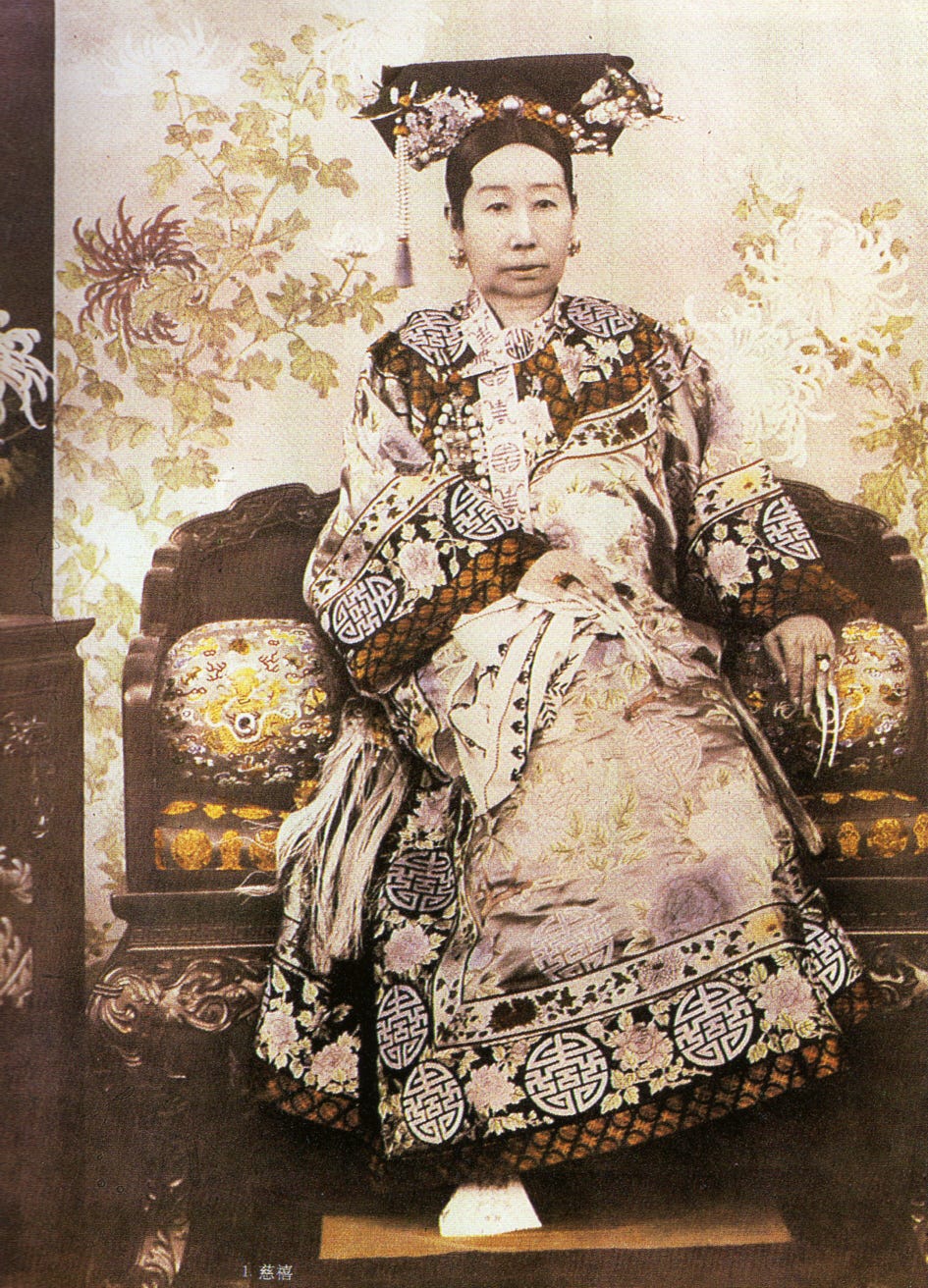
.jpg)
:max_bytes(150000):strip_icc():format(webp)/GettyImages-101683494-5b928684c9e77c008285ae5e.jpg)

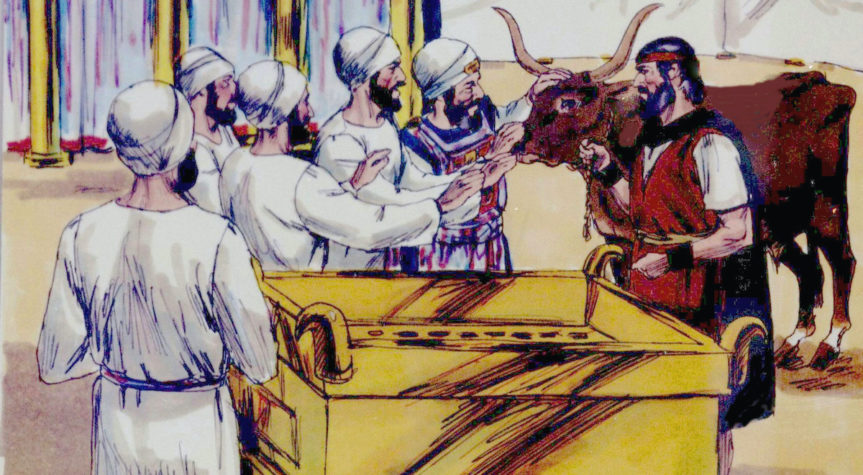
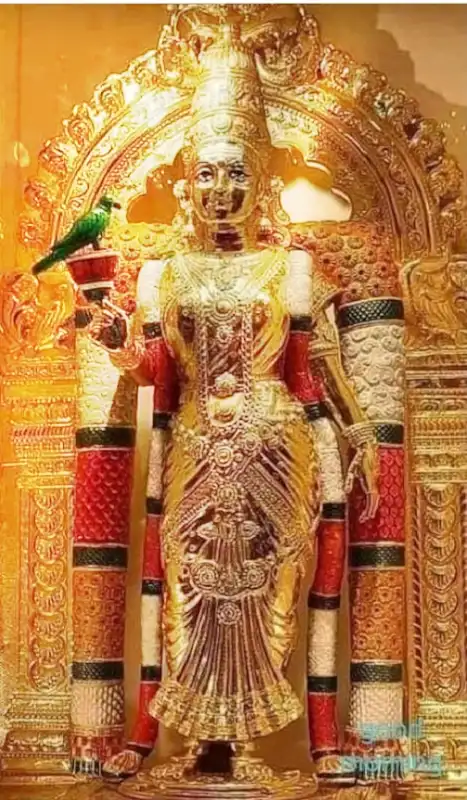
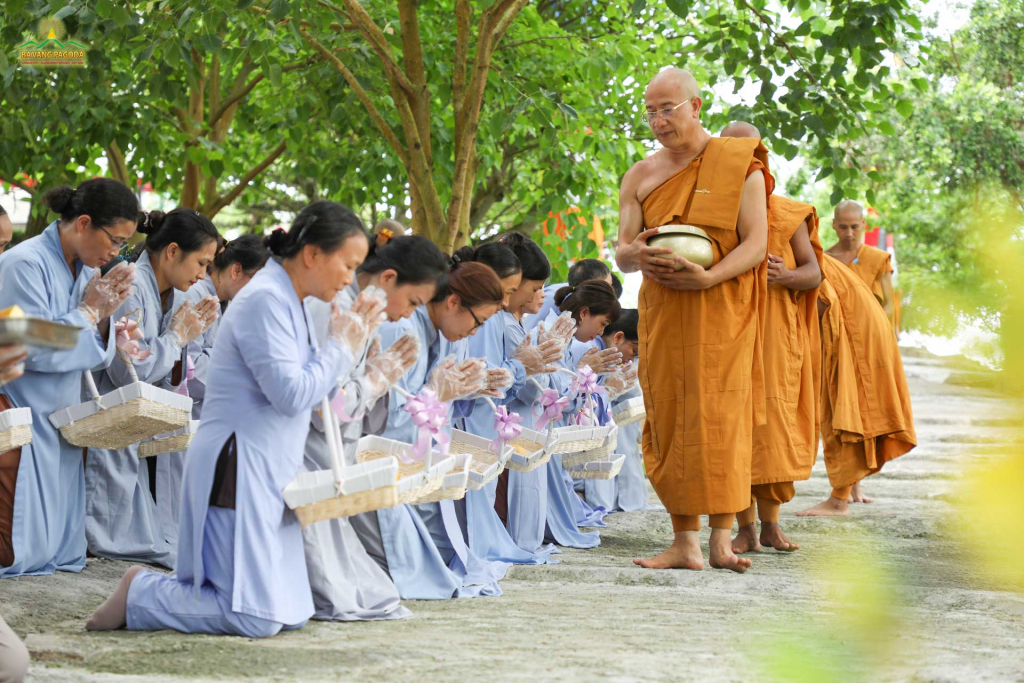
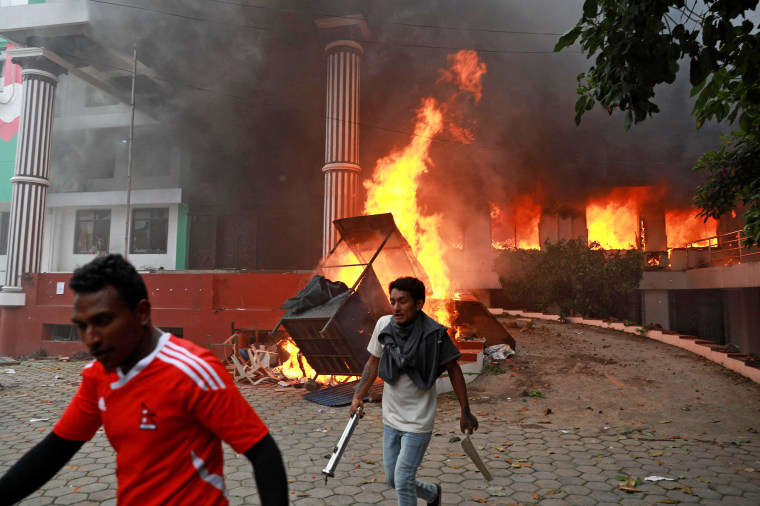
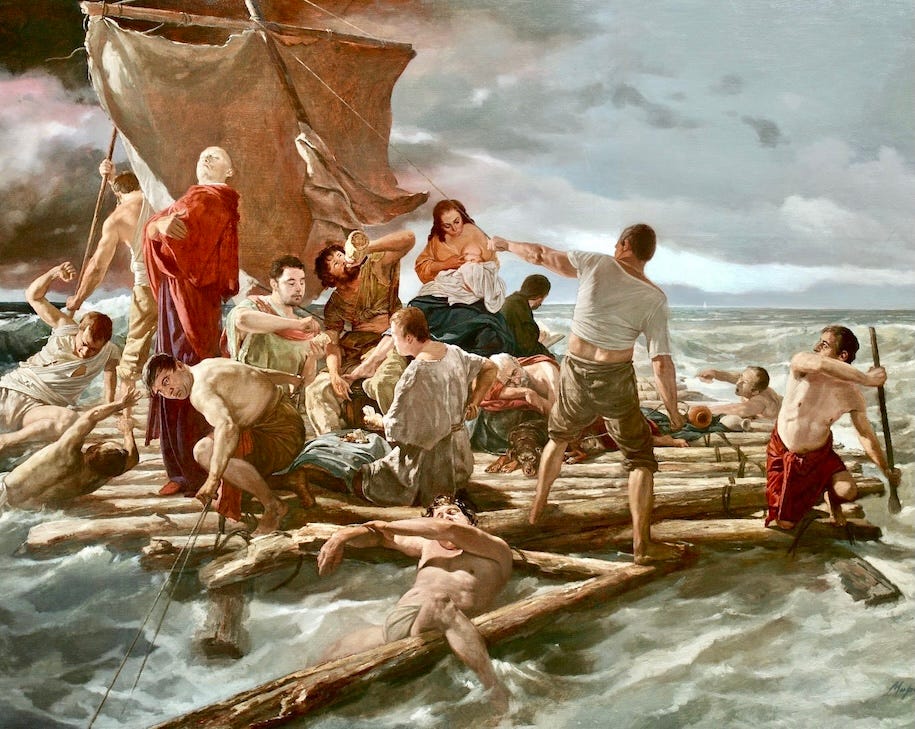
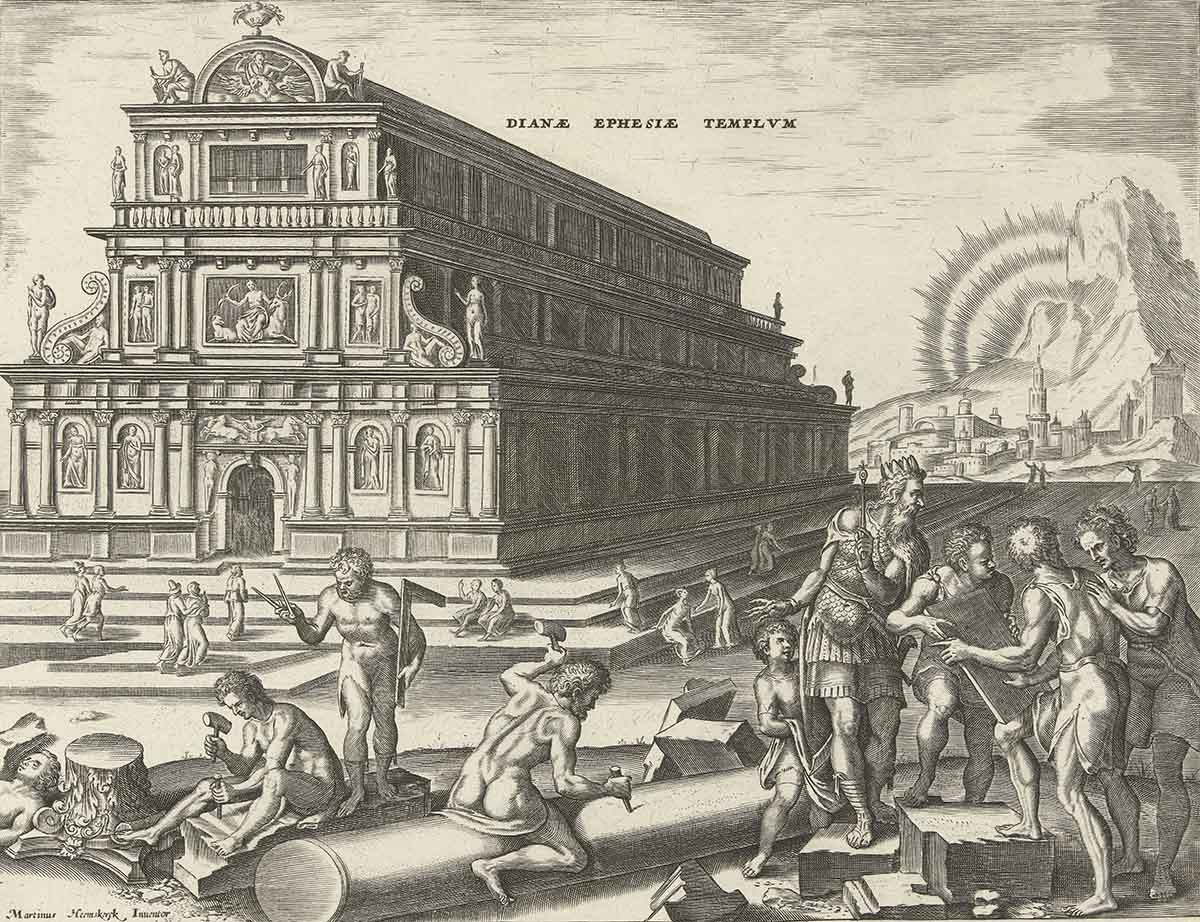


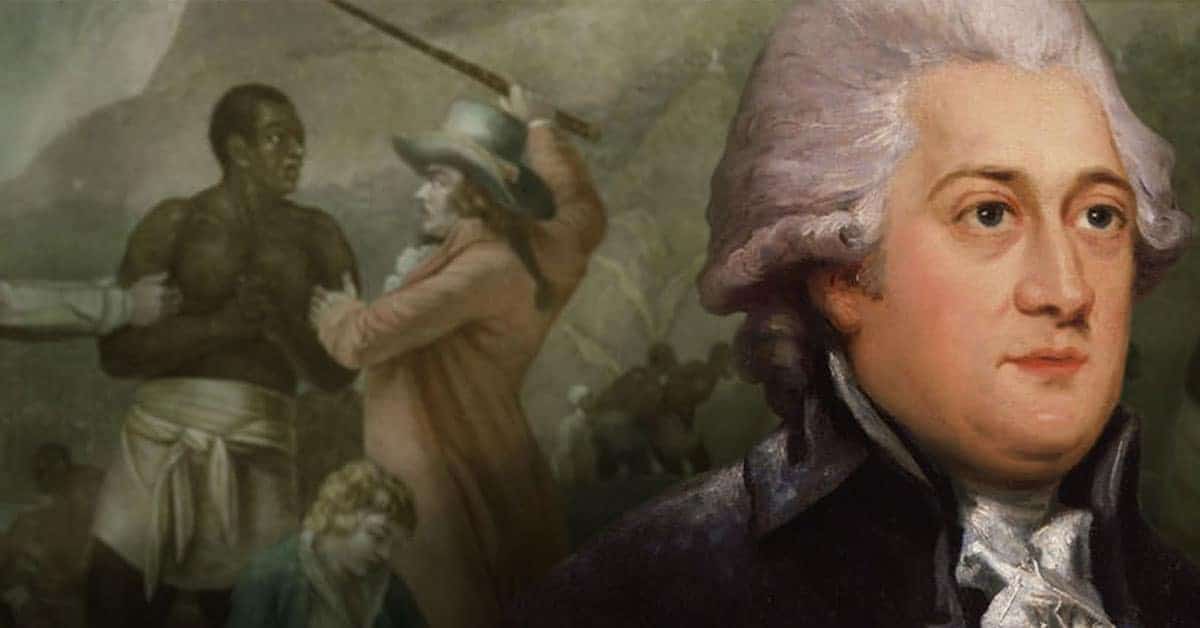


_2014-04-10.JPG)
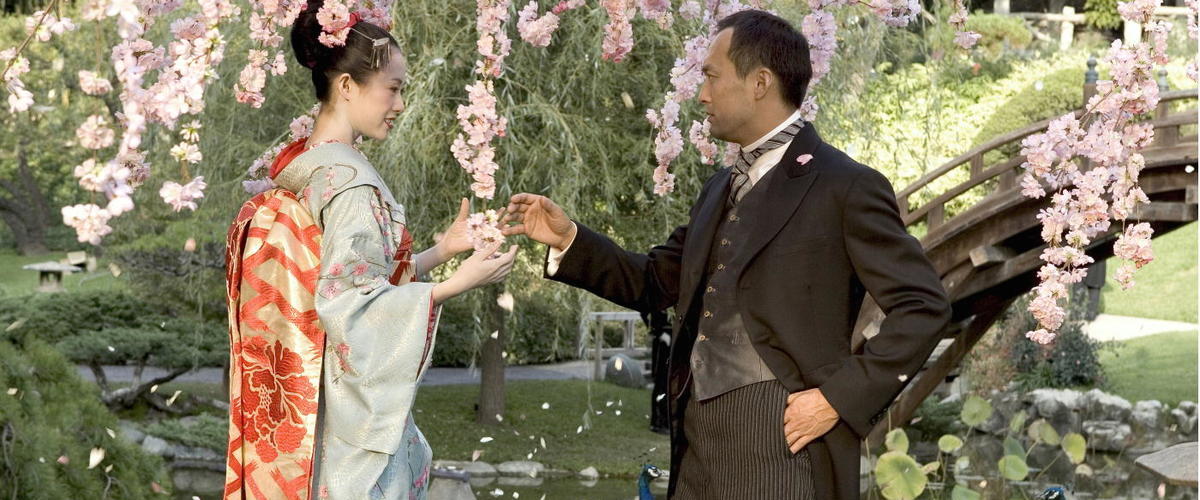



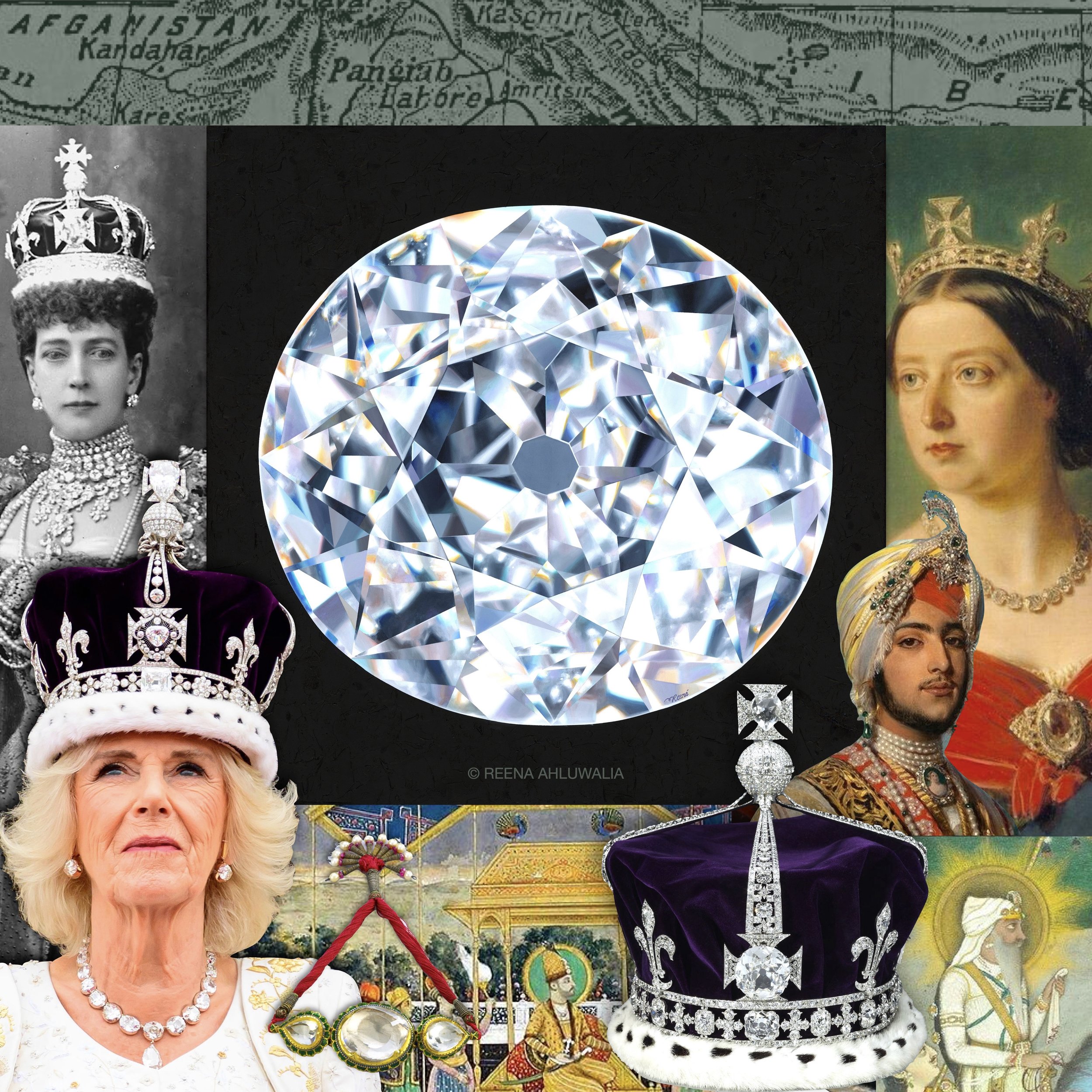


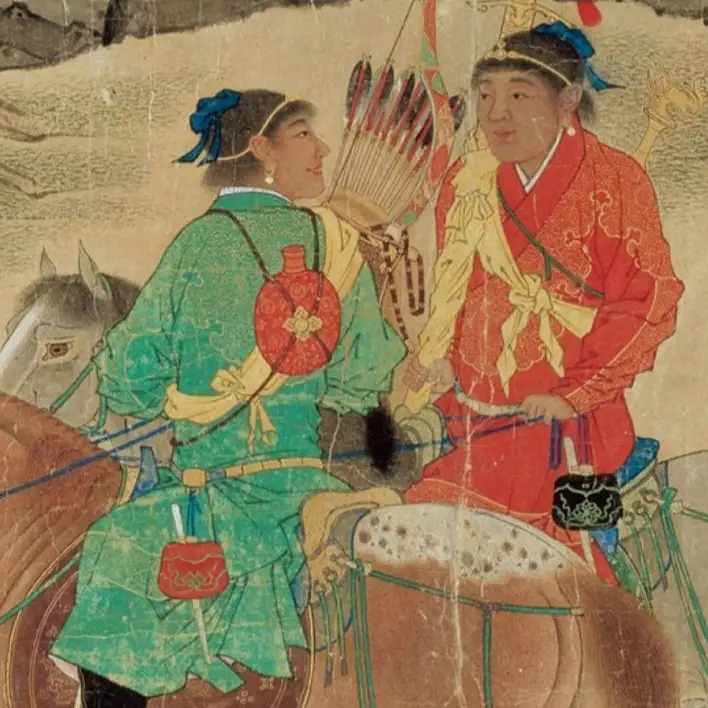
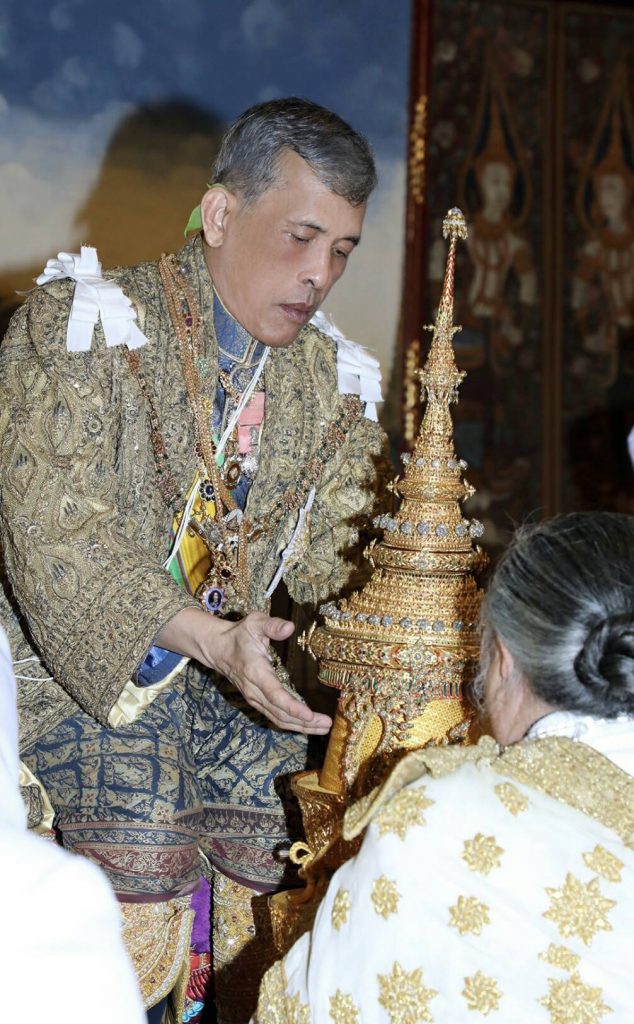



.jpg)


 Same entities who preached equality but also the same group who formed their own political hierarchies and dynasties. There is no such thing as equality in politics. Only the fittest, Noble, and well experienced( and sometimes the vilest).
 . Besides which is more likely to happen?



 Critics, posers or bashers are just like the mythical Vampires of old lore. They can only enter your house (or life) once you invite them or let them go through the door.
 :
: