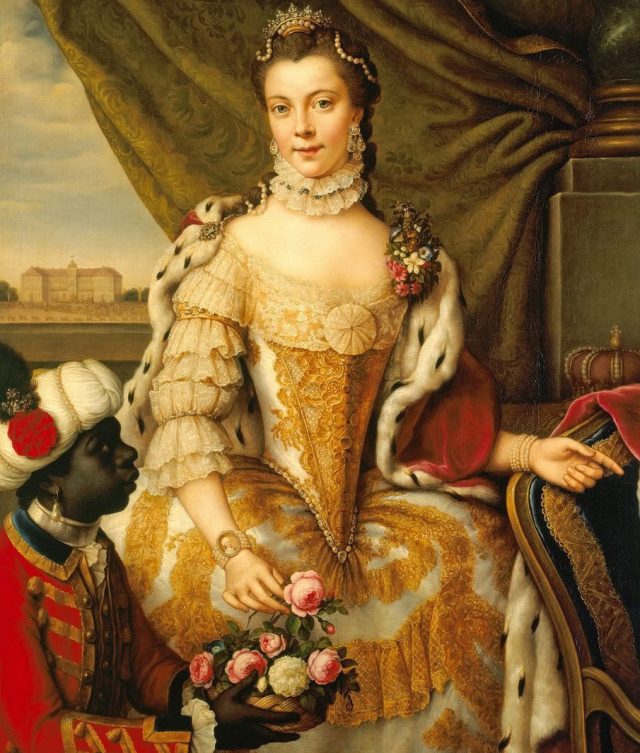
Shemuel Gallardo Vivar is a Filipino Constitutional monarchist (Pro-Constitutional monarchy), aristocrat & conservative (Moderate conservatism). Admin of the Facebook page, Pilipinas: Mga Katutubong “Dugong Bughaw”. (PMKDB) Shem served in The Royal house of Sulu (under the reign of The 35th Sultan Muedzul Lail Tan Kiram & Heirs of Sulu) as one of the “OSMA” (Official Social Media Admins) from September 7, 2022 to April 29, 2026. Shem is also a CulinaryGrad, Humss12grad, Pre-Colonial Advocate, LGBTQIA+ member & admirer of Animist-Hinduist-Buddhist arts history philosophy heritage & etc. A descendant of The Vivar Clan of Kamaligan (also spelled as “Camaligan” or “Kinamalig”. aka Camalig) & Pinag Gubatan (also spelled as “Guinubatan” or Guinobatan), Albay of Las Islas Filipinas. A line of Catholic Maguinoo (nobility) or Catholic Rajahs (Kings) or Datus (Princes) according to their family (father’s side of the family that is believed to have Spanish blood. A “Mestizo” meaning ‘a person of mixed race, especially one of “Indio” or Indigenous and Spanish descent’) Oral history.
About: Page1 is about “The Importance of Monarchism including Asian and Western institutions (Western culture).’ The Page 2 is about ‘Dangers of Wokeism, Communism, Socialism, and Atheism.” Also included is “The Royal Sultanate of Sulu and North Borneoand why I chose to leave the institution. Featuring: Being an Otrovert and Centre-Right (Moderate Conservative) Constituitonal Monarchist in a world governed by cancel culture and many forms of mob rule or extremism (far-left and far-right) and partisanship.”
Part 1: A commitment to the Heavenly Mandate (天命 Tiānmìng) And Divine Right (Jus Divinum)….
Our Lady of Salvation Nuestra Señora de Salvación de Joroan
The original image of Our Lady of Salvation venerated in Joroan, Tiwi, Albay, Philippines
Soul being saved from Hellmouth, Child Jesus with a flaming heart, angel offering a basket of hearts
The Prayer…
My Prayer for this country:
“Hoping that the unity of the islands will be maintained because our Philippine heritage and history have transcended boundaries, tribes, dialects, and languages. May the efforts of the Principalías, the Commonwealth, and the Republic not go in vain. May the leaders and their future elected rulers reform themselves. May they advocate for reform and unity and not be beholden to their respective political colors. Nuestra Señora de Salvación de Joroan, Pray for us! ”
-Shemuel Gallardo Vivar
Photo: Map of Pre-Colonial Philippines by Maharlikan_ and DeliriumMaps
The Era of Royalty and Aristocracy:
The Philippine Archipelago is composed of different Kedatuan (Principalities or Minor Princely Monarchies) and Kerahaan (Major Kingdoms). During the Spanish colonial era, these clans of Nobility (or Aristocracy ) and Royalty were later transformed into the “Principalía” (rulership of chiefs). The Principalía were the hispanized aristocracy of Las Islas Filipinas. The Catholic rajas (kings) and datus (princes/lords) enjoyed many hereditary privileges, such as the following:
1.) Tax Exemption: They were exempt from paying the Tribute (colonial taxes) and exempted from the Polo y servicio (forced manual labor).
2.) Social Prestige: They were legally entitled to use the prestigious title of Don (Lord) or Doña (Lady).
3.) The class was composed of those who held municipal government posts, such as the elected gobernadorcillo (town mayor/administrator) and hereditary cabezas de barangay (village heads).
4.) Right to own and preserved their former Dominions or Realms also known as the Haciendas (landed estate, plantation, or ranch).
5.) See also Maura Law May 19, 1893. Here: May 19, 1893
Spain issues a decree, known as the Maura Law, reforming municipal governments in the provinces of Luzon and the Visayas. This is the most important single place of Spanish legislation touching on local governments. Read here: https://kahimyang.com/…/today-in-philippine-history-may…
PRESENT: During the American Period these aristocrats with landed estates are abolished and most of their lands or Mayorazgo (a privilege allowing an individual to entail his estate so that his property, real or personal, could be passed on intact to a successor) of the former ruling hidalguía or Hidalgo (nobility) or the aristocracies are nationalized or in some instances bought by the state. These large parcels of land will later be fully unified by the Americans (because The Spanish Empire before ‘Treaty of Paris (1898)‘ failed to subdue the “Monarchy” (or Monarchies and various Principalities of Mindanao and Sulu) and be turned into newly formed region or provinces. As of this day, the prohibition against titles of nobility in the Philippines is enShrined in Article VI, Section 31 of the 1987 Constitution , which explicitly states: “No law granting a title of royalty or nobility shall be enacted.”
My Wordpress Journal Entry: ‘Why the History of South East Asia Stays With Me…’
“I didn’t think history could feel personal until I started reading about the events that happened in different parts of Southeast Asia. It’s the stories of Asian history that always get to me. A king signing a treaty he knows will hurt his people, just to buy them one more year of peace and independence. A mother teaching her kid to write in a Script that colonizers tried to erase. Farmers on a mountainside in the rain, figuring out how to make rice grow where it shouldn’t. None of them were famous, but they kept going anyway.
This place has been pulled in a hundred directions. Chinese traders, Indian priests, Arab sailors, Dutch soldiers—all of them left something behind. And somehow the people here took those pieces, wove them together, and made them into something new. You see it in the food, the language, the way Temples and Mosques are built to complement the aesthetics of the new rulers.
What I love about asean countries and their heritage and histories is that their tales are not yet finished. In every generation, someone finds a letter, a song, a story, or an artifact that suddenly changes the whole picture. It feels alive, like the people in it are still moving, conversing, and still fighting not to be forgotten.”
-Words by Admin Shemuel Gallardo Vivar. May 21, 2026
“The outcome of most revolutions, populism or mob rule (Demagoguery) throughout its history can do more unexpected damage. We need educated voters that will vote to remove these individuals in power & not torches or sickles. ALL LEGITIMACY ARE BASED ON SOME SORT OF SOCIAL CONTRACT. A BARGAIN BETWEEN THE RULER AND THE GOVERN. INSTEAD OF ADVOCATING FOR ANARCHY (FRENCH, MAO, DERG OR ETC.) REVOLUTIONS WE MUST STILL CHOSE THE MORE PEACEFUL AND VIABLE OPTION…THE LOT…AKA “THE BALLOT”. USE UR RESPECTIVE RIGHTS TO CAST THE LOT (VOTE) TO DETHRONE THOSE IN POWER.” – @shemuelgallardovivar888 sultanateofsulu.org sgv.ecseachamber.org www.suluarbitration.com revolutions frenchrevolution floodcontrol pilipinas ph
Mandate of Heaven is one of the oldest political institutions in human history, with its roots stretching back over 5,000 years to the dawn of organized civilization. The concept emerged from prehistoric tribal chieftainships as early agricultural societies needed centralized leadership for survival, defense, and managing large-scale projects, with early records dating back to Mesopotamia and Ancient Egypt around 3100 BCE.
Here is a breakdown of the age and evolution of monarchism:
Neolithic Beginnings (c. 9000–3000 BCE): The idea arose during the “farming revolution,” where tribal leaders and shamans evolved into kings as societies became wealthier and more sedentary.
Ancient Civilizations (c. 3000 BCE–500 BCE): Monarchs were firmly established as rulers, often identified as divine or godlike, such as Egyptian Pharaohs. The first dynasty of Egypt, unified by Narmer, dates to around 3150–3100 BCE.
Classical Antiquity (500 BCE–500 CE): While the Roman Republic (509 BCE) and Athenian democracy (500 BCE) began to challenge the idea, Monarchy remained strong elsewhere. The 4th-century BCE Hindu text Arthashastra laid out the ethics of monarchism.
Divine Right (1500s–1700s): The concept evolved into the “Divine right of kings,” where European monarchs claimed their power directly from God. In Asia most monarchies are believed to be founded by Demigod dynasties (such as The Shah dynasty of Nepal. Pictured below).
Modern Era (1800s–Present): While numerous monarchies were abolished following the French Revolution and World War I, many evolved into constitutional monarchies where the monarch serves as a symbolic Figurehead.
Key Historical Data Points:
Oldest Recorded Monarchies: Narmer of Egypt (c. 3100 BCE) and Enmebaragesi of Sumeria (c. 2600 BCE) are among the earliest evidenced monarchs.
Oldest Ongoing Dynasty: Tradition holds that The Yamato Dynasty in Japan began in the 7th century BC, though scholarly consensus points to the 5th or 6th century AD. Yamato dynasty is believed to be descended from Emperor Jimmu (pictured above), the heir of Divine Sun Mother Goddess Amaterasu Ōmikami.
Etymology: The word “monarch” appeared in English in the mid-15th Century, but the concept of monarchia (Greek for “ruling of one”) is over 2,000 years old.
Refuting Misconceptions About Monarchism
The Royal Edge: Why Monarchs Are More Responsible With Power
The True Reason Why Monarchies Got Overthrown
Everything You Were Taught About Medieval Monarchy Is Wrong
Why Monarchy Is The Best Form of Government
Why Monarchy Is Best – Common Objections Answered
Why Monarchs Are Better Than Presidents (and Prime Ministers, Chancellors and etc.)
Why God Prefers Monarchies (Traditional Catholicism)
In the De regno, ad regem Cypri, an unfinished work, Thomas Aquinas planned to discuss two topics: the origin of kingly government and the things which pertain to the office of a king. In other words, it was to be both theoretical and practical.
The idea of the origin of kingly government was not to be a historical discussion; rather it encompasses the problem of the rational “origin” of monarchy. Thomas’ intention is to answer the question, “Why should one man in a given society be set over all other men.” The theoretical section of the treatise also contains a long “digression” on the reward of a king who performs his duty well and, correspondingly, on the punishment of a tyrant who fails to do so.
In Book Two, Aquinas starts by noting that the right practice of royal government is to be discovered by studying the model of God’s foundation of the universe. But he also turns to the ecclesiastico-political teaching on the relations between the two powers; it becomes a treatise on how a king in Christendom should govern by being subject in spiritual matters to the “divine government administered by priests.” The final section of Book Two deals with the monarch’s duty particularly in regard to the foundation of a kingdom.
The original printed Latin editions have proved too deficient to be the sole basis of this translation. Fr. Eschmann made a minute revision of the first translation against the readings of the manuscripts. The result is a reliable English version of Aquinas’ own synopsis of his political notions, with a sufficient introduction, a list of relevant variants in the manuscripts, an appendix of parallel texts from other writings of Aquinas, and a useful bibliography. Link: https://www.goodreads.com/book/show/1674457.On_Kingship_to_the_King_of_Cyprus
Photo: St. Thomas Aquinas, Panel of a 15th-century altarpiece
IN SHORT, ST. THOMAS AQUINAS “DE REGNO” (ON KINGSHIP) is about…
De Regno (or On Kingship) is a political treatise written by St. Thomas Aquinas between 1265 and 1266 for the King of Cyprus. It explores the origins of government, arguing that monarchy is the best form of rule—when directed toward the common good—and discusses how to prevent it from becoming tyranny
Key Aspects of De Regno:
The Necessity of Rule: Aquinas argues that because humans are social beings needing to work toward a common end, a governing power is essential to maintain unity and guide them, similar to how the soul rules the body.
Best vs. Worst: He asserts that monarchy is the best form of government, but if corrupt, it becomes tyranny, which is the worst.
Purpose of the Ruler: The primary duty of the ruler is to ensure the “common good” of the realm.
Influence of Philosophy and Faith: Aquinas draws on Aristotelian philosophy and Christian theology to define the duties of a king, emphasizing that a just king must serve God
IMPORTANT NOTE: The text was left unfinished but serves as a key text on Aquinas’s political philosophy and the Christian understanding of civic authority.
AI (Artificial Intelligence): Other Ideas That Shaped Monarchism…
1.) Why Socrates hated Democracy (aka Demagougery/Populism or Mob Rule):
Socrates viewed Athenian democracy as a system that granted too much power to the uneducated populace, making it vulnerable to manipulation by demagogues and leading to poor decisions. He argued that voting is a skill requiring wisdom and knowledge, comparable to operating a ship, and that electing leaders should be the domain of specialists rather than the unlearned. Socrates was pessimistic about rule by the crowd, fearing that it would lead to societal “shipwreck” through ill-informed choices and a corruption of the common good.
Socrates’sCore Arguments Against Democracy
Voting is a skill, not a right:
Socrates believed that participating in government requires specific knowledge and expertise, much like being a skilled sailor or a captain. He argued that simply allowing everyone to vote, regardless of their understanding of complex political issues, was irresponsible.
The tyranny of the majority:
He worried that a system based on majority rule could lead to the masses making foolish decisions based on emotion or superficial appeal, rather than on rational judgment or informed understanding of the issues.
Vulnerability to demagoguery:
Socrates was deeply concerned that democracy provided an opening for “demagogues”—political leaders who use charisma, prejudices, and false promises to gain power by manipulating voters.
Rule by the uneducated crowd:
He felt that governing should be the work of specialists who possess the necessary wisdom and knowledge to interpret complex issues and make sound decisions for the state.
The Ship Analogy
A central analogy used by Socrates, and famously detailed by his student Plato, likens society to a ship at sea. He questioned who should be in charge: a skilled and trained captain or a random passenger chosen by vote? For Socrates, democracy was like letting untrained, uneducated individuals navigate a vessel through a storm; it was bound to lead to disaster.
Historical Context
Socrates was critical of the Athenian democracy of his time, and his openly antidemocratic views contributed to the suspicion that led to his conviction and execution by a democratic process.
2.) Plato proposed the forms of government to illustrate how justice in the state reflects justice in the individual soul, arguing that a just society, like a just soul, is one where reason rules. In his book The Republic, he identified five forms: aristocracy, which he considered ideal; timocracy, rule by the honorable; oligarchy, rule by the rich; democracy, rule by the people; and tyranny, rule by a single despot. Plato advocated for aristocracy, led by wise philosopher-kings, as the best form because it ensures that reason, rather than desire or wealth, governs the city.
Why Plato proposed the forms of government?
To define the just state:
Plato’s primary goal was to understand what constitutes a just city and, by extension, a just individual. By examining the different forms of government and their decay, he sought to define the perfect political state.
To show the relationship between individual and state:
He believed that the structure of the state mirrored the structure of the human soul. The ideal state, with its ruler possessing reason, corresponds to the rational part of the individual.
To critique contemporary governments:
Plato, through the character of Socrates, critiqued existing forms of government like democracy. He saw democracy as flawed because it was susceptible to the whims of the masses and could lead to instability and the elevation of persuasion over truth.
The five forms of government and their critique:
Aristocracy (Ideal):
Rule by the best and most virtuous, specifically philosopher-kings who are guided by reason and wisdom.
Timocracy:
A government where honor and military valor are the primary values, eventually leading to a preoccupation with wealth.
Oligarchy:
Rule by the rich, where wealth becomes the sole qualification for power and can lead to social and economic inequality.
Democracy:
Rule by the people, which Plato viewed critically for its potential to descend into chaos and mob rule, prioritizing individual freedom to an excessive degree.
Tyranny:
The worst form of government, resulting from the degeneration of democracy, where a single ruler exercises absolute power.
3.) Thomas Hobbes wrote Leviathan (published in 1651) in response to the political instability and fear of the English Civil War (1642-1651) to advocate for an absolute sovereign to impose order and prevent a “state of nature” where life would be “solitary, poor, nasty, brutish, and short”. He argued that individuals should enter a “social contract” to create a powerful, centralized government, the “Leviathan,” in exchange for peace and security.
Context: The English Civil War
Hobbes witnessed the political and religious violence of the English Civil War, which led to the beheading of King Charles I and widespread fear.
This period was characterized by uncertainty and conflict, with competing interests between Parliamentarians and Royalists vying for power.
The State of Nature
Hobbes believed that without a strong government, humans would exist in a “state of nature” where they are equal but driven by self-interest.
In this state, life would be a perpetual state of war, defined by “”continued fear and danger of violent death,” leaving no room for industry, agriculture, or society.
The Social Contract
To escape the “war of all against all,” Hobbes proposed a social contract in which people voluntarily surrender their individual freedoms and power to an absolute sovereign.
This sovereign, the “Leviathan,” would then have total authority to enforce laws and ensure peace, preventing the descent into chaos.
The “Leviathan” as Government
The “Leviathan” ( Leviathan (Hobbes book) is a metaphor for a powerful, unified, and absolute government that acts as the head and body of the commonwealth.
This powerful state was necessary to maintain order and provide security, which Hobbes believed was essential for human well-being and the avoidance of societal collapse.
4.) Niccolò Machiavelli wrote The Prince in 1513 as both a pragmatic job application to gain favor and employment with the new Medici rulers of Florence, and to provide a realistic guide for rulers, like Giuliano de’ Medici, to achieve and maintain political stability and power, especially in a fragmented and conflict-ridden Italy. He sought to offer guidance based on the “effectual truth” of how politics was actually practiced, rather than on idealized notions of how rulers should act, using his own diplomatic and political experiences as a source of practical advice.
Motivations for writing The Prince?
A Job Application:
After the Medici returned to power in Florence in 1512, Machiavelli, a former diplomat, found himself sidelined and exiled. He wrote The Prince as a way to demonstrate his political usefulness and regain a public service position.
A Handbook for Rulers:
: Machiavelli intended The Prince to be a practical guide for governing, a departure from earlier works in the “mirror for princes” tradition that focused on ideal rulers and virtues. He aimed to provide a “handbook for rulers” focused on maintaining power in the real world, not in a perfect or imaginary state.
Political Stability for Italy:
Italy was a collection of independent, often warring states, and was subject to foreign influence. Machiavelli believed that a strong, united Italy was necessary and suggested that the ruler who followed the principles in The Prince could bring stability and repel foreign powers.
Political Realism:
: Machiavelli’s experiences as a diplomat gave him firsthand knowledge of political maneuvering and the chaos of his time. He wanted to write about the “effectual truth” of politics—how power was actually gained and kept—even if it meant employing immoral acts.
Context and Influences:
The “Mirror for Princes” Genre. The Prince is part of a long tradition of educational texts that offer advice to rulers.
Political Chaos in Italy:
Machiavelli’s work was a product of the intense political conflicts and foreign invasions that plagued Italy in his lifetime.
Real-World Experience:
His extensive experience in Florentine politics and diplomacy informed his pragmatic approach to statecraft and his focus on effective leadership.
____________
POEM
Monarchism’s Enduring Legacy
by Shemuel Gallardo Vivar (Part2)
_________________
In the realms of politics, where elected ones run amok,
A steadfast weight holds, a sovereign decree.
Divine ideals, a guiding star,
Shaping history, a heritage so light.
Constitutional monarchs, a symbol of unity,
Absolute crowns, a legacy of stability.
Through global tides, they stand as one & wide,
A bulwark against the waves of change, began.
In times of upheaval, they provide a connective bridge,
A unifying force, across the crownlands.
Their heritage, a treasure to foretold,
A continuity of tradition, forever to uphold.
Why destroy palaces that have stood the test?
Why tear down castles that built a nation’s best?
Monarchies, a symbol of national pride,
A connection to the ancient, where elegance are firstly & truest reside.
In a world of flux, they offer a steady gaze,
A reassuring presence, through life’s maze.
Their relevance, a beacon in darkness,
Guiding nations, through the blight caused by the degenerated rebellious reds.
So let us cherish, these monarchies of old,
A legacy of greatness, forever to be retold.
For in their continuity, we find our strength,
A unity of God’s purpose, a nation’s enduring majesty.
Crowns & Thrones: Types of succession of Monarchist Nation-States. by Shemuel Gallardo Vivar’s Journey.Youtube (If you’re using laptop/PC just Click full screen to see video clearly)
Why The French Revolution Was Worse Than You Thought -Pax Tube
Citations regarding PAX TUBE’s Explanation regarding HISTORICAL FACTS THAT SUPPORTS HIS ARGUMENTS IN THE YOUTUBE VIDEO: ‘Why The French Revolution Was Worse Than You Thought..’ See below…
“The French Revolution is often portrayed in the West as a case of the oppressed masses rising up against a tyrannical monarchy, nobility, and clergy. This narrative is often backed up by films, history textbooks, and even video games. But the truth is the reality of the French Revolution is much more complicated that. In reality, the French Revolution took a flawed system and turned it into a monstrosity that was much worse. In this video on Pax Tube, I explain why The French Revolution was worse than it is often portrayed, and how its flawed philosophies led to the Reign of Terror and more. Listen in for a lesson about one of the most important and controversial events of modern history!” -words by PAX TUBE.
Citations by Pax Tube:
Citations: ‘The French Revolution’ by Hilaire Belloc ‘Citizens: A Chronicle of the French Revolution’ by Simon Schama ‘Causes of the French Revolution – Encyclopedia Britannica’ https://www.britannica.com/place/Fran… ‘The Long and Short Reasons For Why Revolution Broke Out in France in 1789’ by Swansea University Historians https://www.swansea.ac.uk/history/his… ‘Catholic Theology and the Enlightenment’ by Ulrich Lehner https://tinyurl.com/mpvmcvxa ‘The DeChristianization of France During the French Revolution’ by Alberto M. Piedra https://www.iwp.edu/articles/2018/01/…
What is the difference betwwen reference and citation? Citations are brief markers within the text (e.g., author/year) indicating a source, while references are the full bibliographic details listed at the end. Both are required to avoid plagiarism, with citations serving as pointers and references providing the location info
French Revolution: Marie Antoinette Was Not An Evil Monarch
Why Democracy Fails – Ignorance Outnumbers Wisdom
Feudalism and Capitalism
Why Monarchy Is Best – St. Thomas Aquinas
Tyrannical Monarchs And Overthrowing Them – St. Thomas Aquinas
‘Monarchism’s enduring legacy’ by Shemuel Gallardo Vivar
The Facts Regarding ‘Mandate of Heaven’ and ‘Divine Right To Rule’.
Photo: According to Hindu tradition, Prince Krishna was born to Devaki and her husband Vasudeva, members of the Yadava royal family of Mathura. However, to protect him from his tyrannical maternal uncle, King Kamsa, he was smuggled away at birth and raised by the foster parents Nanda and Yashoda in a community of cowherds. As an adult, Krishna returned to Mathura, overthrew Kamsa, and reinstated the rightful king. He eventually established his own kingdom in Dvaraka, where he ruled as a king, though he is frequently referred to and revered in a princely and heroic capacity. The Mahabharata narrates the events before, during, and after the Kurukshetra War, a war of succession between two groups of princely cousins, the Kauravas and the Pāṇḍavas. It contains philosophical and devotional material, such as a discussion of the four “goals of life” or puruṣārtha . Krishna’s role as an adviser and charioteer of Prince Arjuna is one of the striking feature of the story. Krishna is a major deity in Hinduism, widely revered as the eighth Avatar of Lord Vishnu and often worshipped as the Supreme Being. He is the God of compassion, tenderness, and love, celebrated globally through festivals like Krishna Janmashtami.
The Mandate of Heaven and Divine right of Kings…
A.) The Mandate of Heaven
Photo:
The Mandate of Heaven (Tianming) is a Chinese concept legitimizing a ruler’s power based on their moral fitness and divine approval.
– *Concept or Goals*: A ruler has divine approval as long as they govern wisely and justly. If they fail, the mandate is withdrawn, and rebellion is justified.
– *Positives*:
– Provided a moral check on rulers
– Legitimized change of dynasties
– Emphasized the ruler’s responsibility to subjects
– *Practical justifications*:
– Natural disasters or rebellions were seen as signs of lost mandate
– Rulers needed to maintain order and prosperity to keep the mandate
– Transferred power to virtuous leaders, theoretically
– *Eternal contributions*:
– Shaped Chinese governance and political philosophy
– Influenced East Asian monarchies (Korea, Vietnam)
– Emphasized accountability of rulers to people and moral principles
Mandate of Heaven – How Dynasties Rise and Fall
B.) The Divine Right
The Divine Right of Kings is a European monarchist concept where a ruler’s authority comes directly from God. A claim where legitimacy can’t just be taken over by everyone (in contrast to the idea of Tianming)
– *Concept*: Monarchs are God’s representatives, answerable only to God.
– *Positives*:
– Provided stability and legitimacy to monarchies
– Unified countries under one ruler
– Supported hierarchical social order
– *Practical justifications*:
– Rulers claimed absolute authority, suppressing opposition
– Used to consolidate power and centralize governance
– Often linked to religious institutions
– *Eternal contributions*:
– Influenced European monarchies and governance structures
– Shaped concepts of sovereignty and state authority
– Impact on modern ideas of constitutional monarchies and separation of powers
C.) Published Studies
Monarchism is a system where a monarch (king/queen/emperor) holds supreme authority, often hereditary.
– Cultural and historical preservation in some nations
The Studies …
Monarchism has been shown to promote unity, stability, and continuity in various studies. Here are some examples:
Examples:
The Compleat Monarchist by Charles Coulombe. “The arguments for monarchy are basically of three kinds: providentialist—monarchy has been the state form most used by the providence of God to further the Christianization of peoples; sacramental—monarchy permits the symbolic clothing of civil authority with the mantle of Christ the Servant-King, thus setting in a most desirable way the ethos of the state; pragmatic— monarchy transcends factions (no one has voted either for or against the king) as well as the ravages of time (the royal institution necessarily considers both conservation of heritage and provision for future generations). In this humorous yet serious book, Charles Coulombe interweaves such arguments with a great stock of monarchist lore, covering an impressively wide range of historical, geographical, and religious instantiations. The overall message emerges clearly enough: royalism, or supporting the Reichsidee, is not so much a sign of political immaturity as a dawning of wisdom.” —from the Foreword by Fr. Aidan Nichols, OP. Buy Here:https://www.amazon.com/Compleat-Monarchist-Charles-Coulombe/dp/196530320X
Bhagavad-Gītā As It Is by His Divine Grace A. C. Bhaktivedanta Swami Prabhupada. The Bhagavad-Gītā As It Is is a foundational Hindu scripture presented as a dialogue between the warrior Arjuna and his charioteer, Lord Krishna, on the eve of a massive war. Authored by A. C. Bhaktivedanta Swami Prabhupada, it serves as a philosophical and spiritual guide for living purposefully, fulfilling one’s duty, and achieving ultimate self-realization. The book Presents a complete edition of the spiritual classic offering a summary of India’s Vedic wisdom. Buy Here:https://www.amazon.com/Bhagavad-Gita-As-Bhaktivedanta-Swami-Prabhupada/dp/0892131233
– *”The King’s Two Bodies: A Study in Mediaeval Political Theology”* by Ernst H. Kantorowicz (1957) explores how monarchies provide stability and continuity through the concept of the “king’s two bodies”, separating the monarch’s physical and symbolic roles. Buy Here:https://www.amazon.com/Kings-Two-Bodies-Medieval-Political/dp/0691020183
– *“Monarchical Influence on Governance: Stability, Tradition, and Modern Democratic Integration”* by Euginio Cedro (2024) highlights how constitutional monarchies balance tradition with modern democratic norms, promoting stability and continuity. SEE Here: https://influence-journal.com/…/influence/article/view/243
Great Examples of How ‘Monarchism’ Changed The Global World and How It Became The Standard for Statecraft (For Better and For Worst Regardless of Popular and Unpopular Opinion, and Imperfections…) for all MONARCHISTS…
Monarchy Explained: How Kings and Queens Shaped Civilization
Absolute Monarchy – How Absolute were they Really?
How Feudalism Rebuilt The West?
Feudalism rebuilt Western Europe post-Roman Empire by creating a hierarchical system of lords, vassals, and serfs, providing stability and security. Key contributions: – Decentralized governance: Localized power structures emerged, adapting to post-Empire fragmentation. – Manorial economy: Self-sufficient estates became economic hubs. – Social order: Defined roles and obligations structured medieval society. – Chivalry and nobility: Influenced concepts of honor and duty. – Eternal contributions: – Shaped medieval Europe’s politics and society. – Influenced land ownership and aristocracy concepts. – Contributed to modern ideas of governance and hierarchy.
Why and How Feudalism Declined in Europe – Medieval History DOCUMENTARY
Trivia: Facts About the Finances of Some Monarchies. Refuting Misconceptions about the funding of known crowns/royal dynasty/royal families…
1.) Why Does Japan Still Have an Emperor? – How Money Works
2.) King of Thailand: the Richest King in the World?
3.) Monarchies vs. Republics: Impact on GDP Per Capita – Wharton Prof. Mauro Guillen
4.) The True Cost of the Royal Family Explained -CGP Grey
Context of ‘The True Cost of The Royal Family Explained by CGP Grey’. Read below…
Topic: Parliamentary Monarchy. Is it expensive? VERDICT: FALSE.
Official Speech by King Charles III: “I surrender the “Hereditary revenues” to parliament in exchange of a CIVIL GRANT/Sovereign grant so that I can do my responsibility as the monarch.” Historical Background: Crown estate are the ancestral lands(inheritance) of King George The Mad. These private lands are voluntarily surrender every Succession(coronation/accession) in exchange of civil grant to fund a head of state’s responsibilities as a monarch. In exchange the government technically get the big percentage of the profit. The parliament or government nor the monarch doesn’t own it. BUT once the monarchy is abolish the current monarch(deposed) or his/her heirs can turned it us a private property. This is the reason why King Charles III renewed the contract. The royal family generate a huge amount of money but these profits from the crown estates/Crownlands are divide in to 2. The big part goes to government to fund the social and security welfare of the British people while the smallest percentage(Civil grant) is allocated to the Windsor Dynasty. This is the most good contract ever made by a Georgian King.
5.) Trivia About European Monarchies…
I. The Austro-Hungarian Compromise of 1867
II. The royal weddings that shaped European history
Semi-Constitutional Monarchy: Blueprint For Success
Why I’m A Monarchist?
__________________
Do you want to become a monarchist? Or do you just want to understand Monarchism? Or are you a public figure with a heart that wanted to save the country using Monarchism and create you’re own dynasty? Well, here’s the books that will surely enlightened you…
______________________
Articles/Books/Write Ups about MONARCHISM…
Other Recommend Reads:
Notable works arguing in favor of monarchy include
Dec 31, 2025. Proposed constitutional amendment by The De Jure 35th Sultan Muedzul-Lail Tan Kiram.
PROPOSED CONSTITUTIONAL AMENDMENT
AMENDMENT NO. ___
Recognition of the Sultanate of Sulu, Its Sovereignty, Territories, Fiscal Rights, Security Forces, and the Right of Self-Determination
Section 1. Recognition and Sovereignty.
The Constitution hereby recognizes the Sultan of Sulu as the Sovereign Ruler of the Sultanate of Sulu, a pre-existing and continuing sovereign polity whose authority predates the Philippine Republic by more than six centuries. The Sultanate of Sulu is acknowledged as a distinct historical, political, and cultural entity whose sovereignty was never lawfully extinguished.
Section 2. Territorial Scope.
The territories historically and rightfully under the Sultanate of Sulu are recognized to include the Sulu Archipelago, Tawi-Tawi, Basilan, the Zamboanga Peninsula, Palawan, and Sabah (North Borneo), without prejudice to peaceful diplomatic, legal, and international processes.
Section 3. Rights Over Land, Sea, and Natural Resources.
The Sultanate of Sulu shall be entitled to EIGHTY PERCENT (80%) of all gross revenues, income, royalties, taxes, and proceeds derived from all land, sea, coastal, offshore, seabed, and natural resources within its recognized territories, including fisheries, minerals, oil and gas, energy resources, ports, maritime routes, and related economic activities.
The remaining TWENTY PERCENT (20%) shall accrue to the Republic of the Philippines as its administrative and cooperative share.
The Sultanate shall have primary authority to manage, regulate, or co-manage these resources. The 80% share is constitutionally guaranteed, automatic, and non-discretionary, and shall not be reduced, delayed, or withheld by any law or act.
Section 4. Share in the National Treasury.
The Sultanate of Sulu shall retain and receive EIGHTY PERCENT (80%) of all national government revenues collected from within its territories, to be released directly and regularly to the Sultanate of Sulu Treasury, exclusively for the welfare and development of its people.
Section 5. Royal Guard and Royal Armed Forces of the Sultanate.
The Sultanate of Sulu shall have the inherent and sovereign right to organize, maintain, and command a Royal Guard and Royal Armed Forces, loyal to the Sultan, for the following purposes:
(a) To protect the Sultan, the Royal Family, and the institutions of the Sultanate;
(b) To safeguard the lives, rights, and welfare of the people of the Sultanate of Sulu;
(c) To defend the land, seas, waters, and territorial integrity of the Sultanate;
(d) To protect the more than six-hundred-year-old Sultanate of Sulu from foreign powers, external aggression, encroachment, or domination, whether political, military, or economic in nature; and
(e) To assist in internal security, disaster response, and public order within its territories.
Such forces shall exist as a lawful expression of the Sultanate’s inherent right of self-defense and preservation, and shall operate in accordance with constitutional principles, customary law, and mutually agreed coordination mechanisms with the Republic of the Philippines, without prejudice to the sovereignty and supreme command authority of the Sultanate of Sulu.
Section 6. Authorship and Intent.
This Amendment is expressly acknowledged as drafted and proposed by the Sultan and the Royal Sultanate of Sulu, in good faith, to restore justice, dignity, security, and historical truth, and to advance the welfare and self-determination of the people of the Sultanate of Sulu.
Section 7. Self-Determination and Separation.
Any failure to honor, implement, or enforce this Amendment—particularly the guaranteed 80% fiscal shares, territorial rights, and the right to maintain protective forces—shall constitute a material breach of constitutional trust. In such event, should continued union no longer benefit the people of the Sultanate of Sulu, they retain the inherent and inalienable right to self-determination, including the peaceful separation from the Republic of the Philippines and the reconstitution of full independent sovereignty. No force, coercion, or suppression shall be used to deny this right.
Section 8. Separability and Effectivity.
If any provision of this Amendment is declared invalid, the remaining provisions shall remain in full force and effect. This Amendment shall take effect upon ratification in accordance with constitutional processes or by mutual agreement between the Republic of the Philippines and the Sultanate of Sulu.
Additional Note: This proposal did not prosper especially after the revocation of Sabah Arbitration award. To grasp the full context of revocation proceed to sgv.ecseachamber.org ‘s Page 2 of 2 and see the PART 39 titled, ‘The controversial US$14.9 billion Sulu arbitration award has been completely annulled and voided by the French legal system and The sign of wisdom…’ Click here: https://sgv.ecseachamber.org/home/
Part 2. Other things that might interest you? The Spanish Empire:
1.) Isabella La Catolica (Isabella The Catholic). Not perfect but not a villain. A visionary during the end of medieval era. A proponent of legal pluralism aka “Mestizaje”. With Reference. Here: https://www.facebook.com/share/v/1AYZrTzzhW/Watch also original below:
2.) The truth about the histories regarding Christopher Columbus & the overlooked benevolence of Spain as the guarantor of indigenous rights. Separating Facts and Fiction. Explained by the Tiktoker Hispanic Empire. With Reference. Here: https://www.facebook.com/share/v/1BqFZV2k3B/Watch also original below...
3.) Topic: Spain just like every civilisations. Not just a foreign intervention but also a collective aspirations (& civil wars) of all civilisations fighting for survival. And why Spain never conquered mexico. With Reference. Here: https://www.facebook.com/share/v/1CjkvvZeqS/Watch also original below…
4.) Topic: The 300 years in Between. From 1521 to 1821 and why it’s important to know and understand. With Reference. Here: https://www.facebook.com/share/v/1H5pt3AjHA/Watch also original below…
The Philippines’ Sulu Sultanate That Dominated Maritime Trade For Centuries | The Mark Of Empire
The Mark Of Empire: Kingdoms Of The Sea – The Legendary Sultanate of Sulu That Ruled The Southern Seas...
26 Jan 2026 by Channel News Asia.
The Other References…
1.) ‘Ruben langs de zuid chinese zee’. The documentary was recently featured in the dutch media (VPRO), often focusing on in depth, personal stories in Asia. Here: https://www.facebook.com/share/p/1Bi81fDx6W/
A documentaryFor the present and future generation of Monarchists in The Philippines.A story of a rise and fall of ‘The Great Russian Empire’ and what will happened when noblese oblige is no longer practiced and is corrupted. An educational overview for those who wanted to create their own crowned governments and also as a warning to all leaders and civilisations to come…
The Romanovs. The History of the Russian Dynasty – ALL EPISODES. Documentary Film. Uploaded by Cine_Hub. English Subtitles. Running time: 6:54:49 (Six fifty-four and forty-nine seconds). Divided in 8 parts.
‘The powerful Rajahs and Sultans of Pre-Colonial Philippines’. written by Justin Umali of Esquire Magazine. Dec 16, 2019.
The Philippine archipelago was a collection of diverse political entities before the arrival of the Spanish.
There is a common misconception that the Spanish “discovered” the Philippines. That, prior to Spanish conquest, the Philippines had nothing but savage indios who needed the civilization of the West to enlighten it.
Of course, we now know just how far that notion is from the truth. We now understand that Filipino culture and society existed way before colonization, and slivers of it sometimes appear in popular culture: A TV show is set during the era or a discussion on pre-colonial heritage pops up now and then.
The fact is, the Philippine archipelago was a collection of diverse political entities before the arrival of the Spanish. One could probably draw comparisons to Ancient Greece with its various city-states, though the truth is a bit more complicated than that. A single article would hardly do justice to describing the full extent of pre-colonial politics, but let’s try to at least get an overview:
The Seafaring Datus of the Visayas
Photo: Si Datu Lapulapu is widely known as a hero who opposed colonization by vanquishing Portuguese explorer Ferdinand Magellanin the Battle of Mactan on April 27, 1521. –Flickr
A lot of what we know of pre-colonial culture and politics comes from the Visayas, mainly thanks to early Spanish sources like Fr. Chirino and Miguel de Loarca. Because the Spanish first landed in the Visayas before settling in Manila, a lot of effort was made to understand the rules of the strange land and its people.
The most prominent of these was by far the Rajahnate of Cebu. Ruling from the central seat of power in Cebu, the Rajahnate was an important trading hub between the Sultanates of Mindanao and the Kingdom of Borneo to the south, the Rajahnates of Luzon to the north, and the Chinese Empire to the west.
The Kingdom ofCebu also had ties with the outside world. Founded by a minor prince of Sumatra, Sri Lumay, Cebu grew to become a major player in the archipelago’s local politics, By the time of Magellan in 1521, Rajah Humabon was the undisputed ruler of Cebu. Some 40 years later, Humabon’s cousin Rajah Tupas met the conquistador Miguel López de Legazpi, and was the last Rajah of Cebu.
Although Cebu was a central polity in the Visayas, it was by no means the only one. Humabon famously had a rival in Lapu-Lapu, who ruled in the island of Mactan. Some sources assert that Lapu-Lapu was even stronger than his rival, on account of controlling a key position in the Visayan trade route.
This would be a common theme, with each island in the Visayas ruled by its own Datu. Chronicles from the time of Spanish arrival talked of dealings with people like Datu Urrao of Samar, Datu Bankaw of Limasawa, and Datu Sikatuna inBohol. Legazpi famously had a blood compact with Sikatuna to signify their alliance. This was the Spanish way: Ally with local Datus when they could and crush them when they could not.
The Spaniards also recorded other major players in the area at the time of their arrival: In the island of Mindoro, was the Kingdom of Ma-I, which had trade links with China as early as 972 CE, while the island of Panay was home to the Confederation of Madja-as, unique in its description as an alliance of local barangays in the area. The (now-famous) Datu Puti was the first known ruler of Madja-as.
The Rich Sultans of Mindanao
Photo:The replica of Agusan image. Titled ‘Golden Tara Monument’, Jose Rosales Avenue, corner Bacolod City Street, Butuan City. The Agusan image (commonly referred to in the Philippines as the Golden Tara due to its earliest and most-common association with, but disputed,[1] identity as an image of a Buddhist Tara) is a 2 kg (4.4 lb),[2] 21-karat gold statuette,[3][4][5] found in 1917 on the banks of the Wawa River near Esperanza, Agusan del Sur, Mindanao in the Philippines,[6] dating to the 9th–10th centuries. The figure, approximately 178 mm (7.0 in)[7] in height, is of a female Hindu or Buddhist deity, seated cross-legged and wearing a richly-adorned headdress and other ornaments on various parts of the body. It is now on display in the Field Museum of Natural History in Chicago.[8][9] –Wikipedia
South of the Visayan islands lies the region of Mindanao, home to the Lumads, the Moros, and the seat of four major powers: the Rajahnate of Butuan, the Sultanate of Lanao, the Sultanate of Maguindanao, and the Sultanate of Sulu.
Butuan was one of the first polities that the Spaniards came into contact with. Chroniclers described the place as so abundant with gold that the houses were decorated with gold. One chronicler even claimed that Rajah Siagu’s alipin had gold jewelry, something unheard of in Europe.Butuanwas regarded to be one of the richest states not just in the Philippine archipelago, but in Southeast Asia.
On the other side of Mindanao were the Muslim sultanates. Islam was first established in the Philippines in 1380 when Muslim traders set foot in the shores of Sulu and Jolo. The Sultanate of Sulu was founded on November 17, 1405, by Sharif ul-Hāshim of Sulu and quickly rose to become a maritime power, with close ties to the greater Muslim community in Mindanaoand the Kingdom ofBorneo. Sulu was rightfully feared by the Spanish for her pirate fleets that controlled the Celebes Sea.
The spread of Islam continued with the rise of the Sultanate ofMaguindanao underSharif Kabungsuwan. Maguindanao was a proud state that was able to resist Spanish colonization, most famously under Sultan Muhammad Dipatuan Kudarat from 1619 to his death in 1671.
Up north, nearLake Lanao, was a confederation ofMeranaostates. The history of the “men of the Lake” was deeply intertwined with Maguindanao: Sharrif Kabungsuwan was the one who influenced them to turn to Islam. The Maranao states eventually formed a sultanate with Balindong Bsar of House Masiu as its first Sultan.
Lanao and Maguindanao crossed paths again thanks to the Spanish. Spanish incursions into Mindanao threatened the Maranao way of life. It was Sultan Kudarat who rallied the men of the Lake into defending against the foreign incursion. The Spanish retreated within months.
The Old Rajahs of Luzon
Photo: A statue of Princess Urduja stands at the Hundred Islands National Park, Pangasinan. Princess Urduja is a legendary 14th-century warrior princess and heroine from Pangasinan, Philippines. Famous for leading a retinue of female warriors and vowing to marry only the man who could defeat her in combat, her story is famously recorded in the travel accounts of the Moroccan explorer Ibn Battuta. -Google
Apart from the Datus of the Visayas, the kingdoms ofLuzon had the most contact with the Spanish, though much less is written about them. Political power in Luzon was concentrated near the banks of the Pasig River, where trade from China made its way across the archipelago.
The major players near the Pasig River were the Kingdom of Tondo (historical polity)and the Rajahnate of Maynila (historical polity). The two states shared a complex relationship, ranging from friendly to at war.An old state that existed as early as 900 CE, Tondo engaged in trade and exerted its influence to as far as modern-day Laguna, Bulacan, and Pampanga through trade and war. The relationship between Tondo and the other polities was less that of a feudal lord and its vassals, and more of an alliance between a senior and lesser partner.
Tondo was ruled by a Lakan who, by the time of Spanish arrival, shared power with the Muslim Rajahnate of Maynila. One of the last Lakans of Tondo was the famous Lakandula, who lost to the Spanish in the fateful Battle of Bangkusay.
Maynila ultimately shared a similar fate against the Spanish, though its Rajahs hoped that their blood relations with the Sultanate of Brunei would save them. In one incident, the “Young Prince” Ache fought with his cousin, the Lakan of Tondo, who was encroaching on territory belonging to Maynila. Ache, exhorted by his mother to keep the peace, went to ask his grandfather, the Sultan of Brunei for assistance. The Sultan gave Ache command of a naval force.
Ache was on his way back to Maynila to exact revenge on his cousin when he came upon the remnants of the Magellan expedition, which he attacked in hopes of expanding his fleet. Ache was captured but was released after paying a high ransom, whereupon he returned to his Kingdom. Not much is known after that incident.
Ache had another brush with the Spanish in the 1570s. Now known as Rajah Matanda, Ache and his counterpart in Tondo, Lakandula, tried to defend their kingdoms against Spanish invasion. Maynila was burned to the ground and the Spanish built Intramuros in its place.
Outside of the Tagalog regions states and polities were just as abundant. The state of Ibalon ruled in the Bicol peninsula and is known as the first Spanish settlement in Luzon. The Epic of Ibalon is still widely known in the Bicol region as a celebration of oral history and a creative blend of fact and fiction.
Going north, Rajahs had a complex relationship with native highland tribes. The Igorot of Benguet frequently exchanged gold with Chinese wares from Pangasinanwhile fighting Ilocanos in Samtoy. Pangasinan, particularly, is home to the legendary warrior-princess Urduja, who was said to have ruled in the 13th century.
There are more states now lost to history before Spanish arrival and thousands more stories from the people who lived and ruled during this period. But what’s important to remember is that we must always look at our past critically if we are to have an appreciation of our Filipino culture and heritage today.
Sources:
Scott, W. Barangay: Sixteenth-Century Philippine Culture and Society. Ateneo de Manila University Press.
Blair & Roberston. The Philippine Islands 1493-1898. University of the Philippines.
Agoncillo, T. History of the Filipino People, 8th ed. Garotech Publishing.
Newson, L. Conquest & Pestilence in the Early Spanish Philippines. Ateneo de Manila University Press.
Royal Sultanate of Sulu and North Borneo
The Ruma Bichara (State Council)
Head of the Sultanate
His Royal Majesty Paduka Mahasari Al-Maulana Ampun Sultan Hadji Muedzul-Lail Tan Kiram ibni Almarhum Sultan Mohammad Mahakuttah Abdulla Kiram The 35th Sultan of Sulu and North Borneo
Bendahara
His Excellency Datu Bendahara Gov. Abdusakur Mahail Tan, Al-Haj, Bendahara of Sulu and North Borneo
Chairman
His Royal Highness Datu Yldon Tan Kiram
Executive Minister
The Honourable Engr. Darwin Sanaani, DCPS
Secretary General and Royal Ambassador
His Highness The Rajah of Tambulian, Datu Sadja Dr. Matthew PajaresYngson, GCPS
Minister for Philippine Government Affairs
His Highness The Rajah of Pata, Amir Bahar of Sulu, Datu Kevin Randolph Carrion Limjoco, RCPS
Ministers of the Ruma Bichara
His Royal Highness Datu Yldon Tan Kiram Hadji Awad Hamid Mr. Elsan G. Tindick Prof. Hadji Sangkulah Tindick Prof. Nurhatab Abdullah Hadji Muddasil Tulawie Abdullah Engr. Nizam Abubakar Abdulla, PhD Prof. Amirul Ahajul, PhD The Hon. Judge Nabdar Malik (ret.) Shiek Jaafar Asgali Col. Darwin Abdullah Lacbao (ret.) Mr. Najib Abubakar Abdulla Hadji Pyzar Mohammad Hadji Alkap Agga Atty. Habib Abderson Alawi Antao Hadji Alnajir Kadil Hadji Abdulgajir Malli Kadil
The Sultanate also has the following Tuan Panglimas(district leaders) representing our people from all over the Sulu Archipelago.
Sulu – Nineteen (19) Panglima
Sabah – Sixty-two (62) Panglima
Zamboanga Peninsula – Ten (10) Panglima
Basilan – Ten (10) Panglima
Tawi-Tawi – Nineteen (19) Panglima
The Panglima in Sulu supporting H.M. The 35th Sultan of Sulu and North Borneo
A passion for Continuity
What is Continuity?
Continuity represents the smooth, uninterrupted progression of events, ideas, or development over time, emphasizing consistency rather than abrupt change. It is essential for stability in history, nurturing growth in human development, and ensuring reliability in systems. Ultimately, continuity bridges the past and future, providing a steady foundation for growth and resilience. History Skills +4
In history, continuity refers to aspects of life, culture, or technology that remain consistent over long periods, surviving amidst surrounding changes. In development, it highlights the cumulative, gradual accumulation of skills and experiences. Whether in personal development or historical context, recognizing continuity allows us to understand how foundational elements persist and shape the present. It acts as the “thread” that binds, creating a cohesive story, structure, or existence. Without it, progress would be disjointed and unstable.
Renovation and restoration?
Why monarchies must be restored? Arguments for the restoration of monarchies, particularly in the context of constitutional monarchy, often center on the desire for stability, national unity, and a check on partisan politics, as seen in historical cases like the 1660 restoration of the English monarchy. Proponents suggest that a monarch, acting as a non-partisan Head of State, can provide continuity and a neutral, symbolic figurehead to represent the nation, often offering a sense of stability during political upheaval.
Continuous Support
What is Noblesse Oblige? Noblesse oblige is a French phrase translating to “nobility obliges,” referring to the concept that individuals with high social status, wealth, or power have a moral obligation to act with generosity, kindness, and responsibility toward others. It signifies that privilege entails duty, requiring elites to serve and protect their subordinates or the less fortunate
Key Rights and Powers of a Constitutional Monarch:
The Right to be Consulted: Regular (often weekly) audiences with the Prime Minister to discuss government business, and receiving daily, confidential state papers.
The Right to Encourage/Warn: Providing confidential, non-partisan advice, experience, and feedback to government leaders behind the scenes.
Ceremonial Functions: Opening parliament, appointing prime ministers (often a formality based on election results), granting titles, and hosting foreign dignitaries.
Royal Prerogative/Reserve Powers: In rare, extreme constitutional crises, the monarch may have the discretion to act against or without ministerial advice to ensure the continuity of government, such as choosing a prime minister when no clear majority exists.
Approving Legislation: Formally signing laws or Orders in Council (promulgation).
Limitations: Constitutional monarchs do not make policy or law and are expected to remain above party politics. Their authority is defined by a constitution or established custom, and failing to act on government advice can risk their position, as seen in historical abdication crises
Project Management
What are the ideal projects of a monarch? The ideal projects of a monarch are traditionally designed to consolidate power, showcase wealth and authority, and establish a lasting legacy, with a focus on public good and national stability. In both historical and modern contexts, these projects often include
Monuments and Palaces: Constructing, expanding, or improving royal residences and monuments (e.g., Versailles by Louis XIV, the Tower of London) that symbolize the state’s power, serve as centers of administration, and act as artistic and cultural hubs.
Infrastructure and Public Works: Developing infrastructure to enhance trade, communication, and economic growth, such as bridges, roads, and ports.
Cultural Patronage: Supporting arts, education, and literature to project a refined image of the court and promote national cultural identity.
Religious and Charitable Works: Building churches, cathedrals, or monasteries to demonstrate piety and defend the faith, as well as founding hospitals or almshouses.
Landscaping and Environmental Projects: Creating large gardens (like the gardens of Versailles) or, in modern contexts, focusing on conservation and ecological stability.
National Defense: Strengthening the military, building forts, and protecting borders to ensure stability and continuity.
Architectural Solutions in a project as an example? Astana Darul Jambangan
The Astana Darul Jambangan (“Palace of Flowers”) was the historic royal palace of the Sultanate of Sulu in Maimbung, Philippines, serving as the seat of power and residence of the Sultans since 1878. It was renowned as the largest royal palace in the Philippines before being destroyed by a typhoon in 1932. Wikipedia +3
Key Details About Astana Darul Jambangan:
Reconstruction: The reconstruction project was supported by local architects, artisans, and officials, including the Armed Forces of the Philippines. Eastern Caribbean-Southeast Asia Economic and Cultural Chamber +4
Location: Originally located in Maimbung, Sulu. A smaller, reconstructed replica was built at Mount Bayug in Talipao, Sulu.
Significance: It serves as a vital symbol of Tausug cultural heritage and royal pride.
Architecture: Known for a grand “Y” shaped staircase, a large gable roof reflecting Malay designs, and wrap-around terraces for cooling.
Current Status: While the original was destroyed, a bamboo replica exists to reflect a 1850s Tausug village. The site is linked to the 35th Sultan, HRM Ampun Sultan Hadji Muedzul Lail Tan Kiram, who was crowned in 2012.
MORE ABOUT US? Go here:
sultanateofsulu.org
Part 4. Other things that might interest you?
The First Religion of the Philippines? | Forgotten Hindu-Buddhism History by Kirby Araullo (Historian)…
Part 5. Other things that might interest you? The Pallanka (Throne) of Sulu by Shemuel Gallardo Vivar
TRIVIA: The Possible Origin of This Tausug symbol is The Palin of Burma. Here you can see the similarity:
What is the story behind ‘The arch Throne’ or ‘The Meccan Throne’ Symbol of Sulu (pictured above) according to Shemuel gallardo Vivar?
According to researcher, aristocrat and former O.S.M.A (Official Social Media Admin) Shemuel Gallardo Vivar, the Arch Throne (known locally in South East Asia as the Pallanka or Palin (throne) ) of the Sulu Sultanateis a profound symbol that bridges the region’s pre-Islamic heritage with its Islamic foundation.
The story and symbolism behind the Arch Throne detail a fascinating cultural shift in Sulu:
Hindu-Buddhist Roots:Before the arrival of Islam, the indigenous Tausugs practiced a culture heavily influenced by Hindu-Buddhist traditions. The throne embodies this ancient, Indianized heritage, which utilized richly carved architectural arches to symbolize divine authority.
Islamic Unification:As Islam began to take root in the archipelago, the Pallanka (the arch-like throne) was adapted to reflect the Islamic faith.
The “Meccan Arch” Connection: In later royal regalia interpretations—often associated with the Meccan or Middle Eastern influences adopted by succeeding monarchs—the arch represents the gateway to the holy city of Mecca. It serves as an emblem of the Sultan’s duty as an Amir ul-Mu’minin (Commander of the Faithful).
Cultural Preservation:Constitutional Monarchist like Vivar highlight the throne to remind the public of Sulu’s rich, layered history. It demonstrates how indigenous Southeast Asian kingdoms seamlessly wove external influences—from Hindu architecture to Arab-Islamic leadership—into their own distinct sovereign identity.
Palin (Burmese: ပလ္လင်; from Pali: pallaṅka, lit. ’couch’ or ‘sofa’) refers to any one of six types of thrones recognized in traditional Burmese scholarship. The palin is an important symbol of the Burmese monarchy and features prominently in Burmese architecture and Burmese Buddhist iconography. The palin is featured on the seal of Myanmar’s Ministry of Religious Affairs and Culture.
Photo:A Palin or Pallanka (or arch throne) seating an image of the Buddhaat Botataung Pagoda.
For scannability and educational reference, the Arch Throne can be broken down as follows:
Derived from the ancient Pallanka thrones used by pre-colonial, Indianized Southeast Asian realms.
Religious Shift
Integrated the spiritual conversion of the Tausug to Islam.
Royal Regalia
Reflects the Sultanate’s status as a sovereign kingdom and the Sultan’s role as a defender of the faith.
Photo: The Arch Throne Symbol aka Palin or Pallanka (Possible land of orgin: Burma. Present day ‘Myanmar’) totally transformed into ‘The Gateway of Mecca’ the 18th century flag of the Sultanate of Sulu to symbolised that Sulu Archipelago as one of the gateway to Islamisation. This black and white flag is according to the description of explorerPierre Sonnerat.[72]
Much later version of The Sulu Sultanate Flag (late 19th century)
Part 6. Other things that might interest you?
‘About my fascinations/My Personal Belief’ by Shemuel Gallardo Vivar. June 10, 2026
A.) MY PERSONAL BELIEF…
1.) are Buddhists “Atheist”?
Not necessarily. While Buddhismis an atheistic religion (because it does not believe in a supreme creator God), individual Buddhists are not always atheists.
Here is how the distinction works:
Non-theistic at its core: The teachings of Gautama Buddha focus on personal enlightenment, mindfulness, and ending suffering, rather than worshipping a supreme being. Therefore, Buddhism as a philosophy naturally aligns with atheism
Belief in supernatural beings: Traditional Buddhism acknowledges the existence of various gods or Devas (see: Deva (Hinduism) ) and spiritual beings. However, these beings are considered mortal, fallible, and subject to karma, rather than omnipotent creators.
Cultural practices: Depending on the region, some Buddhists pray to deified figures or incorporate local folk religions, blurring the lines between a strict lack of belief in gods and theism
Ultimately, an individual Buddhist can be an atheist, agnostic, or believe in other gods—as long as they follow the core teachings known as the Four Noble Truths and the Noble Eightfold Path.
Photo: A Buddhist monk reciting prayers in Thailand
B.) MY FASCINATION…
2.) What is Shaktism?
Shaktism is a major denomination of Hinduism where the divine feminine energy—known as Shakti or Devi—is revered as the Ultimate Reality or Supreme Being. In this tradition, the Goddess is the source of all creation, preservation, and destruction, with all other male and female deities viewed as her various manifestations.
Core Beliefs…
The Supreme Force: Followers of Shaktism (called Shaktas) believe that the universe is driven by a dynamic, feminine energy. Male deities (like Shivaor Vishnu) are seen as the transcendent consciousness, but they require Shakti to act and create.
Multiple Manifestations: The Divine Mother is worshipped in countless forms, ranging from loving and nurturing (such as Parvati or Lakshmi) to fierce and protective (such as Kali or Durga).
Key Practices...
Tantra: Shaktism is heavily intertwined with Hindu Tantra, which uses rituals, Yoga, Mantras, and Yantras (geometric diagrams) to channel and awaken spiritual energy.
Kundalini Yoga: Yogic traditions within Shaktism focus on raising the latent Kundalini energy—a coiled feminine force said to reside at the base of the spine—to achieve spiritual liberation.
Devotion and Rituals: Devotees perform puja (worship) and chant hymns, such as the Devi Mahatmya, to surrender to and seek the blessings of the Goddess.
Photo: Sarasvati (left), Lakshmi (middle) and Parvati (right). Shaktism is a goddess centric hindu religious or spiritual tradition that revolves in the worship of mother goddess or divine feminine. In the Photo is a sacred trinity of hindu goddess. A representation of Mahadevi (Great goddess).
About the Photo:
Saraswati is the revered Hindu goddess of knowledge, music, art, wisdom, and learning. She is part of the Tridevi (the divine feminine trinity) alongside Goddess Lakshmi and Goddess Parvati. She represents the free flow of wisdom, creative intelligence, and pure consciousness.
Lakshmi is the principal Hindu goddess of wealth, fortune, power, beauty, and prosperity. She is one of the three deities making up the Tridevi (along with Saraswati and Parvati) and serves as the eternal consort of Lord Vishnu, the preserver of the universe.
Parvati, also known as Uma or Gauri, is one of the principal goddesses in Hinduism, revered as the goddess of power, energy, nourishment, harmony, love, beauty, devotion, and motherhood. Along with Lakshmi and Sarasvati, she forms the trinity, known as the Tridevi.
C.) Note: I still see myself as a Catholic but I also accept or believed with some of the principle of Buddha.
A world of thought-provoking articles, posts or ideas
Case studies that celebrate Royal and aristocratic traditions.
Exclusive access to the royal family of Sulu archipelago plus info about the 35th Sultan of Sulu- Sultan Muedzul Lail tan Kiram, the Raha Muda (crown prince) during Presidential Order Memorandum 427 Year 1974.
Trivia: Republicanism is much more expensive and unstable (because of partisan politics) than Monarchies? Example: Trivia: As of March 17, 2025 The British monarchy costs £370m a year. Think we could do it cheaper with a republic? See the actual costs a new republic would need to bear in our new interactive game. Here: http://theroyalists.org.uk/build-republic
Shemuel Gallardo Vivar’s Official Armorial Collection
What is an Armorial Collection? An official armorial collection in art refers to a systematically compiled register of coats of arms and armorial bearings, used as both an artistic record and an authoritative historical index. Also known as an armorial or a roll of arms, this collection visually preserves the heraldic symbols and identities of royalty, nobility, cities, and institutions.
Photo: From top to bottom.
1.) Vivar Coat of Arms from Public Domain (Google). Designed by Peter Townsend’s Irish Collection. A homage to European tradition.
2.) Vivar’s Golden Tara of Agusan atop or emerging from Golden Lotus Flower, designed by Shemuel gallardo Vivar. A homage to Hinduist-Buddhist heritage of Luzon, Visayas, and Mindanao in a Japanese “Kamon (家紋)” or “Mon (emblem)” form. A salutation also to some Vivar clansmen who became guerilla during WWII
3.) Vivar’s Indianised European Coat of Arms, designed also by Shemuel Gallardo Vivar. A homage to Pre-Colonial and Spanish Heritage of ‘The Vivar Clan of kamaligan (Camalig) and Pinag Gubatan (Guinubatan), Ibalon (Bicol) of Las Islas Filipinas.‘
Part 8. Other things that might interest you? A Bonus Topic. From my Past facebook posts: THE ANCESTRY OF VIVAR CLAN OF KINAMALIG/KAMALIGAN (CAMALIG) AND PINAG GUBATAN (GUINUBATAN/GUINOBATAN), ALBAY…
Interesting Facts about the Spanish Empire & local heritage. Sept 19, 2021. Posted in Pilipinas: Mga Katutubong “Dugong Bughaw”.
Topic: From Filipino monarchist to being a Spanish (almost )monarchist. Featuring: Family History, Oral History, Terminology, Citizenship & Migration.
Featuring: ‘The forgotten clans or lineages with storied, legendary (or mythical) & at the same time with historic past.’
The Subject of facebook post (Photo below: An article of Esquire)
Citizenship by Proving Descent
Filipinos with Spanish ancestry—even from a grandparent—may be eligible for Spanish citizenship.
My Point Of View (POV) after reading the said article:
“Actually I (in my opinion) can also do it but according to some sources the people that are only covered by this law regarding citizenship are the people who flee during the Spanish civil war (?) . My father’s mother is a grandchild of Mestizo couple. Yeah, I know many of you will not believe it because I’m not the typical mestizo type of guy. Di matangos gaya ng tipikal na Kastila at ang balat ay di mestisohin o maputi ( The nose is not like the typical Mestizo & even the skin is not mestizo or white) but to be real…Yes, my late father can be considered as mestizo by blood because his father a lawyer & owner of a vast land (who abandons him & his mother during pregnancy after a failed arranged marriage to his mother) is also a son of a mestizo couple (if I’m not mistaken they’re family name is Panis. Pronounced as “Pah-Nis”).
His mother’s family name can be pronounced and be spelled in many ways. For example it can be written as Vivar or maybe written or spelled as Vibar, Bivar, & Bibar).
According to my father’s story the Vivar clan originated from Kinamalig (Kamaligan) or the present day “Camalig”. Most of the Vivar, Vibar, Bivar, & Bibar family history can be found near and inside the premise of Pinag gubatan (Present day “Guinubatan”), Albay.
I’m not sure if this policy of Spain will take effect or how many records of past generations are needed to provide proof for Spanish or mestizo ancestry. I also saw many videos in TikTok but most of them had different opinions, narratives or experiences in obtaining Spanish citizenship but most likely this article (link below) from Esquire Magazine is the accurate one.
Now, will I change my citizenship? Not sure. I’m not a fan of the hectic schedules especially if it involves going to far flung places just to obtain an old document but still I’m not closing my doors in such possibilities. After all being a Vivar of the Guinubatan/Camalig, Albay is not only a part of my identity but also of my own DNA. So it’s undeniably inseparable. That’s all. Just read the article below if you’re interested…but still Paano if isa dun sa both sides ng father ko ay parehas na mestizo…(but still How about if both sides of my father’s parents are both mestizo)?
So, if I’m applying for Spanish citizenship, do I need to find out if the parents of my father or my Papa’s Lolo and Lola (grandfather and grandmother) were both Spanish citizens? Is that how it works? Oh my, if someone will need to dig records of ancestry it will be truly difficult & time consuming.
So starting from me and my father, how many records of past generations are needed? Up to how many degrees (by unbroken lineage or bloodlines) does Spain’s policy cover to acquire the said Spanish citizenship?”
-Words by Admin Shem
EDIT:
June 5, 2025
1.) Additional Trivia: ” It is said that El cid’s noble lineage is descended from a woman called as “Lady of Ubeda” (female line) Interestingly, in Catalogo of apellidos that is published by General Claveria (of Philippines) Vivar & Vibar are one of the few Spanish family names that are permitted to be used by the natives. The Catalogo ( Catálogo alfabético de apellidos
Book by Narciso Clavería ) also had the signature of Juan Alaminos y Vivar (Governor-General of the Philippines) . Most indios or natives (just like my ancestors) that are using the family name Vivar (or Vibar) are native from Pinag gubatan (Present day: Guinubatan, Albay), Philippines. Most of them are said to be land owners.” – Shem
Trivia About Juan Alaminos Y de Vivar…
Later reprints/certifications: The Catalogo was reprinted in 1973 by the National Archives. During Alamino’s term 1873-1874, provincial copies of the catalog were often distributed, certified, or re-issued by the sitting Governor-General. A copy used in a town might vear his signature as “certified true copy” or for administrative circulation. Other reason: Land titles/Padrones. The Governor General signed “Titulos de propiedad, census orders, and local administrative papers. Documents from 1873-1874 with his signature, it’s likely one of those -not the original Catalogo.
____________
The Comments…
___________________________
2.) Additional information:
” I told the Spanish embassy to f*ck off in the 1990s when they offered this back then. Shemuel Gallardo Vivar because they exiled my family from Spain. Spain also screwed the Philippines and Tausugs (during the treaty of Paris with the Americans) .
Vivar is a sacred place in Spain, it is the burial place of the Kings of Spain. My full name and titles in Spanish would be Alexander Gerex Maniquis De Vivar De Legaspi Maniquiz . I treasure my titles from Sulu much more than my Spanish. The vivars are connected to Maniquis and yes vivar is aristocratic, Don Miguel De Legaspi De Vivar is a famous ancestor of mine. Shemuel Gallardo Vivar, I just know that those with the apellido of Maniquis, de Vivar ,de Legazpi are somehow interrelated to each other. The Basques arrived over many waves to the Philippines from the 1500s till 1900s.
Yes many married into Indio clans ,very common and that’s how the Filipino People were born into existence. Salcedo is also a relative. My family intermarried with Ampun’s (Sultan of Sulu) family (Kiram).”
–words by Alex Marques, one of the closest relative of Sultan Muedzul Lail Tan Kiram, De jure 35th Monarch of Sulu archipelago & Raha Muda (crown prince) during Presidential Order Memorandum 427 year 1974. Commented June 4, 2025.
_____________________
Additional clarification: ” Vivar del Cid is not located within the city of Burgos, but rather near it. Vivar del Cid is a small village, now part of the municipality of Quintanilla Vivar, situated about 7 kilometers (approximately 4 miles) north of the city of Burgos in Spain. It is traditionally believed to be the birthplace of Rodrigo Díaz de Vivar, El Cid. While Vivar, Spain is known as the birthplace of El Cid, it is not a site of royal burials. El Cid, or Rodrigo Díaz de Vivar, was originally buried at the Monastery of San Pedro de Cardeña, but his remains were later moved to Burgos Cathedral. The primary site for royal burials in Spain is the Royal Seat of San Lorenzo de El Escorial, where both Habsburg and Bourbon monarchs are interred, according to Unofficial Royalty.” – Google
_______________________
Later that day…
3.) Update: “Want to fly? The amnesty ends this coming October 2025. Gahol sa oras. Wala na pag asa Maka ranas ng ibang lagay ng ekonomiya na may iBang paraan sa pag presyo ng bilihin at tax hahaha (Time is quite limited. No hope to experience a new state of economy that had its own style in pricing goods & tax hahaha). Okey lang Piliin parin ang Arkipelago (aka Pilipinas). Ang lupang sinilangan. Tahanan ng ating lahi. Mabuhay Ang adbokasiya ng Federalismo at Parliamentarismo (It’s okay, I’ll still choose the Philippines. My homeland, the home of my ancestors. Long live the advocacy for Federalism and Parliamentarism). Hoping that one day the Philippines will attain true unity, continuity & stability without the need of alienating institutions (with historic & heritage importance) that predates the republic. ” – Shem
4.) “Now some of you have sent me DMs asking if I feel an outcast because I don’t possess that light skin and good nose line. Well, to be true to myself…Yes, at first I felt like an outcast. Whenever there’s a family reunion and picture taking I decline to partake because unlike my father (& little brother) I don’t have any visible marks or physical attributes of being a true mestizo. Although I still physically inherit my ancestor’s tall height. These insecurities (caused also by peer pressure) is also the main reason why I became too fond of Glutathione capsules & Papaya whitening soaps BUT that is not the case now. I learned to accept the real me. After all regardless of class, race, faith, & gender (or sex); all of us humans are still beautifully created by our Almighty creator. In that reality we should be proud because our physical bodies are divinely designed by The Divine. Have a great day as always everyone. ”
– Shem
5.) “My father also said to me (when he is still alive) that our close relatives (& their ancestors) also intermarried (or have a trace?) of Sangley (Chinese) & Hindi Tao/Hindi Tumawo (two terms being used interchangeably by the lowlanders to described those Aetas or highlanders living in the mountains that later go down to trade & marry after the halt of the Frailocracy’s forced religious convertion or persecution. The Aetas are said to also use the term “Mga tao” to describe non Aetas or people that choose to stay in the plains ). Now you know… I’m not sure if these stories had some weight (in history) but I’m just sharing this knowledge because sharing new information (regarding The Philippines History) is also a form of caring. Some of our relatives according to my father also go to Paracale & become goldsmiths & traders.
How about you what history or story can you share regarding ur ancestry or heritage?” – Shem
Photo: Aeta hunters, as depicted in the Boxer Codex (c. 1595).
Note: Vivar is from Catalogo Alfabetico de Apellidos & the origin of Vivar, Not related to El Cid but still from the line of Kinadatuan/Maguinoo of Camalig & Guinubatan bearing the family name “Vivar”.
Additional reference or examples…
I. Mighty Magulang: The Catalog. Paano (How)?
II. Mighty Magulang: Ley de Memoria Democratica
III.Mighty Magulang: DNA Connect
Part 9. Other things that might interest you? Asking AI…
Here’s the full compilation of your Vivar Clan questions of Kamaligan/Kinamalig (Camalig) & Pinag Gubatan (Guinubatan/Guinobatan) according to AI. And it showed some interesting points before the Claveria Decree..
Photo: Guinubatan Church, Albay
I. Are there any references regarding the Vivar Clan of Camalig & Guinobatan, Albay?
Answer: No prominent online references specifically name a “Vivar Clan” in Camalig or Guinobatan in national historical marker lists, Wikipedia, or LGU sites.
What we know about the area:
– Camalig: Founded 1579 by Franciscans. Administered by Franciscans 1579-1983. Oldest town in Albay.
– Guinobatan: Official municipality of Albay, pop. 84,420 in 2024. Known for Longganiza de Guinobatan.
Where to look for the clan:
1. Parish records– Camalig Church (founded 1579) and Guinobatan Church have 400+ years of baptismal/marriage/death books.
2. Municipal archives – Libro ng mga Angkan, land titles, Spanish-era principalia lists.
4. Oral histories– Elders may trace Vivar as datu or cabeza de barangay lines.
II. In Clavería List of 1849, what town corresponds to the surname “Vivar”?
Answer: The Catálogo alfabético de apellidos does not list “surname → town.” It lists ∼61,000 surnames in 141 pages. Each town was assigned a block of surnames/letters.
Key points:
1. “V” blocks: “Vivar” would be in a town assigned the “V” section. Known “V” towns: Nasugbu, Batangas.
2. Vivar predates 1849: Fray Diego Ordoñez de Vivar, O.S.A. was in Malolos, Bulacan in 1578. Families using it for 4+ generations could keep it under the decree.
3. Page 141: That’s the last page of the catalog and covers “Z” surnames, not “V”. “Vivar” is earlier in the “V” section.
4. To find the exact pueblo: You’d need to check the 1973 reprint at FamilySearch Library and cross-reference which town got the “V” block. No public master list exists online.
III. Who is Fray Diego Ordoñez de Vivar, O.S.A.?
Answer: An Augustinian missionary priest.
Details:
– Order: Order of Saint Augustine (O.S.A.)
-Timeline: Active in Bulacan, 1578-1580*
– Work:
– April 30, 1578: First prior of Bulakan town
– 1578: Erected a cross + bamboo/thatch chapel in Malolos, now Brgy. San Agustin
– 1580: Built a chapel on Canalate River banks
– June 11, 1580: Malolos Parish formally established; he laid the groundwork.
IV. Did he go to Guinobatan or Camalig?*
Answer: No.
Why:
1. Different orders: Camalig was founded 1579 by Franciscans and run by them until 1983. Fray Diego was Augustinian.
2. Geographic assignment: Augustinians worked Bulacan/Pampanga/Cebu in 1570s-1580s. Franciscans were assigned Bicol starting 1578.
3. No records: His documented work is only in Bulakan and Malolos, Bulacan. No evidence he traveled to Albay.
V. Explain: A Vivar from Bulacan/Batangas moved to Albay (our family oral History).
Answer: This is the most likely way a Vivar surname ended up in Camalig/Guinobatan if not pre-1849.
How migration happened:
Reasons or Details:
1. Abaca trade- Albay was the “Manila hemp capital” 1800s. Bulacan/Batangas families moved for plantation work/trade.
2. Government posts: Cabezas, teachers, guardia civil were often assigned outside home province.
3. Marriage: Vivar man from Bulacan/Batangas marries Albayana. Kids are Vivar in Albay.
1. Fray Diego in Bulacan 1578→ surname established there 300 years before Albay records.
2. “V” towns: Nasugbu, Batangas got “V” surnames in 1849. Batangas → Albay sea trade was common.
3. Church records: If Vivars appear in Camalig/Guinobatan only after 1850s-1880s, they likely migrated.
How to confirm:
1. Check oldest Vivar baptism in Albay for “natural de [Bulacan/Batangas]” note.
2. Look at 1849-1898 padrones for “place of birth”.
3. Land titles often list origin of applicant.
Photo: An example of Batangas to Bicol route in the present day. Featuring, Philippine National Railways-WikiCommons
VI. Bonus Trivia:
“Recent archaeological findings within the municipality show that Camalig had been inhabited by people with developed social attributes of cultural and religious, socio-political and economic relationship and organizations as early as the years 200 BC to 900 AD, the period referred to as the early Iron Age in the Philippines. According to Father Cayetano Sanchez, an OFM who made researches on Bicol History at Franciscan archives in Pastrana, Spain, in 1569, a Spanish fleet led by Captain Luis Enriquez de Guzman came to Bicol Region accidentally as they were scouting the neighboring island in search for food supplies badly needed and went as far as Camalig where they came upon a thinning and prosperous agricultural settlement (rancheria) whose inhabitants kept their farm products in little hut with grass roofs and without walls called KINAMALIG, in local language.
After a brief rest in Camalig, de Guzman and his men went back to Panay . So it is easy to deduce then that Camalig got its name from these native huts used for storing harvests or crops. The settlement or rancheria found by Captain de Guzman in 1569 was evangelized first by the Augustinian friars and later by the Franciscans who came to Bicol Region in 1578. Camalig was founded as town in 1579 by the Franciscan missionaries, Father Pablo de Jesus and Father Bartolome Ruiz, who continued the work started by the Augustinian chaplains of the early Spanish expeditions to the region. It is the earliest town to be founded in the Province of Albay.” -Source: Historical Profile by Camalig Website
—
VII. Summary of Key Takeaways…
1. No published “Vivar Clan” for Camalig/Guinobatan, but church/municipal records likely have them.
2. Clavería Catalog doesn’t assign one town per surname. “Vivar” was likely in a “V” town or pre-1849.
3. Fray Diego Ordoñez de Vivar worked only in Bulacan 1578-1580, never in Albay.
4. Albay Vivars most likely came from migration from Bulacan/Batangas post-1850 for trade, marriage, or government work.
Want me to draft a research checklist to trace your specific Vivar line?
My reply? No thanks, I’m content.
But okey.Give me…
Got it — here’s a *Vivar Clan research checklist* you can use to trace your specific line from Camalig/Guinobatan, Albay:
VIII. Goal: Build your baseline tree. An example. Others can use this guide…
Phase 1: Start With What You Know
1. Interview with the oldest living relatives
– Full names, birthplaces, marriage dates of grandparents/great-grandparents
– Ask: “Saan galing ang mga Vivar?” “May kwento ba tungkol sa Bulacan/Batangas?”
– Note any nicknames, professions, land owned
2. Gather documents at home
– Birth/marriage/death certificates 1900s-present
– Old letters, photos with dates/locations, school records
– Land titles or tax declarations with “Vivar”
Photo: Camalig Church, Albay
Phase 2: Church Records (1600s-1900s)
Goal: Get past 1900, find migration clues
Most Filipino records before civil registration in 1930 are in parish books.
1. Camalig Parish Church & Guinobatan Parish Church
– Request access to: Libro de Bautismos, Casamientos, Entierros
– What to look for: Oldest “Vivar” entry. Check if it says “natural de Bulacan”, “natural de Batangas”, or “indio” vs “mestizo español”
– Municipal archives sometimes have 19th-century “clan books”
– Check Guinobatan & Camalig municipal halls
3. Land Records
– _Expedientes de Títulos_ at *DENR-CENRO Albay* or National Archives
– Spanish land grants often list the applicant’s origin province
Photo: Narciso José Anastasio Clavería y Zaldúa, 1st Count of Manila (Catalan: Narcís Josep Anastasi Claveria i Zaldua; May 2, 1795[1] – June 20, 1851) was a Spanish army officer who served as the Governor-General of the Philippines from July 16, 1844, to December 26, 1849.
Phase 4: Clavería & Pre-1849 Check
Goal: Test if Vivar predates 1849 in Albay
1. Clavería Catalog 1973 Reprint
– Find at FamilySearch Library Salt Lake City or NAP
– Check if any Albay town was assigned “V” block. If not, your Vivars either:
– Kept surname from pre-1849, or
– Migrated from a “V” town like Nasugbu, Batangas
2. Bulacan/Batangas Cross-check
– If church records show “natural de Bulacan/Batangas,” repeat Phase 2 for Malolos Parish or Nasugbu Parish∼1700s-1840s
Phase 5: Special Cases
1. If you suspect the link to Fray Diego Ordoñez de Vivar 1578
– Check Augustinian Archives in Manila or Valladolid, Spain for Libro de Gobierno 1578-1580
– Look for lay Spaniards/soldiers with “Vivar” in Bulacan 1570s-1600s. Rare, but possible
2. DNA Testing
– Y-DNA test for males with Vivar surname — can match you to other Vivar lines and suggest origin region
Juan Vivar ~1875 Guinobatan ? 1899 Marriage Witness (example): Pedro Vivar of Bulacan
Top 3 places to start this week:
1. Ask lolo/lola for oldest Vivar they remember
2. Search FamilySearch: Guinobatan baptisms 1850-1880 for “Vivar”
3. Call Camalig Parish: ask if they allow genealogy research and schedule
_____________________
IX. Update as of July 5, 2025. Posts that are interesting…
BELIEVE IT OR NOT:
Descendants of Early Spanish Settlers in the Philippines.Article by Joey Omila
Photo: Left to right: [1] French illustration of a Spanish Filipino mestizo couple c. 1846; [2] Chinese mestizo couple c.1846.
Belive it or not: The descendants of the early Spanish settlers is a fascinating subject specially for those succeeding descendants that did not marry a Spaniard or a mestizo because such descendants will not look mestizo anymore inspite of their early Spanish ancestor because this ancestor was from the 1500s to 1700s. Nevertheless, they had a Spanish ancestor.
One practical reason if you can prove you have an early Spanish ancestor even if you do not look mestizo anymore is simply because there is a good possibility that there are archived records of this ancestor and his relatives in Spain due to its dry climate and much better record-keeping. Having paper records of your ancestors is always the best because it makes your ancestral history much more credible as compared to family stories based only on oral accounts.
You or your friend have a higher possibility of an early Spanish ancestor in the Philippines if your more recent ancestor came from one of the areas where these early Spanish settlers lived. These included the areas that were christianized early in the colonial period such as Cebu, Panay island including Iloilo(Arevalo), Negros island, western, northern and eastern coastal areas of Mindanao, Bohol, Pangasinan, Cagayan Valley, Ilocos, Pampanga, Leyte, Central Luzon, Manila, southern Luzon, Bohol, Bicol, Laguna, etc
The early Spanish settlers included conquistadores, other soldiers, friars, colonial officials and galleon merchants.
There are at least 3 lists or groupings of Spanish encomenderos. In 1576 there was a list of 143 encomenderos in the Philippines then in 1591, there was another list of 236 Encomenderos that settled in the Philippines. Then for the period from 1616 to 1660, encomiendas were granted to 269 Spaniards.
If we just look at the encomenderos, we have a total of 648 encomenderos after adding up the 3groups above. Let us say, only 10 of these encomenderos had children with the indigenous Filipino women, and assuming 2 children per encomendero, and assuming 25 years per generation and each descendanthad 2 children each, and assuming we estimate from1600, then those 10 encomenderos would have 1.3 million descendants today(based on a simplified AI calculation model) so it is a sizeable number of descendants many of whom maybe unaware that they had a Spanish ancestor in the distant past.
Next time, you have a friend or an older relative or in-law claim they had a Spanish ancestor, and you roll your eyes because they do not look mestizo or because your DNA test show zero spanish DNA, do not be too quick to judge yet because the DNA ancestry tests from ancestryDNA, 23andme and Myheritage are autosomal DNA tests and can only show ethnic DNA percentages from ancestors up to 200 years ago which means any early Spanish ancestors from the 1500s to the 1700s will not show. The one company you can try that claims to show ancestries up to 10,000 years ago is FamilytreeDNA through their Big Y and Big X tests. The difference between autosomal DNA and FamilyTreeDNA big X and big Y tests and the implications for discovering ancestors are discussed here : Read here: https://www.genealogyexplained.com/how-many-generations…/ “.
— Posted by Joey Omila (in his facebook) former director of Cultural Affairs @ The Philippine Cultural Foundation Inc. & Former artist at Bayanihan, The National Dance Company of The Philippines. Studied Fine arts Major in Advertising at University of Sto. Tomas, Manila.
Photo: Joey Omila, my friend in facebook
____________________________
Read also:The Kiram Royal Family & their currentsituation and how they stand firm in preserving their heritage, history or identity despite the seemingly never ending challenges:https://www.facebook.com/share/p/1Gg4ViKqrp/
______________
Part 10. Other Things That Might Interest you? Who first abolished slavery? Republicans or Monarchists? Ofcourse, the Monarchists are the first. Not The republicans…
Part 1. May 15, 2026 Did you know that Brazil & Great Britain are the first Imperial Monarchies that abolished slavery? Here’s the breakdown…
Pre-Colonial Philippines Group (PreCoPhiGr)topic of the day: ‘The House of Braganza (or Bragança) & The House of Hanover (also known as the House of Brunswick-Lüneburg, Hanover line)…Featuring State of Georgia, United States.
The British Empire Under The Georgian Monarch…
Photo: King William IV (William Henry; 21 August 1765 – 20 June 1837)of Hanover. Portrait in dress uniform by Martin Archer Shee, c. 1800. William inherited the throne when he was 64 years old. His reign saw several reforms: the Poor Law was updated, child labour restricted, slavery abolished in nearly all of the British Empire, and the electoral system refashioned by the Reform Act 1832. Although William did not engage in politics as much as his brother or his father, he was the last British monarch to appoint a prime minister contrary to the will of Parliament. He granted his German kingdom a short-lived liberal constitution. William had no surviving legitimate children at the time of his death, so he was succeeded by his niece Victoria in the United Kingdom and his brother Ernest Augustus in Hanover, ending the 123-year personal union between the two countries.
1.) British Empire during the Georgian era (1714–1837), yes. Parliament abolished the slave trade in 1807 and abolished the institution of slavery across most of its colonies with the Slavery Abolition Act of 1833.
2.) 1772 (Somerset v. Stewart): A landmark court ruling established that an enslaved person could not be forcibly removed from England against their will, making the practice effectively unenforceable on English soil.
3.) 1807 (The Slave Trade Act): The British Parliament officially banned the transatlantic slave trade throughout the British Empire, making it illegal to buy or sell enslaved people in British territories.
4.) 1833 (The Slavery Abolition Act): Abolished the actual ownership of enslaved people. It freed most enslaved people in the British Empire in stages between 1834 and 1840.
The Brazilian Empire Under The Brazillian Princess and Yes, the Brazilian Empire was under heavy British influence when it took steps to abolish slavery...
Photo: Isabel, Princess Imperial of Brazil. Dona Isabel[a] (29 July 1846 – 14 November 1921), known as “the Redemptress” (A Redentora),[3] was the Princess Imperial of Brazil and heiress presumptive to the throne of the Empire of Brazil. She served as regent of the empire on three occasions and was a central figure in Brazilian history during the final decades of the monarchy. Isabel was the eldest daughter of Emperor Pedro II and Empress Teresa Cristina, and a member of the Brazilian branch of the House of Braganza (Portuguese: Bragança). During Emperor Pedro II’s absences abroad, Isabel exercised the powers of the crown as regent. In her third and final regency, she sponsored and signed the Lei Áurea (“Golden Law”) in 1888, which abolished slavery in Brazil. Although emancipation was widely celebrated by the population, it intensified opposition among influential landowners and political elites. Her prospective accession was further contested due to prevailing gender prejudices, her strong Catholic faith, and her marriage to a foreign prince. In 1889, the Brazilian imperial family was overthrown in the military coup that ended the monarchy. Isabel subsequently lived in exile in France, where she spent the final three decades of her life. On May 13, 1888, serving as regent for her father, Emperor Dom Pedro II, Princess Isabel signed the Lei Áurea (Golden Law). This legislation completely and unconditionally abolished slavery throughout Brazil.
Key Facts About the Abolition:
1.) The “Redemptress”: For her pivotal role in ending slavery, Princess Isabel was celebrated by the Brazilian public and given the title A Redentora (The Redeemer).
2.) The Final Step: While her father, Emperor Dom Pedro II, had previously passed incremental measures—like the 1871 Law of the Free Womb and the 1885 Sexagenarian Law—the Golden Law was the final piece of legislation that completely ended the practice.
3.) Aftermath: The abolition deeply alienated Brazil’s powerful wealthy landowners. The loss of free slave labor without state compensation contributed to the downfall of the monarchy, leading to a military coup and the establishment of the Brazilian Republic just a year later in 1889.
Source: Google
_________________
Photo: Slaves Waiting for Sale – Richmond, Virginia (1861) oil painting by Eyre Crowe,
Question: How about The US where Republicanism and Equality is the core of their identity?
Answer: “Well, you were referring to the U.S. State of Georgia (see this article online: “History of Slavery in Georgia”), it did not abolish slavery until decades later. The state legalized slavery in 1751 and did not officially abolish it until the end of the Civil War with the ratification of the 13th Amendment in 1865 that is according to US History that you can also verify by simply going to Google or other sites dedicated for the preservation of western (American & European) heritage & histories. It looks like Monarchists are the first ones who practiced slavery BUT at the same time the first ones who advocated for the abolishment of the said trade. Come to think of it the media avoid reporting these facts whenever the issue of colonialism & imperialism is being debated both in papers & online? Is activism in today’s world deeply embedded in our psyche or just simply skin deep?...hmmm. Interesting.
– Words by Admin Shem
Part 2. Did you know that France’s National Assembly of ‘THE FRENCH 5TH REPUBLIC’ voted unanimously 254-0 on May 28, 2026 to repeal the Code Noir. Too Late isn’t it?
Context: A few details: – Code Noirwas the 1685 royal decree under King Louis XIV that defined enslaved people as “moveable goods” – Slavery was abolished in France in 1848, but the Code Noir itself had never been formally removed from French legal heritage until this vote – The repeal was symbolic since the code lost all authority in 1848, but lawmakers called it an important act of remembrance. So your “178-year-old” note lines up: 2026 – 1848 = 178 years since slavery was abolished. . TheFifth Republic aka Cinquième Républiqueis too late (‘THE FRENCH 5TH REPUBLIC’ voted unanimously 254-0 on May 28, 2026 to repeal the Code Noir). The British and Brazillian Monarchists had more guts to abolish slavery and yet the Republicans especially the woke (Communists, Socialists, Atheists,and Anarchists) are too brazen to get credits. To understand the facts read or see the following references below
Photo: Coat of Arms of The 5th French Republicwith the words “Liberty, Fraternity, Equality” in French.
_________________
This Post is shared & approved by PreCoPhiGr facebook group admins. May 15, 2026.
__________________
Part 11. Other Things That Might Interest you? A REMINDER TO WOKES OF WOKEISM…
1.) Should there be slave reparations? by Tom FitzGerald (if you’re using a PC/Laptop kindly click the full screen to see the full video)…
About Tom FitzGerald: History is not just something that happened. It is a blueprint for how to live. Auctoritas explores the lives of the greatest men in Western history, Caesar, Marcus Aurelius, Alexander, Charlemagne, and extracts what is actually useful from them for the modern world. Every video is built on primary sources, academic research and a genuine love of the past. Ancient Rome, medieval Europe, military history, philosophy and the lives of men who shaped civilisation are brought to you daily in short-form stories and long-form essays that make you think rather than just watch. Tom also built the Auctoritas European History and Study System, a curated reading list, 20 primary sources with FREE full-text links. Helping you get into history properly, without overthinking it. Educational Background of Tom FitzGerald: BA First Class Honours in History, National University of Ireland, Galway.
2.) How Europe Conquered the World by Liam DeBoer (part 1)
3.) The History of “Woke” Ideas by Liam DeBoer (Part 2)
4.) Why Everyone is Going Crazy by Liam DeBoer (Part 3)
About the Host of Liam Out Loud, Liam DeBoer is a political and cultural commentator who does deeps dives into the contemporary issues our world faces today, often with references from philosophy and history. This podcast we discuss topics including the newest Project Veritas video revealing a Pfizer executive leaking info about what is called “Directed Evolution”. We also discuss the toxic culture of marketing, government censorship, the importance of truth and comedy in society, favorite philosophical quotes and the importance of critical thinking. Liam’s YouTube 👉 https://www.youtube.com/@liam-out-loud
Part 12. Other Things That Might Interest you?Other past topics of the Facebook group regarding history..
5.) Isabella La Catolica (Isabella The Catholic). Not perfect but not a villain. A visionary during the end of the medieval era. A proponent of legal pluralism aka “Mestizaje”. Here: https://www.facebook.com/share/v/1AYZrTzzhW/
6.) The truth about the histories regarding Christopher Columbus & the overlooked benevolence of Spain as the guarantor of indigenous rights. Separating Facts and Fiction. Explained by the Tiktoker Hispanic Empire. Here: https://www.facebook.com/share/v/1BqFZV2k3B/
7.) Topic: Spain just like every civilization. Not just a foreign intervention but also a collective aspirations (& civil wars) of all civilisations fighting for survival. And why Spain never conquered mexico. Here: https://www.facebook.com/share/v/1CjkvvZeqS/
12.) Pre-Colonial Philippines Group (PreCoPhiGr) Topic: The Western Institution as the global custodian of our present day rights is under siege? Here: https://www.facebook.com/share/p/1859hR9sGF/
Description: Did you know that Brazil & Great Britain are the first Imperial Monarchies that abolished slavery? Here’s the breakdown… Pre-Colonial Philippines Group (PreCoPhiGr) topic of the day: ‘The House of Braganza (or Bragança) & The House of Hanover (also known as the House of Brunswick-Lüneburg, Hanover line)…Featuring State of Georgia, United States. The British Empire Under The Georgian Monarch… 1.) British Empire during the Georgian era (1714–1837), yes. Parliament abolished the slave trade in 1807 and abolished the institution of slavery across most of its colonies with the Slavery Abolition Act of 1833. 2.) 1772 (Somerset v. Stewart): A landmark court ruling established that an enslaved person could not be forcibly removed from England against their will, making the practice effectively unenforceable on English soil. 3.) 1807 (The Slave Trade Act): The British Parliament officially banned the transatlantic slave trade throughout the British Empire, making it illegal to buy or sell enslaved people in British territories. 4.) 1833 (The Slavery Abolition Act): Abolished the actual ownership of enslaved people. It freed most enslaved people in the British Empire in stages between 1834 and 1840. The Brazilian Empire Under The Georgian Monarch… On May 13, 1888, serving as regent for her father, Emperor Dom Pedro II, Princess Isabel signed the Lei Áurea (Golden Law). This legislation completely and unconditionally abolished slavery throughout Brazil. Key Facts About the Abolition: 1.) The “Redemptress”: For her pivotal role in ending slavery, Princess Isabel was celebrated by the Brazilian public and given the title A Redentora (The Redeemer). 2.) The Final Step: While her father, Emperor Dom Pedro II, had previously passed incremental measures—like the 1871 Law of the Free Womb and the 1885 Sexagenarian Law—the Golden Law was the final piece of legislation that completely ended the practice. 3.) Aftermath: The abolition deeply alienated Brazil’s powerful wealthy landowners. The loss of free slave labor without state compensation contributed to the downfall of the monarchy, leading to a military coup and the establishment of the Brazilian Republic just a year later in 1889. ________________ Question: How about The US where Republicanism and Equality is the core of their identity? Answer: “Well, you were referring to the U.S. State of Georgia (see this article online: “History of Slavery in Georgia”), it did not abolish slavery until decades later. The state legalized slavery in 1751 and did not officially abolish it until the end of the Civil War with the ratification of the 13th Amendment in 1865 that is according to US History that you can also verify by simply going to Google or other sites dedicated for the preservation of western (American & European) heritage & histories. It looks like Monarchists are the first ones who practiced slavery BUT at the same time the first ones who advocated for the abolishment of the said trade. Come to think of it the media avoid reporting these facts whenever the issue of colonialism & imperialism is being debated both in papers & online? Is activism in today’s world deeply embedded in our psyche or just simply skin deep?…hmmm. Interesting. – Words by Admin Shem Sources of (parts) video reel: Google, Turning Point UK, Shemuel Gallardo Vivar (The Filipino Monarchist) of X & ofc ladyi of TikTok For educational/historical purposes only. _________________ Shared by: Shemuel Gallardo Vivar is one of the former OSMA (Official Social Media Admins) of The Royal House of Sulu. A former Social Media Admin of the Facebook page, ‘ Pilipinas: Mga Katutubong “Dugong Bughaw”. ‘ The tenure ran from Sept 7, 2022 to April 29, 2026. The aristocrat worked with The 35th Monarch of Sulu Archipelago His Royal Majesty The 35th Sultan Muedzul Lail Tan Kiram. A descendant of The Vivar Clan of Kamaligan (Camalig) & Pinag Gubatan (Guinubatan), Albay of Las Islas Filipinas. A line
Part 13. Other Things That Might Interest you? Looking Back in History: Bad and Good side of Empires just like every civilizations…Featuring: Queen Isabela II
Did you know that When King Leopold of Belgium tries to persuade her to sell Philippines our Reina decided to decline the said offer?
“The reason why she declined the said offer? Because(She knew it already) the Belgian parliament don’t had any knowledge whatsoever about leopold’s ambitions. After Reina Isabela’s overthrow(Isabelos Versus Carlitos) the new government of Spain almost erased her memory. Thankfully, some supporters in Las Islas Filipinas hide her life size bronze image.. And Leopold? Well, Filipinos are quite lucky to know that Reina Isabela’s decision because Filipinos are able to avoid King Leopold’s tyranny(see: King Leopold & Congo free state). Our beloved Reina is an advocate of modern education. She boost the educational system of the Philippines..
She may not be an ideal Queen but she has done a lot for the welfare of our people. She was the Queen who sent the Hijas de Caridad to the Philippines who took charge of orphanages, hospitals and shools. She introduced the public school system, the first in Asia. Thus compared other European colonies, we had the highest literacy. While it was true that higher education at that time was for the elite but we had a good number Filipinos educated in Spain and other European countries compare with other Asian countries. Some places are also named after her.”
-words by Shemuel Gallardo Vivar. Posted in facebook (Sept 19, 2021).
see also the following:
Part 1: NEW DEVELOPMENT AS OF YEAR 2023: Year 2023: Why is your understanding of the Congo free state is wrong. An educational talk. Separating facts & fallacy. Watch here the YouTube video titled
Part 14. Other Things That Might Interest you? King Leopold’s Ghost: An absurdly deceptive book is better described as historical fiction
Context: For the past 25 years, the idea of the Congo has been closely linked in the Western imagination to the 1998 book King Leopold’s Ghost by the American journalist Adam Hochschild. The book is widely assigned in high schools and colleges, and it regularly tops best-seller lists in colonial, African, and Western history. Hochschild has become a sort of king of the Congo, or at least of its history. The book is reflexively cited by reputable scholars in their footnotes any time they wish to assert that it is “well known” and “beyond doubt” that sinister men in Europe wrought havoc in Africa over a century ago. Any discussion of the Congo, or of European colonialism more generally, invariably begins with the question: “Have you read King Leopold’s Ghost?”
I have read it. And I can declare that it is a vast hoax, full of distortions and errors both numerous and grave, a few of which I will detail in this short essay. Some people might view “King Hochschild’s Hoax,” as we might call it, as an empowering fable for modern Africans at the expense of the white man. But its debilitating effects on Africa, and on the Congo in particular, make the opposite more nearly the case. It is a callous and negligent chicotte (hippo whip) lash on the backs of all black Africans, narcissistic guilt porn for white liberals at the expense of the African. The Congolese lawyer Marcel Yabili calls it “the greatest falsification in modern history,” a compliment of sorts, I suppose.
Hochschild’s book is a history of the private domain of the Belgian King Léopold II in the Congo river basin that was founded in 1885 and then handed over to the Belgian government in 1908. The book alternates between diabolical accounts of Léopold and hagiographic accounts of three of his critics: the British campaigner E.D. Morel, the British diplomat Roger Casement, and the black American missionary William Henry Sheppard. The narrative style is dark and conspiratorial, from the initial plans for the domain to its final dissolution. All along, Hochschild’s aim is to elevate the story into one of the greatest evils ever perpetrated by the West upon the Rest.
There have been two documentary films about Hochschild’s fable, both travesties of art as well as fact. But the worst is yet to come. A dramatized Hollywood version by the American directors Ben Affleck and Martin Scorsese, co-produced with the singer and activist Harry Belafonte, has been in development since 2019. The history of the Congo might have survived one gut punch from California (Hochschild did his research entirely at libraries in the state and teaches at Berkeley). But once Hollywood weighs in on the matter, history as such will be impossible. Before that happens, let’s set the record straight and end this most malicious form of imperial plunder.
Part 2: King Leopold: How guilty is he? Update as of 2024:
Monarch Profile: King Leopold II of the Belgians by The Mad Monarchist. Monday, May 10, 2010
“It is safe to say that no other Belgian monarch is as controversial as King Leopold II. He was born in Brussels on April 9, 1835 to King Leopold I and Queen Louise-Marie and named Louis Philippe Marie Victor. His childhood was not a very happy one. His mother thought his prominent nose made him look deformed and his father referred to him as “the little tyrant”. Whereas his brother Philippe was jovial and popular and his sister was the charming and studious favorite of their father, Leopold was shy, awkward and walked with a limp. He seemed to be always compared to his siblings and his widely respected father and never favorably. It is not surprising that much of his future reign would be devoted to succeeding in the task his father was never able to, namely making Belgium an imperial power.
Photo: King Leopold II in his younger days as ‘Leopold of Belgium, Duke of Brabant’
In 1853 Prince Leopold entered the senate to begin gaining some experience at statecraft and on August 22 married the teenage Archduchess Marie-Henriette of Austria. The couple went on to have four children; Princess Louise-Marie, Prince Leopold, Princess Stephanie and Princess Clementine. However, their marriage was not a happy one. Some said Leopold could be charming when he wished but he seldom seemed to wish it in the domestic setting, he was an unfaithful husband and had a rather scandalous private life before and after the passing of his long suffering wife in 1902. It was on December 17, 1865, after the death of his father, that Leopold II took his oath as the new King of the Belgians but there were troubles from the very start. The delegation he sent to Mexico to announce his accession to his sister, Empress Carlota (Charlotte of Belgium , former Empress consort of Mexican Empire ), was attacked by republican bandits and massacred. There was an uproar in Belgium and Leopold II closed the recruiting office for the Belgian Legion, which his sister naturally regarded as almost an act of betrayal; her brother leaving her high and dry in a distant and increasingly hostile land. When the Mexican adventure ended in disaster and Carlota returned home insane with grief over the loss of her husband and adopted country Leopold took relatively little notice of her.
Photo: The Queen of Belgium in 1875. Marie Henriette of Austria (Marie Henriette Anne; 23 August 1836 – 19 September 1902) was Queen of the Belgians as the wife of King Leopold II. The marriage was arranged against the will of both Marie Henriette and Leopold and became unhappy due to their dissimilarity, and after 1872 the couple lived separate lives, though they continued to appear together in public. Queen Marie Henriette was described as an energetic and intelligent horsewoman, foremost devoted to her animals. In 1895, she openly retired from public life and lived her last seven years in the city of Spa, where she became known as “The Queen of Spa”.
Leopold II was obsessed with achieving international greatness for Belgium and in 1876 he convened an international conference on the exploration of central Africa. This led, the following year, to his sending out the intrepid Henry Morton Stanley to sign treaties with local chieftains and lay the foundations for colonial expansion. Stanley did his work well and in 1885 the Berlin Conference recognized Leopold II as King-Sovereign of the Congo Free State which was to be in personal union with the Crown of Belgium. This effectively made Leopold II private owner of a vast central African empire some 80x larger than his entire country. In 1890 King Leopold II organized a military campaign from the Congo Free State to eradicate the Arab slave trade in central Africa which was still booming at the time.
This expedition was a success but Leopold also set up a framework for the economic development of the Congo which eventually led to immense profits from the rubber trees there (which greatly took off after the invention of the bicycle and automobile) but also immense cruelties inflicted on the Congolese population. It is for this horror that Leopold II is most remembered these days but a few key facts should be kept in mind. First of all, a lot of the numbers that are tossed about as to the number of people who died are quite often simply absurd, at times ranging from 50% to the entire estimated population of the Congo. Obviously, if these extreme statistics are believed absolutely no one would have been making any profit at all. Perhaps most importantly though is that Leopold II was not inflicting these atrocities intentionally. That is often the image that is portrayed with the King being compared to Hitler. Undoubtedly the King was a hard man and often an unsavory character but it is an absolute lie that the horrors of the Congo were purposely carried out by him. Where he can be blamed is in setting up the system whereby his local officials were paid based on the amount of rubber they produced -which would have seemed to make economic sense but which provided an incentive for unscrupulous officials to brutalize the natives in order to enrich themselves. Also, contrary to what many believe, Leopold was troubled by the reports that began to circulate about the savagery going on in the Congo but, and he can be blamed for this, he was all too willing to believe advisors who assured him these were malicious lies.
Eventually, however, the reports and international criticism became too great to ignore and in 1904 (though he is seldom given credit for this) it was King Leopold who sent a commission to the Congo to investigate these reports. Many have dismissed these inquisitors as hand-picked “yes men” Leopold knew would never report anything negative. Again, this is untrue as the commission met with native people and leaders as well as colonial officials and returned with a very balanced report. They cited the advances made by the King’s investments; the roads, schools, hospitals and local infrastructure that had been created, the humanitarian work done by the often heroic missionaries but it also reported that a great many abuses were going on as well, many people had died, many mutilated and many more exploited. Once this was done King Leopold issued new regulations to correct this situation and in 1908 the Congo Free State became a colony, the Belgian Congo, under the control of the government rather than being the personal property of the King.
All of this is said in an effort to be fair -not to sugar coat the facts. One does not have to intentionally wipe out an entire population to be a ‘bad guy’. Whether it was his cold, autocratic nature toward his family or his scandalous private life there is no doubt King Leopold II would have been seen as an unsavory character regardless of what happened in Africa. The suffering was immense but the fact remains that his guilt lies in setting up a system which inadvertently encouraged exploitation rather than a deliberate campaign of genocide. Such accusations in that direction are certainly untrue. He was not a completely heartless man and was reluctant to have even criminals whose guilt had been proven put to death. He wanted Belgium to become an imperial power and to embellish his country and this he certainly did. Long known as the “Builder King” many of the most magnificent buildings and national monuments in Belgium, such as the Cinquantenaire were built by Leopold at his own expense.
However, on the international stage Leopold II was mostly unpopular among his peers. Part of this, it must be said, was due to jealousy over his success and the fact that many larger countries felt little Belgium had achieved a status out of proportion to her size. Much of it though was due to the King himself, because of the private scandals and the suffering in the Congo associated with him. In personal dealings the King put people off and made them uncomfortable, partly because of his own character and partly, no doubt, because of the image portrayed of him in the anti-monarchy and anti-colonial press. Nonetheless, he insisted that he cared nothing for popularity, though this may have been a defense mechanism rather than a genuine sentiment. One other thing Leopold II always stressed was his belief in a military policy of armed neutrality with defense based on military preparedness rather than simply trusting international agreements. As he was on his deathbed the conscription act he had long sought was finally passed. In this area too the coming Great War would prove the unpopular monarch to have been correct.
Also, five days before his death, Leopold II married his long-time paramour, a woman of ill-repute by whom he had two illegitimate children, in a religious ceremony (there was no civil marriage). He died on December 17, 1909. He said he wanted only a small, private funeral but he was given the full royal treatment though there was not exactly widespread grief at the passing of this man who seemed to have been unpopular since the day he was born. His own family was aware of how the reputation of the Belgian monarchy had suffered during his reign. When he came to the Belgian throne in 1865 King Leopold II declared that, “all that I desire is to leave Belgium larger, stronger and more beautiful”. If that was his only standard of success Leopold II was a successful monarch as he did do all of those things. However, his name will forever be tainted by the many scandals of his reign, paramount amongst them being the horror that existed in the Congo Free State. Thankfully, his successor would be a man of impeccable character, embodying everything that a good King should be.” –The Mad Monarchist
The former queen in Paris. Queen Isabella II. Reina(Queen) Isabela II of Spain & Philippines wearing a mantilla(veil). This photo (above) is taken after the carlists ousted the isabelos thus leading to Queen Isabela’s exile. Her statue is still in Intramuros.
According to available records she reigned from 29 September 1833 to 30 September 1868. Predecessor Ferdinand VII
Part 15. Other Things That Might Interest you? A reminder to those who still hold resentment towards Madre España and Padre Estados Unidos. The History of Western Culture is not always bleak…
Viva España & Viva Christiana? A History…
Part 1
Conquistador Juan De Salcedo and Princess Kandarapa.
Juan De Salcedo is the 22 year old grandson of Governor General Miguel Lopez de Legaspi while Kandarapa is the 18 year old niece of Lakan Dula.
After the Spanish (from Mexico) and the Visayans liberated the Kingdom of Tondo from vassalage under the Sultanate of Brunei, Juan de Salcedo who was around 22 years old, fell in love with the 18-year-old niece of Lakan (King) Dula, Dayang-dayang (Princess) Kandarapa.
Conquistador Juan de Salcedo once met the princess in an enclosed glade near the edge of the Pasig River who as a token of her affection to him, gave the young Conquistador lotus flowers as a sign of her faithfulness to their love before the young Conquistador set sail for Vigan.
This was completely against their forebears wishes since Lakan Dula wanted his niece, Dayang-dayang Kandarapa, to be married to the Rajah of Macabebe and Miguel de Legaspi desired that his grandson, Juan de Salcedo, be married to a Spanish woman.
Eventually, Legaspi died. Then, when Juan de Salcedo pacified Northern Luzon and established the town of Vigan, his heart was burning with love for Dayang-dayang (Princess) Kandarapa and it was this same love that gave him the courage to do the impossible and defeat the 3000 Chinese pirates of Warlord Limahong in the Battle of Manila (1574) with a meager force of 600 fighterssome 300 soldiers brought over from Mexico and another 300 Visayan troops with some help from a native hero called Galo, who was thereafter awarded the honorific “Don”.
After repulsing the Chinese Pirates’ attack on Manila, they chased them to and eventually defeated them in Pangasinan. However, a false rumor was circulated that Juan de Salcedo married the daughter of the King of Laoag and then died in battle. Kandarapa, struck by not only the uncharacteristic snub from her lover but also the alleged death of her soul-mate, died of a broken-heart.
When Juan de Salcedo returned from his exploits expecting to meet his love, Kandarapa. He only met the news of her death. Salcedo, desolate and grieving, returned to Ilocos. Thereafter, during one of his expeditions, he caught malaria and ran a burning fever. Finding a stream, he drank and drenched himself with icy cold water. Hours later, he convulsed and died.
In his breast pockets were found the dried leaves of the lotus flowers Kandarapa gave him. Juan de Salcedo, conquistador, was dead at 27.
Kandarapa’s and Juan’s love which was responsible for doing the impossible and was the inspiration for a victories in-spite of overwhelming odds, was tragically torn apart by the Xenophobia and Racism of their own families.
1.) Love and power among the conquistadores, Inquirer
2.) Juan De Salcedo, People pill
3.) The romance of Juan de Salcedo and Lacandola’s niece Dayang Kandarapa, Kahimyang
Photo: Juan De Salcedo and Kandarapa by Salcedo Auctions
Source: Philippines My Philippines, Facebook page.
Part 2
Here’s your statement completed with historical dates + sources. For educational purposes only.
Question by Shemuel Gallardo Vivar:
*Legend: “Christianism is spread through colonialism & imperialism”*
*Fact-checked version by AI:*
*Christianity spread in multiple ways, not only by colonialism:*
1. *It existed long before the fall of Rome, 476 CE*
– *1st century CE*: Christianity reaches Egypt ∼50 AD. Mark the Evangelist became first bishop of Alexandria ∼43 AD. By ∼200 AD, NT writings in Coptic were found in Middle Egypt.
– *2nd century CE*: Christianity had strong roots in Carthage/North Africa by end of 2nd century.
– *4th century CE*: Kingdom of Aksum [Ethiopia/Eritrea] adopted Christianity as a state religion under King Ezana. Armenia became the first nation to adopt Christianity as state religion in 301 CE.
– *By 312 CE*: ∼30,000,000 Christians out of ∼120,000,000 in the Roman Empire at Constantine’s conversion.
2. *It was thriving peacefully in the Middle East & Africa before Islam*
– *Egypt*: Coptic Church founded by Mark in Alexandria during Nero’s reign, 54–68 AD. Alexandria’s Catechetical School was active by 190 AD.
– *North Africa*: Churches in Carthage linked to Rome by late 2nd century and produced Popes Victor I, Miltiades, Gelasius I. Augustine of Hippo, 354–430 CE, was a Berber Christian.
– *Middle East/Asia*: Syriac-speaking missionaries took Christianity to Central Asia and China. By the 4th century, Christian % was as high in the Sasanian Empire as in Rome.
3. *Colonialism/imperialism was a later factor, mainly 15th-20th century*
Up to Rome’s fall, Christianity was mainly along the Mediterranean: North Africa at Carthage, Hippo, Egypt; Europe in Greece, Sicily, Italy, S. France, Spain. Large-scale spread to Sub-Saharan Africa, the Americas, and parts of Asia came with European colonial expansion after 1500s.
– *661–750 CE*: Umayyad Caliphate expanded to Spain, North Africa, Central Asia. Córdoba Emirate 756–1031.
– Historians note: In core regions like Syria, Egypt, Iraq, Persia, North Africa, Iberia, expansion was _politically_ via military conquest + administration. Mass conversion often came centuries later.
– *750–1258 CE Abbasid period*: Focus shifted to trade, culture, learning. Baghdad became a center.
– *Southeast Asia & East Africa*: Islam spread peacefully to Indonesia, Malaysia, East Africa via merchants and Sufi saints. In Africa: across Sahara via Timbuktu, up the Nile to Uganda, and down East Africa via Mombasa/Zanzibar.
– *West Africa & India*: Established ∼1000 CE through trade, patronage, and proselytizing.
*Summary map from historians*: Islam spread first as an empire in key core regions via conquest, then as a religion through incentives, institutions, and da‘wah/trade. It was not only one mechanism. 1287
Photo: The Rashidun Caliphate at its greatest extent under Uthman, c. 654. The Rashidun Caliphate (Arabic: الخلافة الرّاشدة, romanized: al-Khilāfat ar-Rāshidah) was the early Islamic polity led by the first four successive caliphs (lit. ”successors”): Abu Bakr, Umar, Uthman, and Ali, collectively known as the Rashidun, or “Rightly Guided” caliphs. These early caliphs led the Muslim community (Ummah) from the death of the Islamic prophet Muhammad in 632 CE to the establishment of the succeeding Umayyad Caliphate in 661 CE, and marked the beginning of the transition out of late antiquity into the Near East’s Islamic period.-Google
Bonus Article: The West Is a Superior Civilization (And I Don’t Care If That Offends You)The civilization that gave the world constitutional liberty, modern science, and human dignity deserves defense, not embarrassment. by Itxu Diaz. The American Spectator July 14, 2026.
“We do not defend one civilization over another out of irrational passion. The West is not a football jersey we wear to compensate for our insecurities or our lack of personal identity. It is something closer to what the wise G. K. Chesterton said: “We are not asked to take off our heads when we enter the Church, but we are asked to take off our hats.” We do not adhere to Western values out of blind faith. We do so because there are a million reasons behind them.
We defend the West because we believe it represents the most advanced and prosperous moral, political, and social order in the history of civilization. Because we believe it is better. The Christian West is undeniably better than everything else; proof of that is that, for centuries, much of the non-Western world has tried to invade our countries. I do not want to jump to conclusions, but I doubt they are fleeing absolute happiness.
inheritance, the rule of law, the separation of powers, individual rights, representative democracy, freedom of expression, modern science and technology, the market economy, and the abolition of slavery, among many other things.
Nor are we parrots repeating slogans. We do not believe the West is perfect. That would be like believing democracy is a perfect system. Democracy is often nothing more than the best idea we have come up with to avoid having to shoot each other every time we want to get rid of a cretin in government, which is incredibly tiring and stains your clothes terribly.
The West has experienced wars, harbored atrocious dictatorships, and served as the birthplace of a great many foolish ideas, including the wokism that ravaged civilization in this century. But what has made this civilization great is its ability to recognize those deviations and try to correct them, or at the very least condemn them. Many of the misguided ideas the West has produced are themselves products of freedom. And freedom is, for us, an unquestionable good. We embrace it knowing exactly what it exposes us to, and we prefer it that way. That is one of the greatest distinctions between the West and other civilizations and cultures.
In my mind, the West is a cathedral. Its foundations are laid in Greece and Rome, resting upon the thought of Socrates, Plato, Aristotle, Cicero, and Seneca. Christianity raised those foundations, projecting them toward the heavens like beams of light and giving the cathedral greater height through saints such as Saint Paul, Saint Augustine, and Saint Thomas Aquinas. Nothing in the development of Western civilization remained the same after it embraced Christianity, after the cathedral rose higher.
The West would not embody this continuous search for beauty and truth withoutLeonardo da Vinci, Michelangelo, Galileo Galilei, or Isaac Newton. The pages of constitutional liberalism were written by authors such as John Locke and Montesquieu, while the history of politics and morality would never have reached its full stature without the contributions of Burke, Kirk, and Scruton, helping us understand the passage of time, the bloody novelties of history, and the modern age. It would, of course, be absurd to boast of the Western economic model without Adam Smith, or without the struggle of von Mises, Hayek, and Friedman to keep government from becoming a totalitarian monster crushing the individual.
Culture is not some forgotten supplement tucked away at the back of a newspaper. It is one of the central pillars of Western Civilization. In literary terms, the West is Shakespeare, Cervantes, Goethe, Dickens, and, of course, from distant Russia, Dostoevsky and Tolstoy. Closer to our own time, we need T. S. Eliot, Evelyn Waugh, Tolkien, Orwell, and Lewis to know ourselves better, to understand one another, and sometimes even to laugh.
The West is the scientific method, the steam engine, and the Internet. The West is religious liberty, property rights, and equality before the law. The West is judicial independence, limited government, and representative democracy. The West is free enterprise, international trade, and the rule of law. The West is the dignity of every human person, the family, gratitude toward the generations that came before us, and individual responsibility. The West is Roman law, medieval universities, cathedrals, and the Industrial Revolution. The West is The Iliad, The Divine Comedy, and Don Quixote. The West is the Sistine Chapel, Michelangelo’s Pietà, Velázquez’s Las Meninas, and Beethoven’s Ninth Symphony. The West is also The Beatles, Bob Dylan, and the golden age of Hollywood.
The West is the outright rejection of Soviet central planning, collectivization, and repression. The West is the opposite of the destruction of cultural heritage and the persecution of intellectuals. The West represents the antithesis of the Khmer Rouge’s Cambodia, Nazi Germany, present-day North Korea, the revolutionary dictatorships of 20th- and 21st-century Latin America, Islamic terrorism anywhere and at any time, and Taliban Afghanistan.
No. Not all cultures are of equal value. Not all ideas deserve equal respect. Not all the barbarism found in the non-Western world can be explained away by the injustices suffered by those who commit it. The West, too, could have become its worst self. It could have remained trapped in Nazi barbarism, embraced bloody revolutions, or failed to resist the Muslim invasions. Instead, it chose to strive for its best self. Others did not. Other cultures, like the one Zohran Mamdani admires, struggle every day to return to their worst. That is why the following statement is neither arrogant nor provocative, but calm and firm: the West is better. And we should be proud enough to defend it to the end, just as our ancestors did.” -Itxu Diaz
May 12, 2026
My POV (Point of view): “Come to think of it most ultra far left or those considered as radicals or too liberals forget that most of thefreedom we currently possessed comes from the western tradition (judeo christian values) even the Philippine constitution, preamble & etc. are empowered by these principles despite the so-called separation of church and state.Even the major laws ofour country are based on the Abrahamic laws (example: 10 commandments). Believe it or not,weadhere andall benefit to these principles entirely.Yes, it may be true that Pre-Colonial culture had its own beauty BUT same also to the era of Spanish Expansion. Both things had their own ups and downs. Positive & negative.The only thing we can do is to nourish the remaining traces of that pre Spanish culture and make it compatible with the current conventions of our time because by dismantling the current image of our nation it might unleash things (that are associated to the pre Spanish era) that are not worthy to be proud of. It maybe unpopular but that’s life. Past is past. We must learn not to repeat the same past mistakes.Empower what remains and not to take for granted the things we currently had. Identity is not born out of fad or trend. It is born out of evolution or revolution.Just my POV. “
-Gumagalang (Sana kayo din), Shemuel
Support the Filipino Monarchists
Join US!!!
.
Shem is one of the former ‘Official Social Media Admin (OSMA)’ of HRM Sultan Muedzul-Lail Tan Kiram , De Jure 35th monarch of The Royal House of Sulu . Sultan Muedzul is the Raha Muda (Crown Prince) of Mohammed Mahakuttah Abdullah Kiram (reigned 1974–1986) the last titular Sultan of Sulu officially recognized by the government of the Philippines during Presidential Order Memorandum 427 Year 1974 Sulu coronation.Sultan Muedzul is the successor of the 34th monarch and also one of the legal heirs or present day descendants (1 of the inheritors of Sabah Private Lease agreement)as confirmed or in accordance to theMcCaskie Court Decision Year 1939.
Part 16. Other Things That Might Interest you? Options and Reminders about Statecraft…
I. Option…
“Monarchism as an ideology and form or way of thinking, living or governance had its own Pros and Cons (just like any other ideology)…but always choose the most practical that most of the time will result in unity, continuity, stability and non partisanship. A form of government inspired by both the divine and human inspirations and aspirations. A “hereditary principle” that is inspired by the universal truths that encompass all faith, languages, race, tribes and borders. Monarchy and being a true monarchist (Constitutional and Absolutist depends on you) is the only sole option a country can have. You still have time to elect or crown a hereditary head of state.” -Shemuel Gallardo Vivar
II. Statecraft. Featuring Great words from a Monarchist Dynasty…
On political involvement (1778): “Je deviendray politique malgré moi” — I am becoming political despite myself.” -Queen Charlotte of Mecklenburg-Strelitz (Sophia Charlotte; 19 May 1744 – 17 November 1818)
Context: Je deviendray politique malgré moi” means “I am becoming political despite myself” (or against my own will/reluctantly). It describes a situation where an individual is forced by circumstances, passion, or necessity to engage in politics, even though they have no desire or intention to do so.
Origin: The phrase was famously written by Queen Charlotte (wife of King George III) in a 1778 letter to her brother, expressing how the surrounding war had completely consumed her life, forcing her to focus on politics despite her husband’s wishes for her to stay away from them.
“Je deviendray”: An archaic or non-standard spelling of “je deviendrai” (I will become/am becoming).
“Malgré moi”: Means “in spite of myself,” “reluctantly,” “unwillingly,” or “against my will”.
Context: It signifies losing personal neutrality due to external pressures.
Bottomline: Monarchs or Royal/Monarchist dynasties are born for the job and is above partisan (because royals are hereditary unlike Republicans that are mostly elective in nature) and must maintain the dignity of the State/People (meaning unlike the socialists or communists they must do the God’s divine ideals for the betterment of mankind).
“Without balance and the freedom of choice or self-determination, all ideas, history, heritage, faith, and contributions will be nothing. The things our predecessors fought for will only become a facade of false prestige.”
-Shemuel Gallardo Vivar
PAGE 1 OF 2
Important Note: 1.) To our beloved readers (of this WordPress Webpage) in order to proceed do the following…
Proceed to Part 2 of the webpage: A page dedicated to the Western History/Heritage by a Monarchist/Royalist/Aristocrat friend and former ally of Kiram Dynasty. – The Journey of Filipino Monarchist by Shemuel Gallardo Vivar . Part 2 (click here): https://sgv.ecseachamber.org/home/
You’re in Part 1 of the webpage: The Journey of Filipino Monarchist by Shemuel Gallardo Vivar . Part 1 (click here): https://sgv.ecseachamber.org/
3.) It’s advisable to use a PC (Personal Computer) or Laptop for a fast or easy loading of the webpage.
4.)The webpage sgv.ecseachamber.org is a simple summary or “overview” of the history, importance & relevance of Monarchism (Monarchy) & Monarchists (Royals, Aristocrats, & Commoners) in a changing world. To teachers & students the compiled informations are for you so that when you encounter the topics or issue regarding the ideology called “Monarchy” (Monarchism) you will know how to explain it or understand it easily why many people up to this day are still adhere or choose this form of governing. The 2 part page (Part 1 of 1 and Part 2 of 2) also included the importance of western culture and how to preserve it in a moderate form (see: Political moderate) of conservatism (see: Moderate conservatism). This webpage will also serve as a warning for hardcore or ULTRA Conservatives/ULTRA Traditionalists (see: Ultraconservatism) and ULTRA Liberals/ ULTRA Leftists (see: Ultraliberalism). A webpage that warns against all kinds of “Extremism“. A warning regarding the dangers of being a far right and far left. My position in the Political spectrum is Centre-Right. Have a blessed day as always. Hiraya Manawari-Namasthe-Inshaallah-Amen!
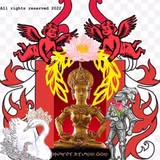

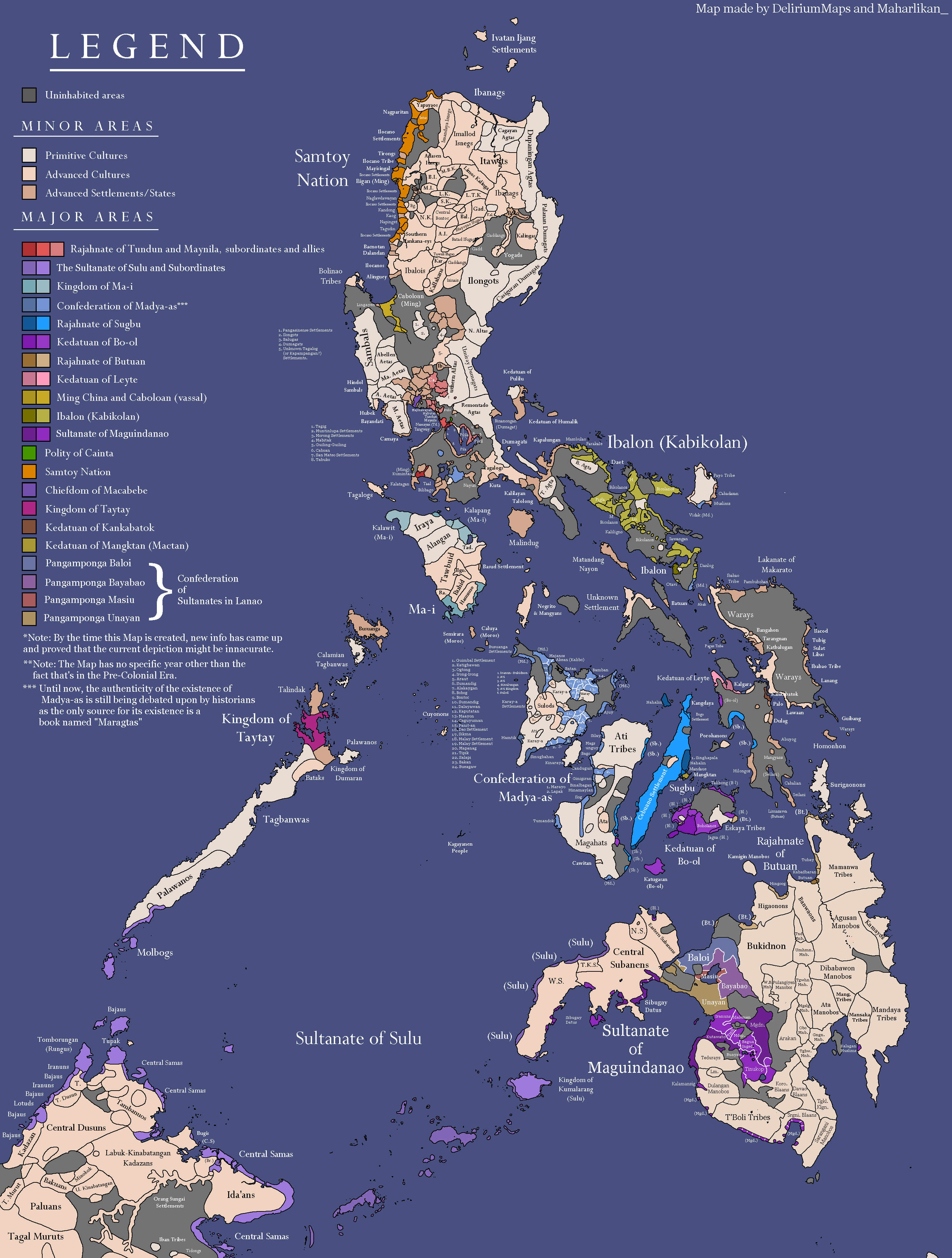





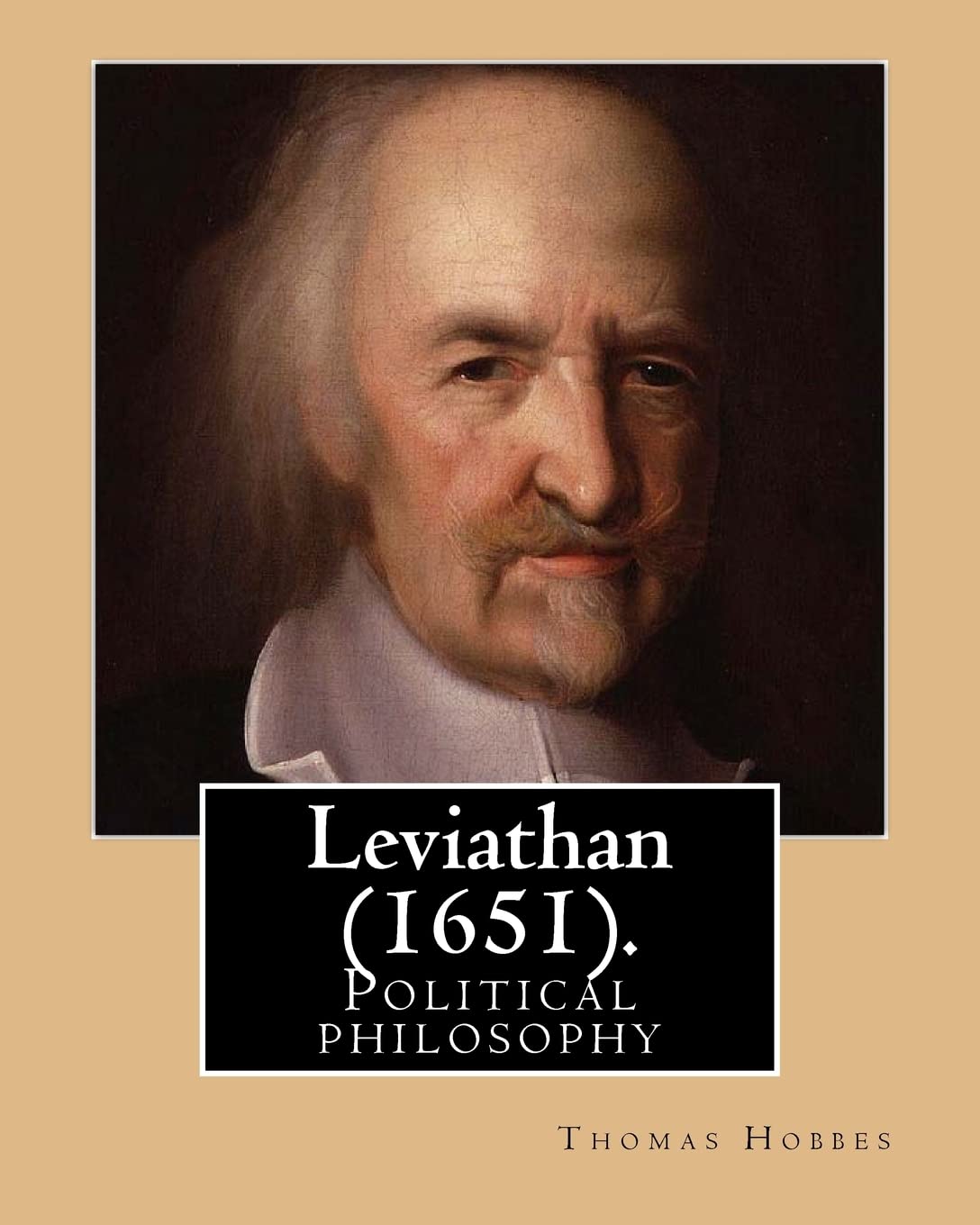

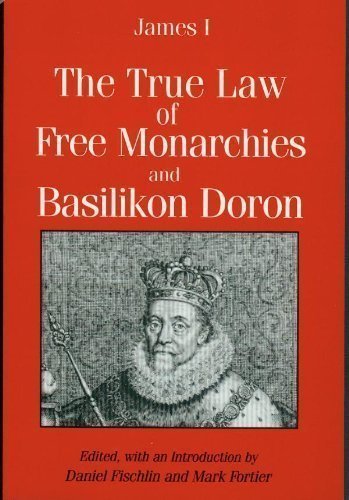
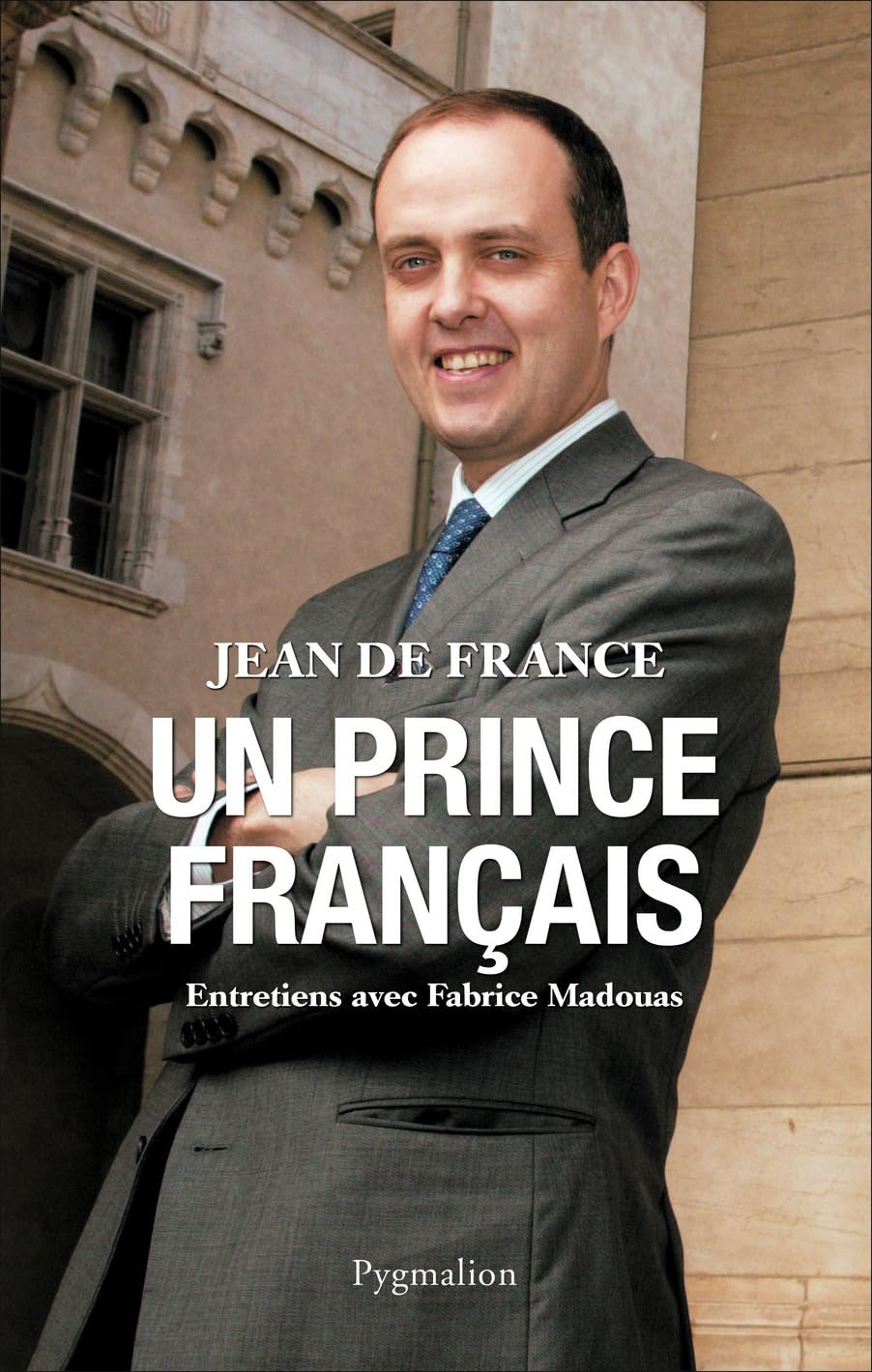



.jpg)



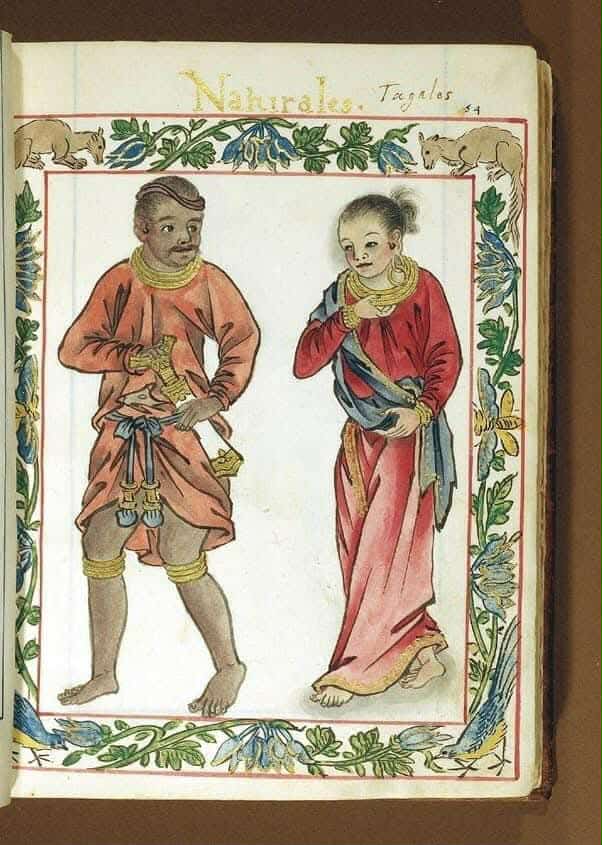
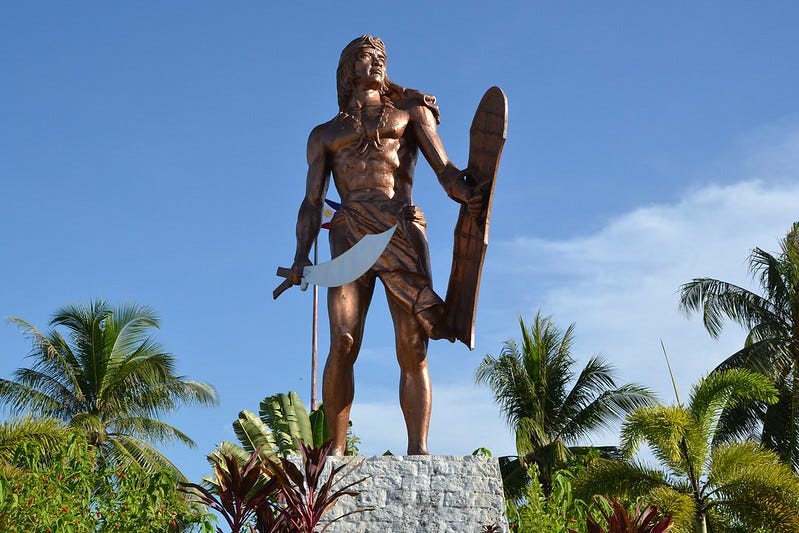
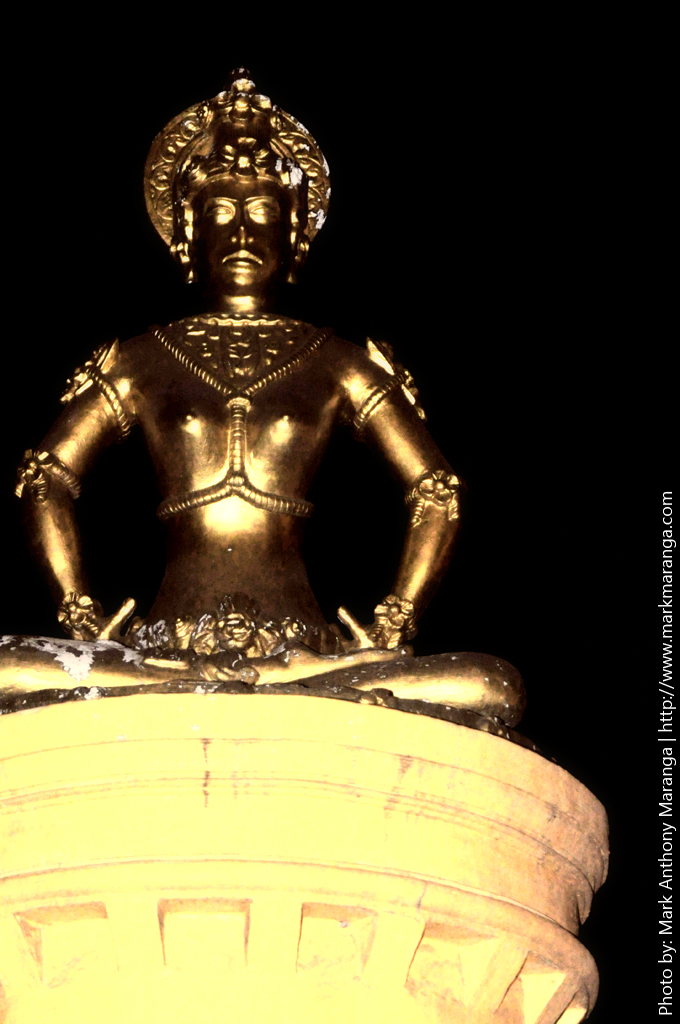
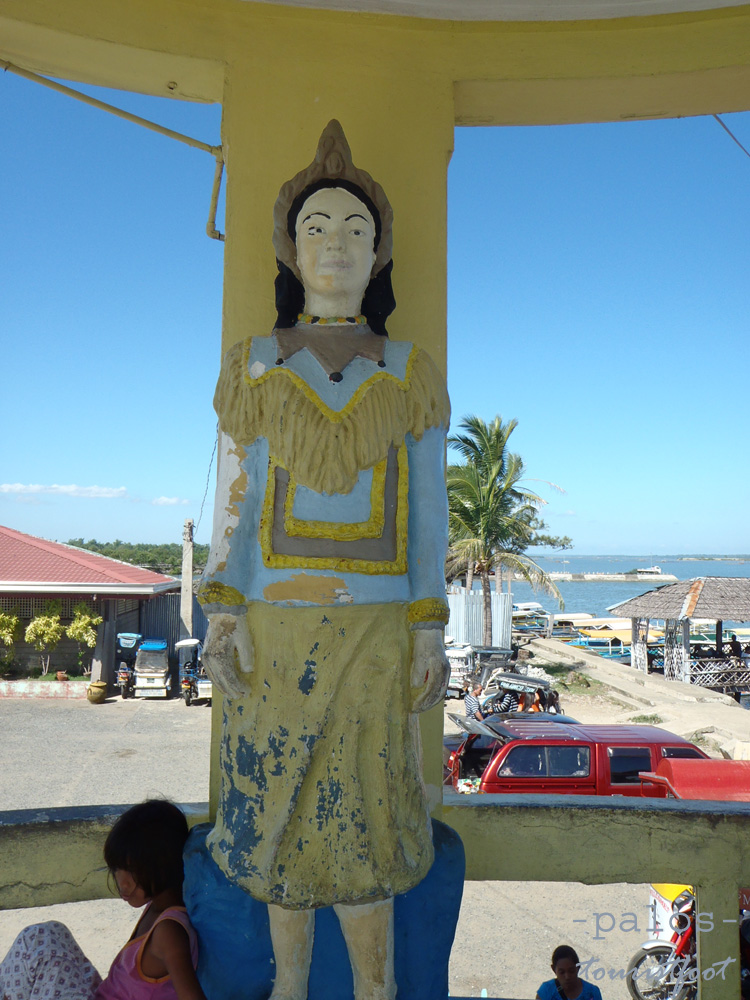




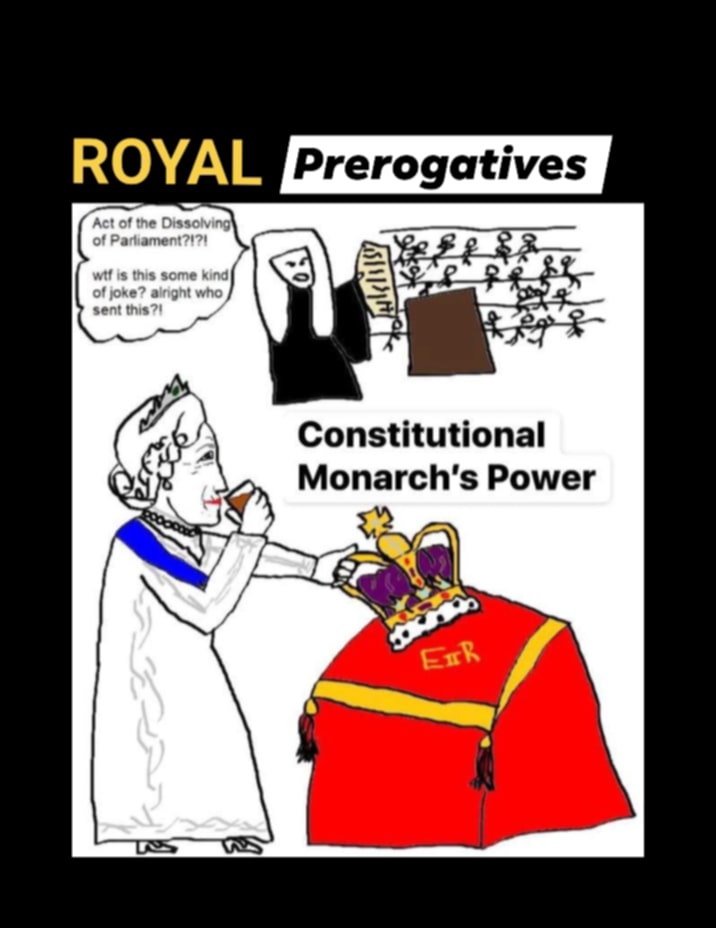


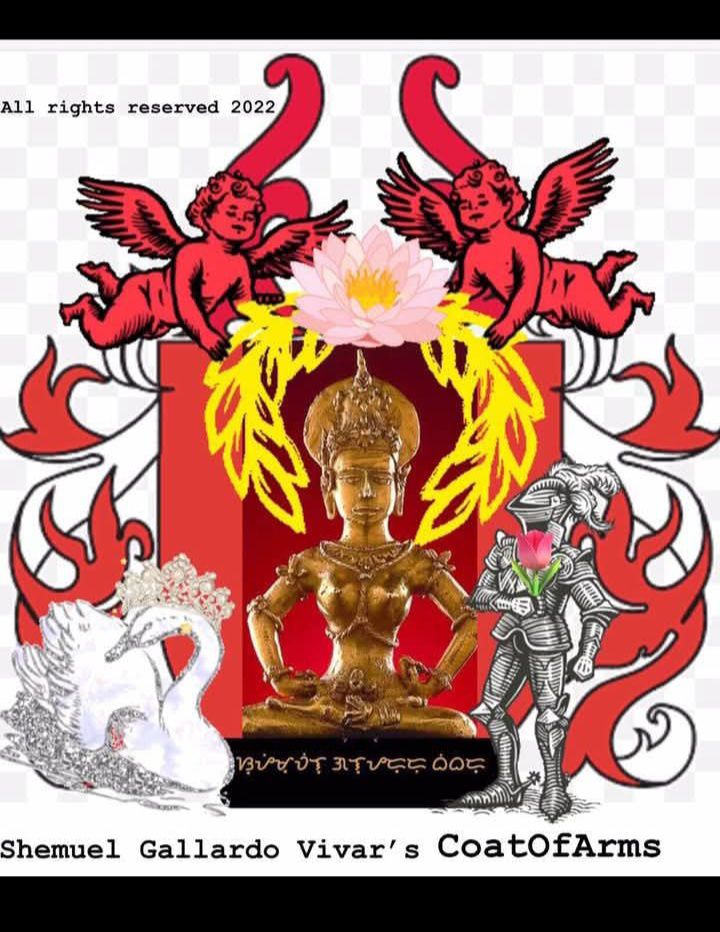
 )monarchist. Featuring: Family History, Oral History, Terminology, Citizenship & Migration.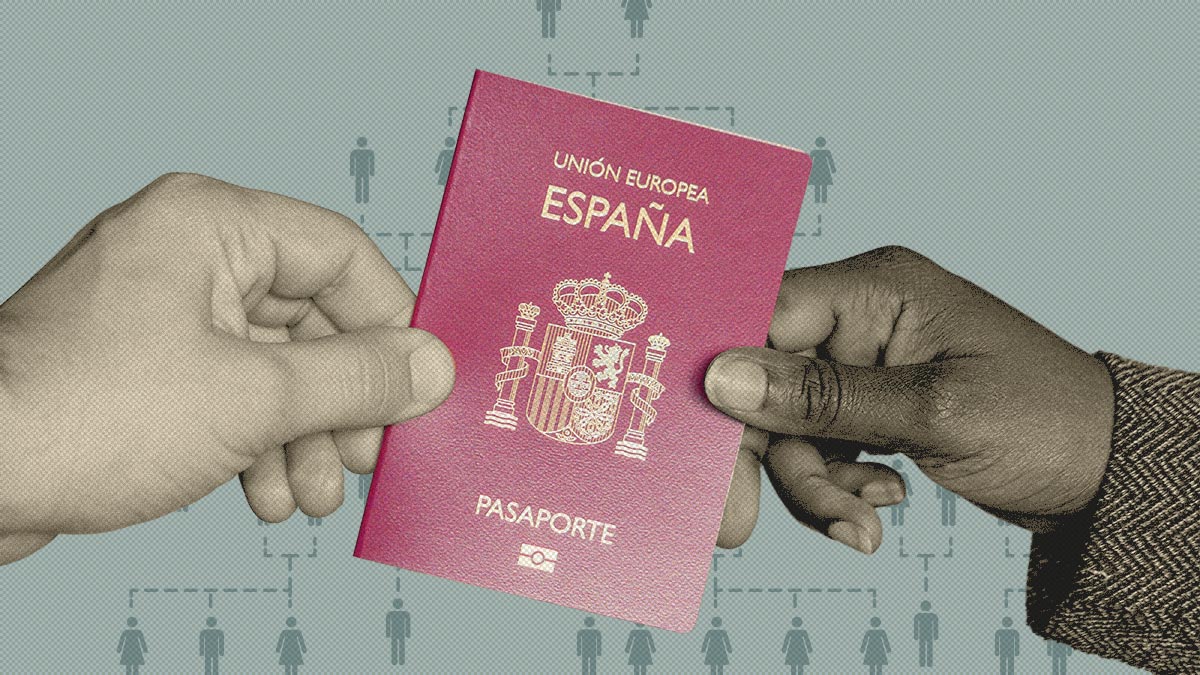

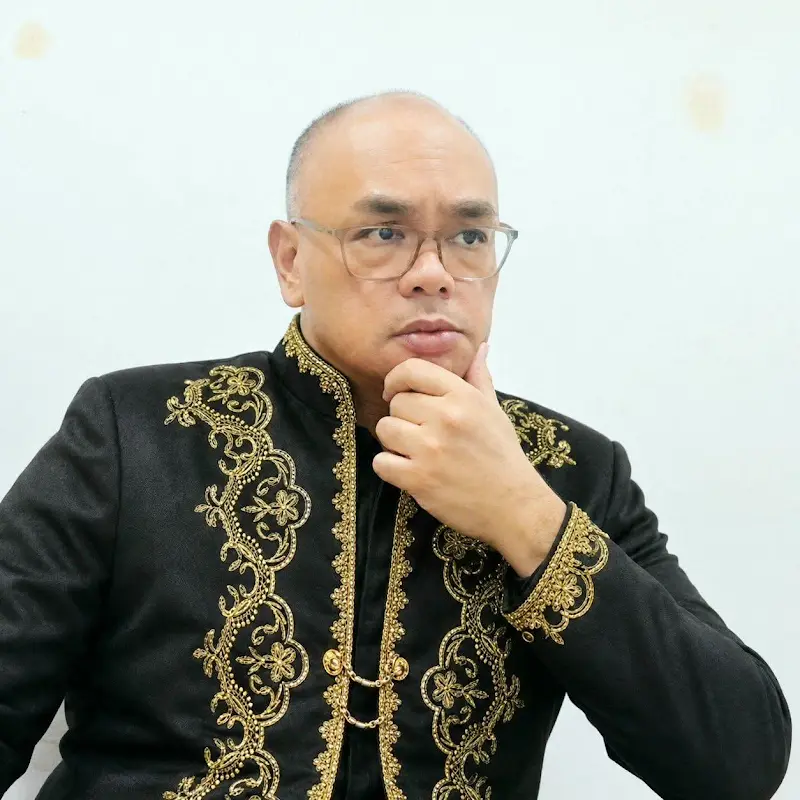


 (Time is quite limited. No hope to experience a new state of economy that had its own style in pricing goods & tax hahaha
.jpg)
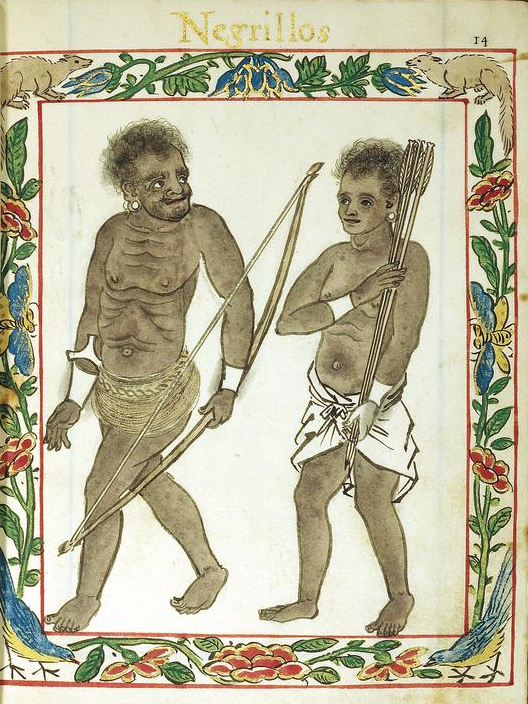


.jpg)


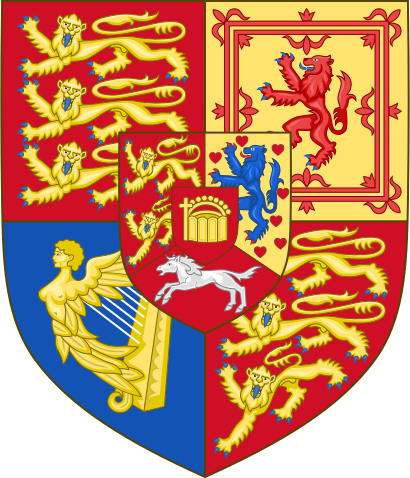




 .
.